Naval ramming: How warships used collisions from World War I to modern times - The Indian Express
On September 15, a Pakistani naval ship, PNS Hunain, collided with an Indian naval ship, INS Kolkata, in the northern Arabian Sea. The incident severely damaged the Pakistani vessel and has sparked considerable debate regarding the recklessness of the Pakistani captain’s actions.
The tactics of shadowing and ramming ships have a long-standing history. In this week’s column, we will explore how these strategies have evolved over the years. Though these actions date back to the era of wind-powered vessels, they persist today, serving both as displays of bravado and as a means of asserting a threatening posture.
The Institute of Marine Engineering Science and Technology states on its website that the ram bow was the most significant weapon of naval vessels in ancient times.
“Galleys would be propelled at maximum speed by slave oarsmen with the intention of smashing into an enemy ship, often with dire consequences. But the arrival of gunpowder and the cannon, which could hit another vessel and possibly sink it at a distance, meant such tactics and the ram itself fell into disuse,” the institute notes.
The institute notes that ramming was particularly effective against submarines. During World War I, 19 German U-boats were sunk by ramming. Notably, the British battleship HMS Dreadnought used its ram bow to sink the German submarine U-29.
“A similar situation happened during the Second World War, with 27 U-boats being rammed (according to statistics up to May 1943), of which 24 sank, proving that ramming could be effective in very specific situations even without a special bow. However, damage to the ship which did the ramming was often substantial, and it was increasingly frowned upon,” the institute says.
In the Second World War, Japanese destroyer Amagiri rammed and sank US PT-109 (commanded by Lt John F Kennedy) in the Solomon Islands in August 1943. The destroyer chose ramming over gunfire to avoid revealing its position.
British destroyer HMS Glowworm rammed the German heavy cruiser Admiral Hipper in April 1940 after a close-range fight in heavy weather off Norway. Glowworm was lost, but her captain received a posthumous Victoria Cross.
US destroyer USS Borie rammed U-405 in a night surface action in November 1943; both vessels were so badly damaged they were later scuttled or sank. In another instance, Finnish submarine Vetehinen rammed and sank Soviet submarine ShCh-305 in November 1942.
Multiple Allied escorts rammed German and Italian submarines (HMS Hesperus vs U-357, USS Buckley vs U-66). The ramming ship often suffered serious bow damage because submarines were built to withstand deep-water pressure.
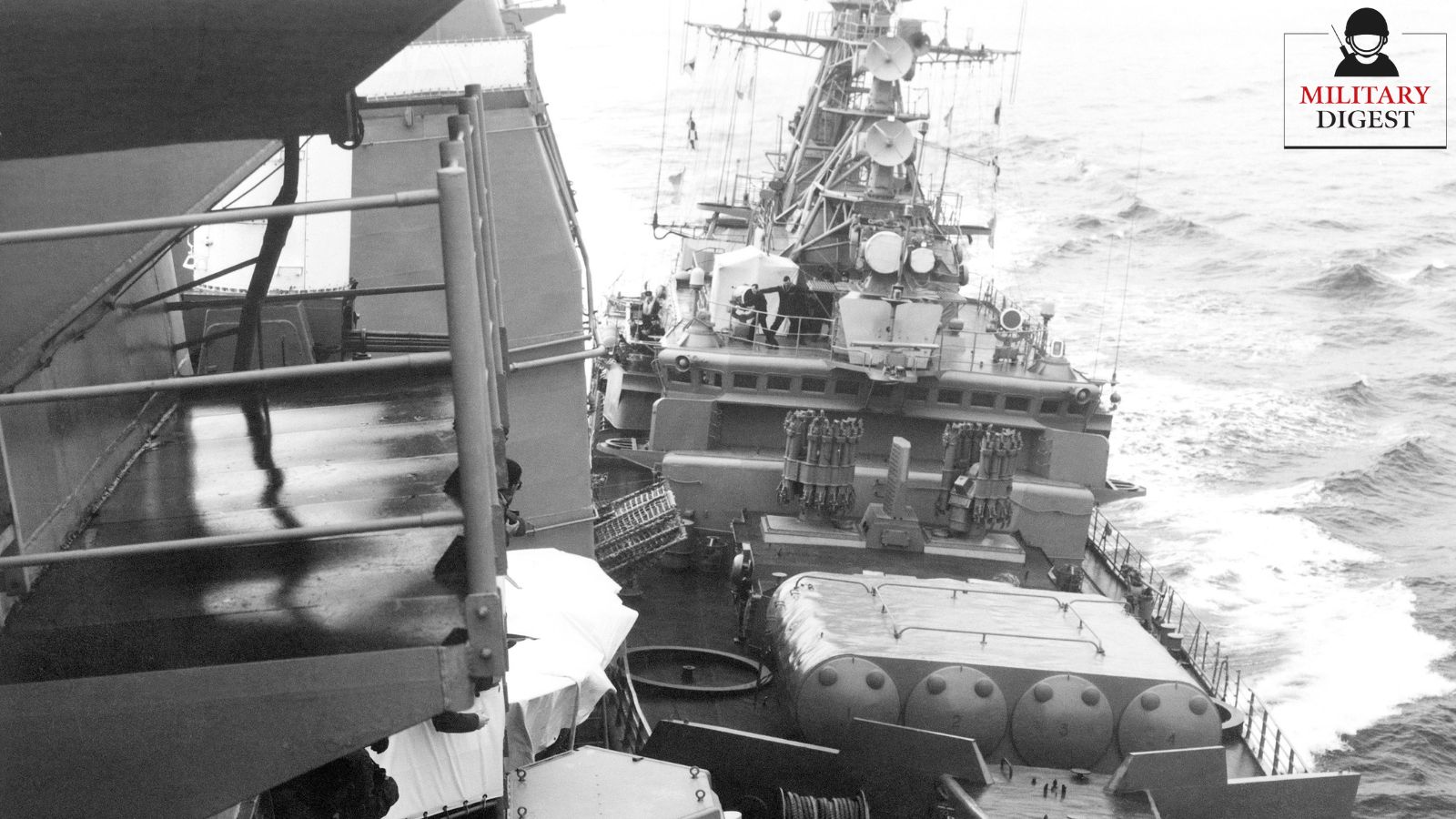
Deliberate low-speed ramming or “shouldering” occurred in tense but non-shooting confrontations during the Cold War era. Notable among these is the Black Sea bumping incident of February 1988, when Soviet frigate Bezzavetny bumped USS Yorktown and Mirka-class SKR-6 bumped USS Caron inside claimed Soviet territorial waters. Damage was limited to scraped hulls and bent fittings.
In an earlier incident in the Sea of Japan in May 1967, USS Walker and Soviet Kotlin-class destroyer Besslednyi collided after repeated close approaches, with each side accusing the other of ramming.
In the 2020s, the South China Sea has become the primary global hotspot for dangerous naval manoeuvres. The Chinese People’s Liberation Army Navy (PLAN), the Chinese Coast Guard (CCG), and its “maritime militia” frequently employ what experts call grey-zone tactics—harassment that stops just short of provoking an outright war.
Among India–Pakistan encounters, the 2011 PNS Babur vs INS Godavari incident involved high-speed closing and contact.
Ramming is a rare occurrence in modern naval warfare because contemporary warships are neither designed nor trained for it. Collisions pose significant risks, including flooding, fires, and the potential loss of both vessels involved. When ramming does happen, it typically stems from a miscalculation, in which one ship tries to nudge another into changing course without resorting to gunfire.