New NSRI rescue boat named after late kitesurfer Graham Howes - IOL
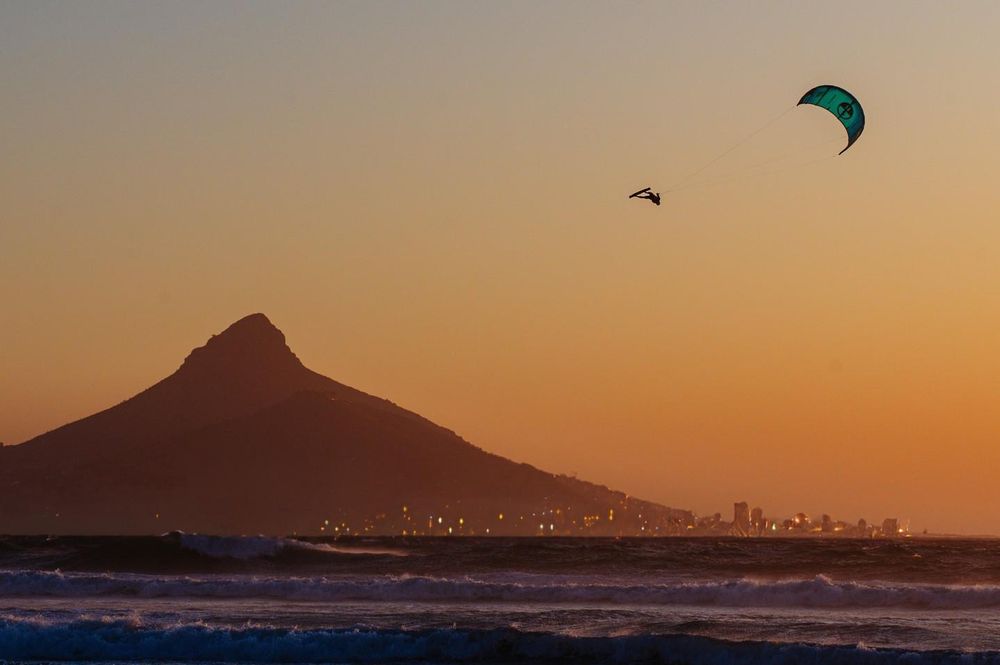
Late professional kiteboarder and Dirty Habits founder Graham Howes smiling on the beach at sunset.
When big-air kiteboarder and "Dirty Habits" founder Graham Howes lost his life at sea off Eden on the Bay in September 2025, the South African extreme sports community lost a pioneer whose impact extended far beyond his athletic achievements.
On September 25, 2026, the National Sea Rescue Institute (NSRI) announced that enough funds had been raised to finance the Spirit of Graham Howes, a 5.5-metre rigid-hull inflatable boat for Station 16 Strandfontein. Gemini Marine has donated its hull and is building the craft.
Now, just over a year after his tragic passing, a dedicated rescue vessel bearing his name stands as a powerful testament to his life. It embodies both his devotion to saving lives in and out of the water and his lifelong mission to ensure no one fights their darkest battles alone.
Known globally for his explosive riding and charisma, Howes was equally revered for breaking the silence around mental health in action sports.
Howes grew up in Johannesburg, far from the waves he wanted to ride. Kiteboarding took him to Dubai, New Zealand, and the Dominican Republic. In Cape Town, he became known for powerful riding and big-air tricks, becoming part of the international group of riders drawn to the city’s summer winds.
Richard Howes, Graham’s father, remembered giving his 14-year-old son a kite and watching him ride out, turn neatly, and come straight back. Richard asked why he had stopped. “Sharks,” Graham replied.
Dirty Habits grew from a combination of riding, filming, travel, and gathering people together. Graham described its members as “young and old, professional and amateur,” bound by a common goal of freedom.
Richard saw how widely his son extended that welcome, treating newcomers with the same care as lifelong friends. "He accepted everybody into the tribe and made everybody feel welcome," Richard noted.
That confidence took time to grow. His brother Craig told mourners that he and Graham had few friends at school and were both outsiders. Graham stuttered so badly as a boy that he struggled to say his own name.
Years later, his brother considered him one of the bravest fighters he knew.
In 2014, Graham wrote of Cape Town as a place where “pros are made, careers are ended, friendships are bound.
His brother, Craig Howes, watched him develop as a rider overseas. Graham initially favoured powered tricks in boots. A knee injury later drew him towards wave riding and, Craig said, away from some of the pressure of competition.
Kiteboarding was Graham’s “work, his escape, his identity,” Craig wrote. Graham described it as “my career, my work, my escape from all the crazy things.”
In 2014, Graham wrote of Cape Town as a place where “pros are made, careers are ended, friendships are bound.”
He knew how much the sport demanded of its athletes. He also cared about the relationships formed around it. At Graham’s memorial, Richard recalled a visitor from Angola whom Graham made sure would not have to go out alone while staying in Cape Town.
“When people speak of Graham, the words that come up again and again are life, energy, and kindness,” Richard said when the family launched its NSRI fundraiser.
“He had a rare gift. Whoever he was with felt seen, cared for, and valued.”
A friend who worked with Graham said at his memorial how he had been taken under Graham’s wing but treated “like a wingman." He remembered advice, late-night plans, and Graham’s attention to people he had only just met.
“You didn’t just create a brand, G,” the friend said. “You created a family.”
The freedom Graham sought through sport did not always match what he felt within himself.
In his reflective poem There’s a Place, he confronted the internal struggle of feeling constantly judged, writing that he was “scared to fail, to disappoint” and “scared to be me.”
The poem reaches a pivotal moment when he realises that the harsh critic he feared was not the public, but his own internal voice. “It’s me who judges me.”
Howes later brought these poetic reflections on life in a deeply personal video post about his mental health struggles, bringing raw vulnerability to a culture often dominated by bravado.
A mental health advocate, Graham spoke openly about living with depression, insecurity, anxiety, self-doubt, ADD, ADHD, and epilepsy.
Describing his dual life as a professional athlete, artist, and brand owner, he shared how these underlying challenges had given him the “strength and courage to push through boundaries,” but had also heavily affected his competitions, personal relationships, and everyday happiness.
Graham wrote that buried past traumas had taken him to dark places. After a period in which he spent two weeks on the couch with the blinds shut, Candace, Graham's close friend, helped him seek professional care.
He said a psychiatrist diagnosed him with major depression in July 2019. At first, he resisted medication. “I’m not weak,” he recalled telling himself. “I’m a survivor.”
“This year has also made it obvious I can no longer pretend life is perfect as I show on social media and Dirty Habits,” he wrote. “It’s time to get real.”
The ocean had been the place where, when he found his rhythm, “nothing else matters.” During that session, it no longer felt like a refuge. He wrote that depression had taken from him “The Ocean, my happy place.”
Graham then looked closely at the image he had helped sell. He wrote that sponsors and Dirty Habits benefited from presenting a life that seemed “cool,” “hardcore”, and masculine.
He believed he had contributed to a culture in which athletes hid their difficulties for fear of seeming weak. He saw that fear in friends and professionals reluctant to risk “crying, looking weak, feeling ‘uncool.’”
He did not intend to stop celebrating the sport. He wanted the idea of “living your best life” to include care for mental health.
“A lot of people have to accept that psychological and physical injuries are at the same level of intensity,” he wrote.
He helped create a support group for extreme sports athletes and worked on We Need to Talk, which brought athletes together to discuss depression, injury, addiction, and identity.
In 2023, the Global Kitesports Association gave him its Social Contribution Award for challenging the stigma around mental health in sport. “I’ve always strived to be more than ‘just a kiteboarder,’” he said.
At his memorial, a friend spoke about the bravery it had taken to share his struggles. “By doing that,” the friend said, “you gave us all the permission to be real.”
Craig, Graham's brother, who had witnessed both the pain and the effort behind his brother’s openness, spoke of the following memories of him and his brother laughing.
“We laughed together. We cried together. We prayed together,” he told mourners.
NSRI Station 18 in Melkbosstrand, the sea rescue base whose volunteer crews were activated during the search for kiteboarder Graham Howes.
Graham went missing on Sunday, 7 September 2025, after failing to return from an afternoon kiteboarding session off Eden on the Bay.
Graham's father described a windy night and “a really, really wild sea”.
It was his brother, Craig, who contacted the NSRI. NSRI crews at Station 18 Melkbosstrand were activated at 7:59 p.m.
Rescue boats, aircraft, emergency services, and members of the maritime community joined a search that continued through the night. At the station, volunteers gave Graham’s family somewhere to wait, explained how they were searching, and kept them informed.
“To know that the NSRI was out there was the best feeling,” Richard said later. “People with passion who risk their lives every time they answer the call for help, in all weather, day and night.”
Craig said he felt that everything possible was being done to find his brother. For Richard, the crews’ commitment was everything to him.
“The NSRI is built on volunteers who give up their time to help others in distress,” he said. “They rely on public support and ask nothing in return.”
Graham was located and recovered on Monday, 8 September 2025. Dirty Habits subsequently said the findings indicated that he had been struck by a whale.
“We couldn’t have got through that night without the NSRI,” the family said.
Craig was grateful that the search brought his brother home, although it did not bring the result they had hoped for. “It’s the spirit that embodied my brother, helping people,” he said. “That’s what NSRI is.”
Hundreds of riders and local residents later gathered at Small Bay. They paddled out, formed a circle on the water, and laid flowers.
At Graham’s memorial, his family and friends spoke about the rider they had watched, the difficult periods they had shared with him, and the ordinary evenings they now missed.
A friend read from a note he said Graham had left for the Dirty Habits crew.
“Protect the crew, look out for each other, have each other’s backs, and make sure no one gets left behind.”
Paddle out for Graham Howes memorial.
The Howes family launched its NSRI fundraiser back in November 2025.
“He had the same passion as the NSRI, so it would be great if there were a boat in Graham’s memory that belongs to the NSRI,” the family said.
“Just to know that Graham still has a presence in this world.” Richard believed his son would have valued the tribute. “Graham had such humility,” he said. “He’d be so honoured by this.”
Water rescue was close to Graham’s heart, Richard added, and he was “always finding ways to help kids in need through surfing.”
The first boat is now funded, according to the NSRI. Its head of fundraising, Alison Smith, said R200 000 had been raised to date, while a BackaBuddy campaign sought a further R600 000 towards the wider initiative.
Richard hopes the personal connection will encourage people to support work that could help someone they know.
“Many people want to help,” he said, “but they want a more personal fundraiser. Graham touched so many lives.”
The NSRI expects Spirit of Graham Howes to be completed in October, with a blessing planned for late November when Richard, who lives in Portugal, will be in South Africa.
Richard’s father was also named Graham Howes and shared the family’s love of the sea. For Richard, the name on the craft remembers both men.
“To have a rescue craft named after Graham would be amazing,” Richard said when the campaign began. “Knowing that Graham continues to sail the sea, helping people in distress.”
He called support for the fundraiser “the final act of love for Graham” and hoped the craft would keep his son’s name alive.
The launch of the Spirit of Graham Howes will ensure that Graham’s courage and compassion will continue to protect lives along the coastlines he loved.