New TB vaccines could save millions of lives by 2050 – what to know
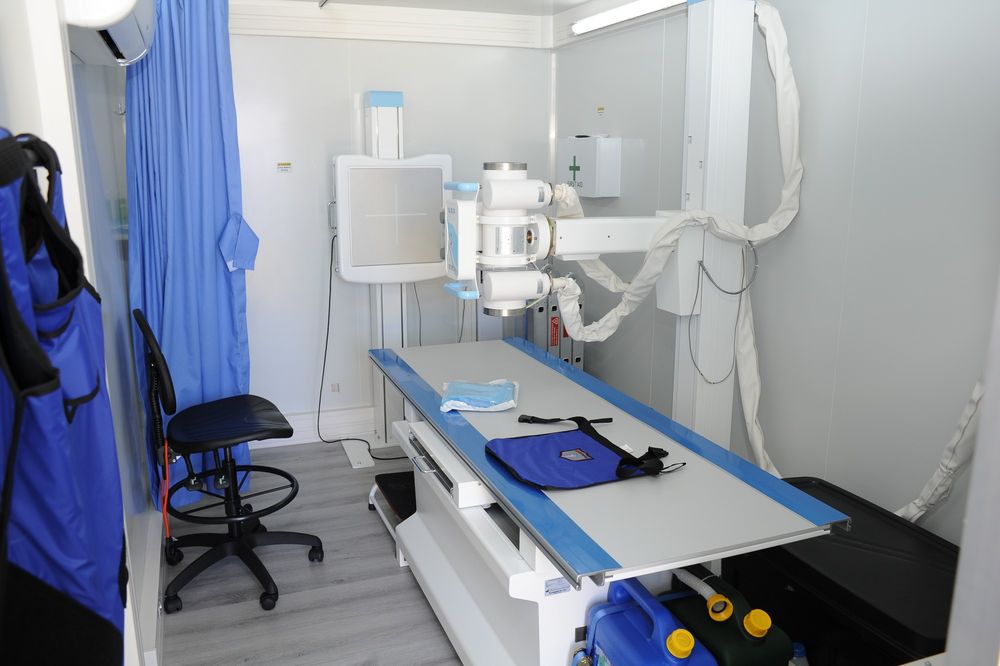
Mobile clinics provide a full range of healthcare services to farming communities in the Western Cape, including immunisation for newborns.
Despite progress being made, tuberculosis (TB) continues to claim thousands of lives each year in South Africa, but there might be hope, as there is a new vaccine in the works.
According to Gavi, the Vaccine Alliance, a novel vaccine with 50% efficacy could avert up to 7.3 million deaths around the world.
The first vaccines are expected to achieve regulatory approval and licensure between 2029 and 2030.
It is designed specifically for adolescents and adults, addressing a critical protection gap left by the 100-year-old BCG vaccine.
M72/AS01E, which is developed by the Gates Medical Research Institute, demonstrated 50% efficacy in Phase 2b trials, with Phase 3 results expected in mid-2028.
The African continent will not be ignored, as the novel TB vaccines have been granted priority status under Gavi’s African Vaccine Manufacturing Accelerator (AVMA) to incentivise production within Africa.
Tuberculosis remains the world's deadliest infectious disease, causing a staggering 10.7 million cases and 1.2 million deaths in 2024, with 77% of deaths occurring in Gavi-supported countries.
The only currently licensed vaccine, Bacille Calmette-Guérin (BCG), was administered in approximately 250 million doses in 2023.
While BCG provides up to 90% protection against severe childhood TB, its protection wanes over time and offers limited protection in adolescents and adults.
Because adolescents and adults drive ongoing community transmission, World Health Organization (WHO) product standards prioritise vaccines designed to prevent pulmonary TB disease in these populations.
According to the London School of Hygiene & Tropical Medicine (LSHTM), the adolescent/adult TB vaccines will be among the highest-impact interventions in global health history.
Under a high-demand scenario targeting high-burden areas and high-risk groups, a 50% effective vaccine could avert 5.8 to 20.8 deaths per 1,000 fully vaccinated individuals, saving up to 7.3 million lives by 2050.
The vaccine will also play a vital role in slowing the spread of antimicrobial-resistant TB strains.
There are seven candidate vaccines in Phase 1, 2, and 3 clinical trials targeting disease prevention in adults and adolescents across adjuvanted protein, live-attenuated, and mRNA platforms.
M72/AS01E (Gates Medical Research Institute) is an adjuvanted protein candidate that demonstrated 50% efficacy in a Phase 2b trial and an acceptable safety profile for people living with HIV in Phase 2a trials. Phase 3 trial results are expected in mid-2028, with potential licensure by 2029–2030.
GamTBvac (Gamaleya Federal Research Centre) is an adjuvanted protein candidate undergoing a Phase 3 trial evaluating efficacy against non-HIV respiratory TB, with trial completion expected in 2026.
Global health partners recommend a dual deployment approach. This entails routine immunisation, with adolescent vaccination building long-term population immunity and targeted catch-up campaigns with early focus on high-risk populations (such as people living with HIV) and high-burden geographical settings.
Demand across low- and middle-income countries is projected to average 86 million vaccination courses per year, with demand peaking in early years as high-burden countries launch catch-up campaigns. Procuring doses to meet global demand from 2030 to 2040 will require $5–8 billion in procurement funding.
A central objective of Gavi's market shaping strategy is establishing a geographically diverse supply chain to avoid initial supply bottlenecks.
Novel TB vaccines have been granted priority status under African Vaccine Manufacturing Accelerator (AVMA).
Gavi is believed to be leveraging AVMA financial incentives as well as exploring potential future adjustments to encourage vaccine manufacturing within Africa, diversifying the future supply base and strengthening regional access.
Strategic plans aim to foster a competitive pipeline of candidates matching country preferences regarding dosing schedules, storage requirements, and affordability.
Gavi is also coordinating with the Global Fund to align country support modalities and working with the WHO TB Vaccine Accelerator Finance & Access Working Group to prepare high-burden countries for rapid rollout.
The latest World Health Organization (WHO) estimates show that about 249,000 people developed TB in South Africa in 2024, while approximately 54,000 people died from the disease. It is worth noting that the figures are estimates because not every person with TB is diagnosed and reported.
The country's estimated TB incidence has fallen substantially over the past decade. In 2023, the WHO estimated South Africa's incidence at 427 cases per 100,000 people, compared with 988 per 100,000 in 2015. The WHO's South Africa annual report described this as a 57% reduction from the 2015 baseline.
Despite improvements in finding and treating people with TB, a large gap remains between the number of people estimated to develop TB and those diagnosed.
WHO previously estimated that South Africa had reduced its number of "missing" TB cases from about 150,000 in 2019 to 66,000 in 2022 – a 56% reduction.
The National TB Recovery Plan says treatment coverage had increased to 79% in 2023, although concerns remain about people who are not diagnosed or do not enter treatment.
HIV remains an important factor in South Africa's TB epidemic. WHO says people living with HIV are 12 times more likely to develop TB disease than people without HIV. TB is also a leading cause of death among people living with HIV.
What is even more alarming is that, according to the WHO's 2025 Global TB Report, children aged 0–14 accounted for about 7% of the country's TB burden. This is below the 10–15% proportion expected in high-burden countries.
South Africa is also one of the countries with a high burden of multidrug-resistant/rifampicin-resistant TB (MDR/RR-TB).
WHO's latest report shows that South Africa was among the countries with the largest gaps globally between the estimated number of people developing MDR/RR-TB and those starting treatment in 2024. South Africa accounted for about 3% of the global gap.
The country has, however, been an early adopter of shorter, all-oral treatment regimens for drug-resistant TB.