New wild cat species is identified for first time in 100 years, researchers say
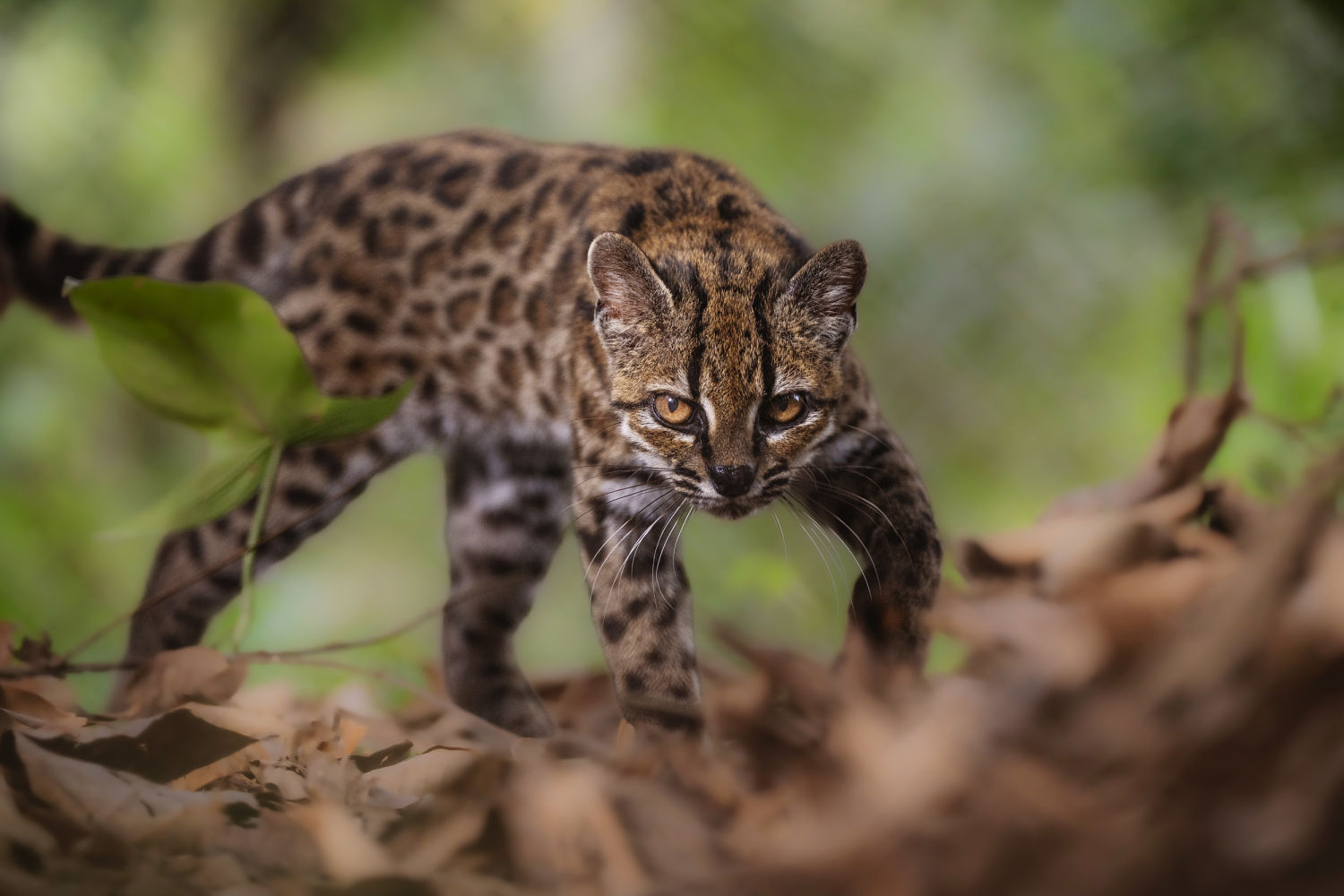
A Leopardus tilcayo at Senda Verde Animal Refuge in Bolivia’s Yungas region. Fernando Faciole / National GeographicShareAdd NBC News to GoogleSept. 17, 2026, 11:01 AM EDTBy Evan BushFor the first time in a century, researchers say they’ve identified a new species of wild cat previously unknown to science.
Leopardus tilcayo — or the Tilcayo tiger cat — is slender and spotted, with rounded ears. It is smaller than a typical house cat and lives in the Bolivian Yungas, the cloud forest where the Andes mountains meet the Amazon basin. The species was described for the first time in the journal Current Biology on Thursday.
It’s rare to find a new, relatively large mammal — unsurprisingly, most new animal species discovered are small in size, said Paola Nogales-Ascarrunz, who co-authored the study and leads a wild cat conservation program called the Programa de Investigación de Félidos Bolivia (Bolivian Felid Research and Conservation Program).
“This time, it’s a cat. That’s really novel. And it hasn’t happened in 100 years,” she said. “No one else had named it. No one else had described it.”
The Tilcayo tiger cat is smaller than a house cat.Fernando Faciole / National GeographicThe size of the Leopardus tilcayo population is not clear yet.
“We really don’t know how many cats are still in the wild,” said Nogales-Ascarrunz, whose work as a conservationist is funded by National Geographic. “We need science, we need more studies to answer this question, which is actually critical for its conservation.”
Tiger cats — small, wild cats native to South and Central America in the Leopardus genus — face stiff conservation challenges as development and agriculture expand.
The new study says there are five tiger cat species in South America.
“All of them are in habitats that are vanishing fast,” said Tadeu de Oliveira, another coauthor of the study and an ecologist at the State University of Maranhão in Brazil.
Leopardus tilcayo might have continued to escape notice if not for Nogales-Ascarrunz’s sharp eyes. She volunteers at a wildlife rehabilitation center near La Paz called the Senda Verde Wildlife Sanctuary.
“I saw this cat, it was really, really small, and I couldn’t believe how small it was,” Nogales-Ascarrunz said. “I thought it was a kitten.”
Paola Nogales-Ascarrunz with the Leopardus tilcayo at Senda Verde Wildlife Sanctuary in Bolivia. Fernando Faciole / National GeographicThe cat had been brought in by a man living in a community in the forest near La Paz, who had mistaken the cat for a domestic kitten, according to details recorded by the sanctuary. He had fed the animal noodles, rice and eggs, only to realize it was wild and that he could not take care of it. So he brought it to the sanctuary.
Initially, colleagues at the sanctuary thought the animal might be a known tiger cat species from Brazil, but Nogales-Ascarrunz wasn’t convinced.
“If you look at the spots or the tail, they really don’t match,” she said.
Nogales-Ascarrunz did genetic testing, using tissue from the tiger cat and a second animal that also turned up at Senda Verde. The results from those specimens revealed that the two cats were unique and from the same species, which had diverged from other tiger cat lineages about 1.4 million years ago. That’s enough genetic distance to consider it a new species.
Nogales-Ascarrunz said, however, that local communities in Bolivia have been aware of the species’ presence for generations.
“This cat, they call it Tilcayo. And when you ask, ‘Does it have some meaning in Quechua or Almyra and other indigenous languages?’ they say, ‘No, my grandpa told me that’s the Tilcayo,’” Nogales-Ascarrunz said. “This is a traditional knowledge that they have in the community. We want to preserve that knowledge and we didn’t want to give it another name.”
Nogales-Ascarrunz is working to install camera traps in the Yungas forest in Bolivia to search for more signs of Leopardus tilcayo.Fernando Faciole / National GeographicIt’s not rare for scientists to add a mammal species to the taxonomy — they do so about 65 times a year, according to a study released last year. But many of those new species — including some recently named wild cats — are the results of a split. That’s when scientists realize what was once a single species has sufficient genetic distinctions to become two.
For example, the Sunda clouded leopard found on the island of Borneo — called Neofelis diardi — was first recognized in 2006 when its genome was distinguished from its mainland counterparts. But examples of the Sunda clouded leopard were already in museums at that point.
The Tilcayo, on the other hand, was completely novel to scientists.
“We didn’t have specimens in museums,” de Oliveira said. “It had never been collected before.”
Nogales-Ascarrunz said this new species is likely in danger. She views the discovery as yet another argument in favor of conservation.
“It’s a new reason to protect the world,” she said.
Evan Bush is a science reporter for NBC News.