No Need to Hesitate to Question Nusron Wahid - Tempo.co English
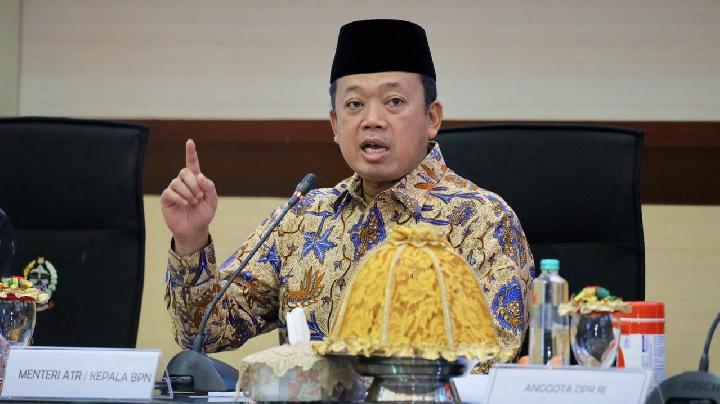
The Corruption Eradication Commission need not hesitate to question Minister Nusron Wahid. Agrarian affairs must not be influenced by money or personal connections.
INVESTIGATORS at the Corruption Eradication Commission (KPK) need not hesitate to question Minister of Agrarian Affairs and Spatial Planning/Head of the National Land Agency Nusron Wahid in connection with alleged bribery in the processing of building use rights (HGB) for Summarecon Agung. The KPK’s investigation found that four of the eight suspects in the case are people trusted by Nusron.
Coordinating Minister for Legal Affairs, Human Rights, Immigration, and Corrections Yusril Ihza Mahendra also emphasized that the government respects the KPK’s authority to question those suspected of being involved.
The case began with alleged bribery to unblock and process the subdivision of Summarecon’s land HGB in Bogor Regency, West Java. KPK investigators named eight suspects and seized evidence worth around Rp106.3 billion.
Four of the suspects are people whom the KPK described as trusted by Nusron. One of them, Erwin, allegedly received Rp1.5 billion from Summarecon’s chief executive officer. According to the KPK investigators’ findings, Erwin acted as a liaison in processing the unblocking and subdivision of the HGB. The Bogor Regency Land Office Chief reportedly refused to process the request without instructions from his superior.
These facts do not yet prove Nusron’s involvement. That is precisely why he needs to be questioned. The investigation must establish how much the minister knew about the activities of those around him, whether there were instructions or communications with land officials, and who controlled and benefited from the flow of money. Nusron has said he was unaware of the circumstances surrounding the alleged bribery. That statement needs to be tested through due process, rather than simply accepted or rejected based on political statements.
The case also needs to be viewed within the framework of state capture corruption. The term refers to a situation in which political or business interests influence state institutions and processes to generate benefits for certain groups. In land affairs, the risk is not merely that officials receive bribes, but that state authority is used to facilitate the interests of particular parties.
There is not yet a basis for concluding that the Summarecon case constitutes state capture corruption. However, the alleged involvement of multiple people, the use of channels involving land officials, and the large sums of money are sufficient grounds for the KPK to examine whether what occurred was merely a bribery transaction or part of a broader pattern.
Therefore, the investigation must not stop at the recipients of the money. The KPK needs to trace the source of the funds, intermediaries, beneficiaries, communications, instructions, and assets acquired from the case. If any party used their position or influence to alter state administrative decisions for business interests, that pattern must be uncovered.
President Prabowo Subianto also needs to ensure that the legal process proceeds without interference. Cabinet members must not receive special treatment simply because they are part of the circle of power. Questioning Nusron does not mean declaring him guilty. The questioning is necessary to establish whether he was involved. If there is no evidence, the legal process must make that clear. If there is, the KPK must follow up on it.
What is at stake in this case is not merely Summarecon’s HGB, but also whether land authority continues to operate according to the rules or can be influenced by money, personal connections, and power. The KPK must ensure that the answer is clear.