No seat belt on bikes, no helmet in cars: Odisha’s bizarre traffic fines

You don’t have any Active Subscription.
Account subscription benefits alongside Premium Stories, Editorials, Opinions and more. Unlock these with Subscription
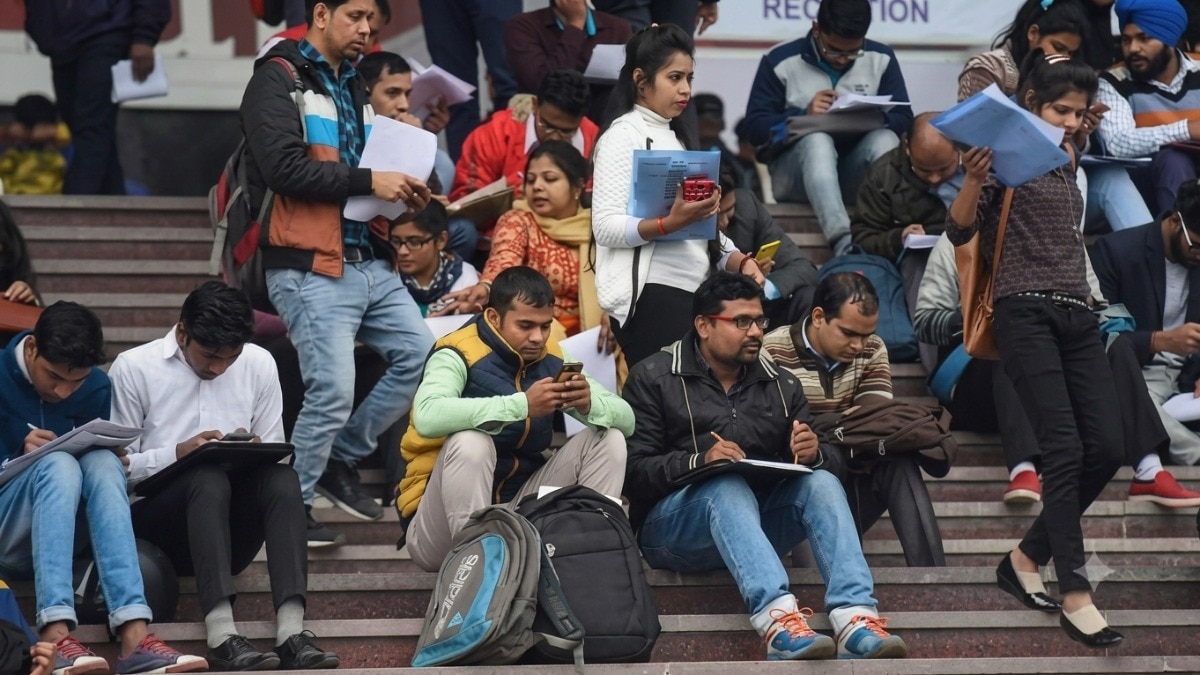
The CAG reports tabled in the Odisha Legislative Assembly have uncovered a series of lapses, questionable records, and instances of massive misuse of public funds across various departments of the Odisha Government. Representative file image. | Photo Credit: Getty Images/iStockphoto
Can you imagine a two-wheeler being fined for not wearing a seat belt and a car or auto-rickshaw driver being penalised for not wearing a helmet?
Yet this is precisely what happened in Odisha, according to the latest findings of the Comptroller and Auditor General of India (CAG). As many as 2,988 two-wheelers were booked for seat-belt violations, while 4,786 three- and four-wheelers were issued challans for helmet violations. In another bizarre instance, 60,058 MT of legacy waste was shown as transported in Rourkela using two motorcycles, an e-rickshaw, a car, and even a non-existent vehicle.
The CAG reports tabled in the Odisha Legislative Assembly on Monday (September 28, 2026) have uncovered a series of lapses, questionable records, and instances of massive misuse of public funds across various departments of the Odisha government.
Section 194B(1) and Section 194(D) stipulated in the Odisha Motor Vehicle Rules that drivers not wearing a safety belt or passengers not wearing seat belts will be punishable with a fine of ₹1,000. Similar provisions apply to two-wheeler riders who drive without a helmet, for whom a fine of ₹1,000 will be imposed.
“Analysis of VAHAN and e-Challan data pertaining to 2019-24 revealed that 2,988 cases were booked for driving a vehicle ‘without a seat belt’ and a fine of ₹29.88 lakh was imposed, whereas the vehicles were registered as two-wheelers, and 4,786 cases were booked for ‘not wearing a helmet’ and a total fine of ₹47.86 lakh was imposed, whereas the vehicles were registered as three- and four-wheelers,” says the CAG audit.
“This indicated the casual approach of the authorities while booking the offences and lack of validation control in VAHAN, which allowed issuance of challans for an offence which could not have been committed by that category of vehicle,” the agency observes.
The CAG suggested corrective action such as cancellation of incorrect e-Challans, and necessary action against the officers responsible for issuing e-Challans under incorrect sections needs to be taken.
Another amusing piece of information came to the light when CAG carried out an audit of the 2022 agreement with an executing agency for biomining of 61,156 metric tonnes of legacy waste at the dump site near Biju Patnaik University of Technology, Rourkela.
“In the absence of a control mechanism, the audit verified the vouchers for seven months amounting to ₹5.81 crore paid for bio-mining of 1.06 lakh MT waste and cross-checked the vehicle registration numbers used for transportation of legacy waste during bio-mining activities, with data available in the Parivahan portal,” the audit agency informed.
“It was observed that 60,058 MT of legacy waste was shown as transported in two motor bikes, one e-rickshaw, and one car and in one non-existent vehicle. For such transportation, Rs. 3.29 crore (57% of the test-checked amount) was paid to the executing agency,” CAG finds.
Wasteful expenditure under the District Mineral Foundation fund scheme continued to come to the fore.
In Keonjhar, India’s richest district as far as receiving DMF funds is concerned, an audit noticed that ₹6.06 crore was sanctioned by DMF, Keonjhar in 2023 for course fees, health insurance, and living costs without the approval of the DMF board of trustees. The funds were for five students selected to pursue a Master of Professional Engineering (Mining) course at Curtin University, Australia.
When the CAG raised objections stating that, instead of creating educational infrastructure for the general benefit of a larger number of beneficiaries in the mining-affected area, payment for higher studies in foreign countries for a select group of students was sanctioned, the State Government stated that these expenditures were made in good faith to empower local youth. It has, however, not ascertained that the five students hail from villages directly affected by mines.
Comments have to be in English, and in full sentences. They cannot be abusive or personal. Please abide by our community guidelines for posting your comments.
We have migrated to a new commenting platform. If you are already a registered user of The Hindu and logged in, you may continue to engage with our articles. If you do not have an account please register and login to post comments. Users can access their older comments by logging into their accounts on Vuukle.