Not just OpenAI and Anthropic, even Zoho is going after developers with AI tools
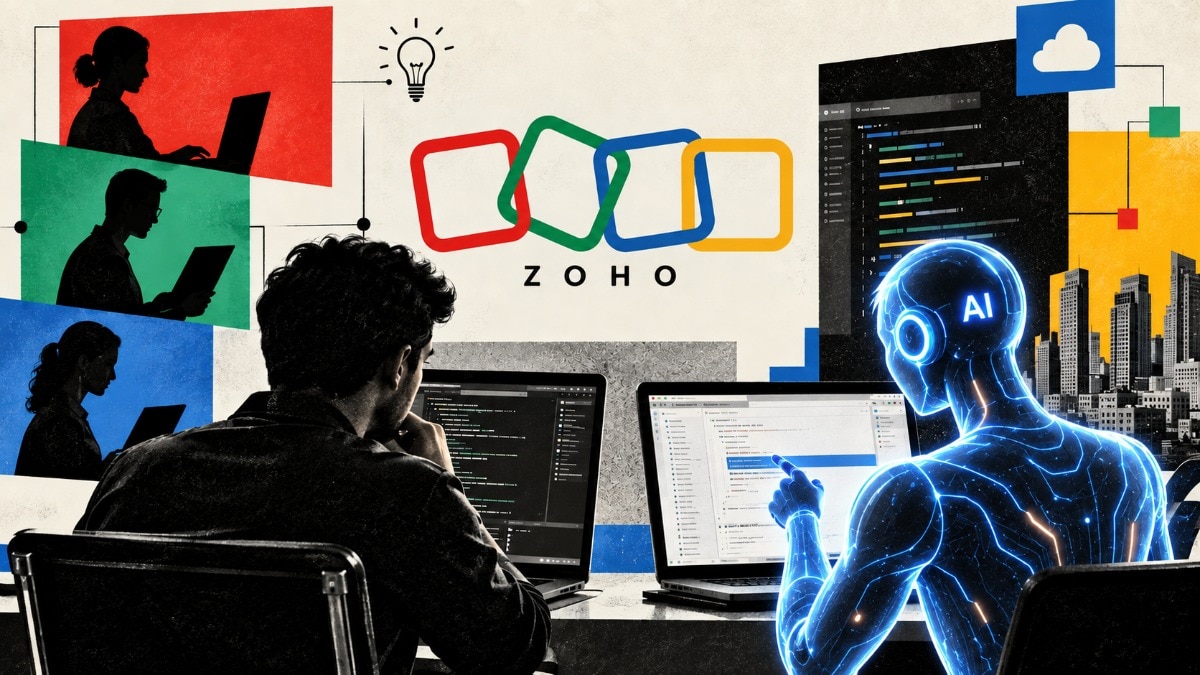
AI is rewriting the rulebook of the corporate workplace, and if there is one job that is particularly in focus, it is that of software developers. AI is writing code, building features and taking over several tasks that were earlier part of a software developer’s KRA (key result area). But companies such as OpenAI and Anthropic are not pitching AI as a replacement for developers. Instead, they argue that AI is making developers more productive and helping them work faster, with AI models, coding agents and APIs increasingly being built around developer workflows. Now Zoho is also joining the party, but with a slightly different approach.
Zoho has decided to bring AI deeper into the developer workflow and part of this push is the company's recently launched Catalyst 3.0. It's an update to its developer platform that aims to help developers not just write applications with AI, but also deploy, secure, scale and run them. According to the company, AI has made the coding part of software development much faster, but getting an application ready to actually run at scale is still a time-consuming process. With Catalyst 3.0, the company wants to change that.
“We saw that writing the code itself has become super-fast,” Anand Nergunam, VP, Revenue Growth at Zoho, told India Today Tech. “But taking that app live today is still taking the same time that it used to take before. And sometimes it has gotten even worse.” Anand Nergunam, VP, Revenue Growth at Zoho And this is where Zoho is seeing an opportunity with Catalyst 3.0While AI coding agents can now handle the actual writing of software, developers still have to deal with everything needed to make that software work in the real world — from configuring the backend and setting up databases to authentication, security, deployment and scaling.
With the Catalyst platform Zoho is essentially trying to address this other half of the development process. The company says it wants developers to spend less time dealing with the infrastructure around their applications and more time solving the actual business problem. And according to Nergunam the techies have two very big roles to focus on.
“Developers have two roles to play,” Nergunam said. “One is understanding the business problem and converting that into some tangible outcome.” The other, he said, is “the boring development work, which is configuring, setting this up, staying up all the time, making sure the scalability things are addressed, and all of this.”Zoho says AI is changing who gets to build software
So, does this mean AI is changing the way developers have been working for all these decades? According to Zoho, it's not just about changing how developers work. Nergunam says AI is also expanding the pool of people who can now build software.
We are seeing a clear shift where 72 per cent of developers are using AI code-generation agents at one level or the other,” he said. “The second aspect, which is very interesting, is that people who otherwise would never have been called developers have now started to come into the fray,” he added.
That includes product managers, designers, entrepreneurs and professionals who understand specific industry problems but may not have traditionally written software themselves.
“They've also now come into the fray of development because they are able to convert their expertise and ideas into apps,” Nergunam said.
This is also why Zoho believes software development could change a lot in the coming years. Because anyone can now build software, the company believes more people will start turning their ideas into apps. And if AI makes writing code much faster, the bigger challenge is getting that code into a working product.
Zoho says Catalyst 3.0 is designed around that problem. The platform has evolved from its original serverless offering in 2021 to a full-stack backend platform in 2023, adding capabilities such as databases, storage, login and AI components. With Catalyst 3.0, Zoho says it has gone further towards making the platform AI-ready so that coding agents can understand and work with it more easily.advertisementSo, what happens to developers?If AI can write more of the code, and more people can turn their ideas into actual working software, then what happens to developers? Does this eventually mean there will be fewer developers? Zoho's answer is that developers will instead have more bandwidth to work on higher-value problems.
“So it's clearly something that leads to significant enhancement in their own productivity, provided they are tuned to it,” Nergunam said. “But the boring part is taken out; it gives them more bandwidth.”
He believes that bandwidth can then be used to solve more problems and take on more projects.
“That bandwidth can be used to take up more challenges and solve problems,” he said.Zoho is already seeing this change
Within Zoho, the company says it is already seeing developers move towards more customer-facing work.
“Within Zoho, we see a similar trend where people who are otherwise doing such work are now getting released to do more customer-facing solutions,” Nergunam said.
In other words, Zoho does not see the developer of the AI era simply as someone who writes code. It sees them increasingly becoming a broader problem-solver or solution provider.
“Now they are in a position to be able to do much more,” Nergunam said.
And Zoho believes this could also create more opportunities for people entering the industry now. Rather than competing directly with AI, the company says developers should learn how to combine AI with technical and business understanding.
“I'm super bullish about converting these tools to more employment opportunities, provided the students skill themselves the right way,” Nergunam said.- EndsPublished By: Divya BhatiPublished On: Sep 14, 2026 18:37 ISTAlso Read | Government issues alert for Android users, asks them to update phones ASAPAlso Read | Samsung launches Galaxy S26 FE in India, says it brings flagship features to more peopleAlso Read | Deepinder Goyal, Art of Living team up to study meditation using Temple