
One in six products on Trump tariff list aren’t Canadian exports, officials say - Toronto Star
One trade lawyer said that the list seems crafted to target certain provinces, adding that right now 'my view is you can't trust the U.S.'
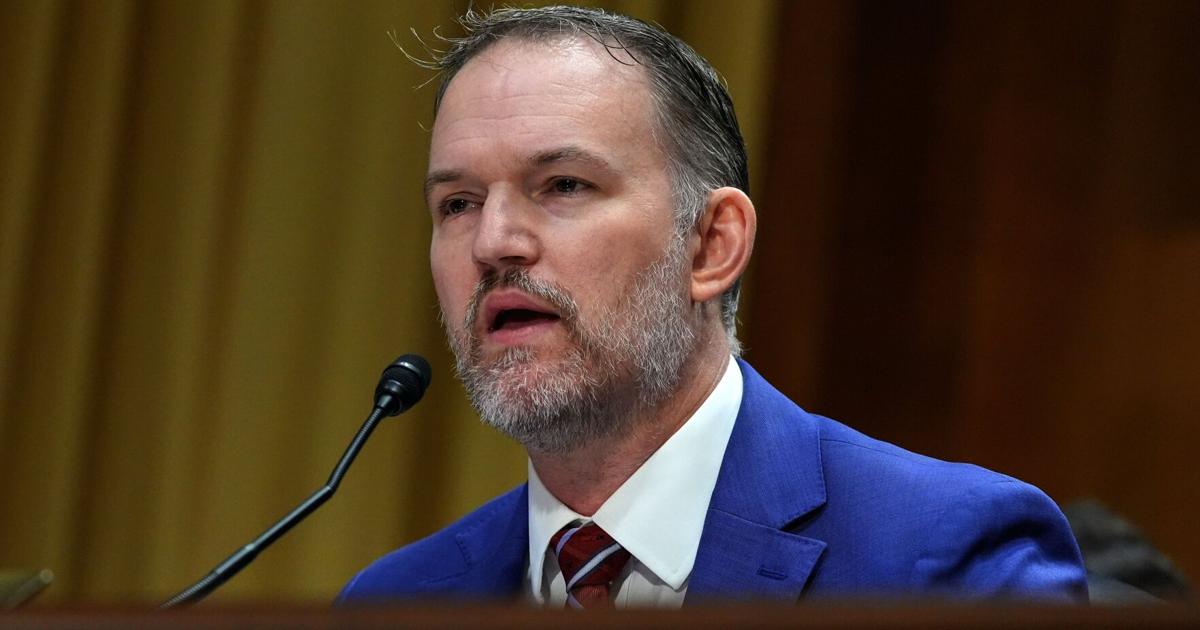
United States Trade Representative Jamieson Greer, testifies on Capitol Hill, Wednesday, July 22, 2026, in Washington.
OTTAWA — Nearly one in six products captured by U.S. President Donald Trump’s latest tariff spree are goods Canada doesn’t export to the United States, Canadian officials recently told Ottawa’s economic advisory council — something experts say may shed light on the thinking behind Washington’s strategy.
Jean Simard, head of the Aluminium Association of Canada and a member of Prime Minister Mark Carney’s Canada-U.S. advisory council, told the Star on Tuesday that officials conveyed to members that 85 of the 555 targeted products are goods Canada does not sell to the United States.
For Simard, that was evidence that Trump’s newest trade escalation had “all the makings” of a pressure tactic designed to squeeze Canada further.
A spokesperson for Canada-U.S. Trade Minister Dominic LeBlanc wouldn’t share the list of products with the Star, only writing in a statement that LeBlanc and United States Trade Representative Jamieson Greer had spoken on Tuesday and would continue discussions.
An independent analysis of U.S. trade data also found at least 40 products on the list that recorded no Canadian imports in one or both of the past two years.
President Trump invoked a 1930s trade law to hit $20 billion in Canadian goods with 50% tariffs over ongoing trade disputes.
“This (move) is not a laser-focused, highly strategic, hit them in the underbelly where it’ll really pinpoint hurt,” said Jennifer Robson, an associate professor of political management at Carleton University who conducted the analysis.
“To me, there’s stuff in here that even if we do make it, even if we are exporting it to the United States, it’s a fairly scattershot list,” Robson added. “This is (about), how do we generally gum up the trade relationship at the border and create a lot of uncertainty.”
Trump on Monday slapped 50 per cent tariffs on a wide range of Canadian goods normally shielded by the Canada-U.S.-Mexico free trade agreement, with the duties set to be applied on Aug. 19.
His administration imposed the tariffs under an obscure section of the U.S. Tariff Act of 1930, arguing that the move was necessary to counter “discriminatory” trade practices Canada has undertaken targeting American autos and alcohol since Trump initiated a trade dispute last year, and to address long-standing irritants around Canadian dairy.
The escalation is estimated to impact about $28 billion, or five per cent, of goods exported annually south of the border.
The list includes politically sensitive products such as alcohol and dairy and products from sectors including forestry and electronics manufacturing. It also appears to focus on provinces that pulled U.S. liquor from store shelves. Yet questions remain about why many items were included.
“Some of this is not just bluster,” said Unifor union national president Lana Payne.
That doesn’t mean the broader move isn’t “outrageous,” she said.
Natural sponges of animal origin; gelling agent agar-agar; a rare essential oil derived from irises; and whole bovine skins or hides are among Robson’s list of products that were caught up in the latest round of tariffs but did not account for any Canadian exports to the U.S. in 2025.
International trade lawyer Lawrence Herman said the lack of legitimacy behind Trump’s escalation is “appalling.”
However, despite the seemingly haphazard nature of the list, which also includes products like horsehair and flower bulbs, Herman said he believes the conscious targeting of certain provinces and sectors shows the slate was carefully curated.
“They have a lot of people digging into this matter, and they’ve devised the list accordingly,” Herman said.
“My view is you can’t trust the U.S. Their signature on a trade deal isn’t worth very much, and what we’re looking at in the future is basically a shifting, unstable relationship,” Herman said.
Prime Minister Mark Carney and Canada’s provincial and territorial premiers speak with reporters following the First Ministers’ Meeting in Charlottetown, P.E.I.
Payne echoed Carney by saying Canada must get to the negotiating table, and then consider further action if the tariff orders aren’t rescinded next month.
“Stand firm, hold the line, no more concessions, and let’s see if we can’t get this worked out. If we can’t, and in 28 days we are facing a slew of more tariffs from the United States … then Canada is going to have to make a different decision, and that means it’s going to have to be ready and willing to use other leverage to push back,” said Payne, who also sits on Ottawa’s Canada-U.S. advisory council.
On Wednesday, Greer defended Trump’s actions, telling the U.S. Senate finance committee that the president’s trade policy “was characterized by a national emergency, a $1.2-trillion trade deficit.”
“That national emergency still persists, and so our policy remains the same. The specific authorities this administration is using have changed, but the trade strategy has not. We are committed to continuing to use tariffs and to negotiate deals to support the reindustrialization of our economy, protect American workers, and increase their wages and shrink our trade deficit,” Greer said.
Democratic Sen. Ron Wyden, a senior member of the committee, said Wednesday that the Trump administration had “lost the plot” on its tariff strategy, referencing Monday’s orders against Canada.
Wyden introduced a bill in the Republican-controlled Senate on the same day, seeking to constrain Trump’s authority over tariffs and give the U.S. Congress more power over trade policy.
Error! Sorry, there was an error processing your request.
There was a problem with the recaptcha. Please try again.
You may unsubscribe at any time. By signing up, you agree to our terms of use and privacy policy. This site is protected by reCAPTCHA and the Google privacy policy and terms of service apply.
Raisa Patel is an Ottawa-based reporter covering federal politics for the Star. Follow her on Twitter: @R_SPatel.

