One of the 'World's Oldest Babies' Has Just Been Born - Newsweek
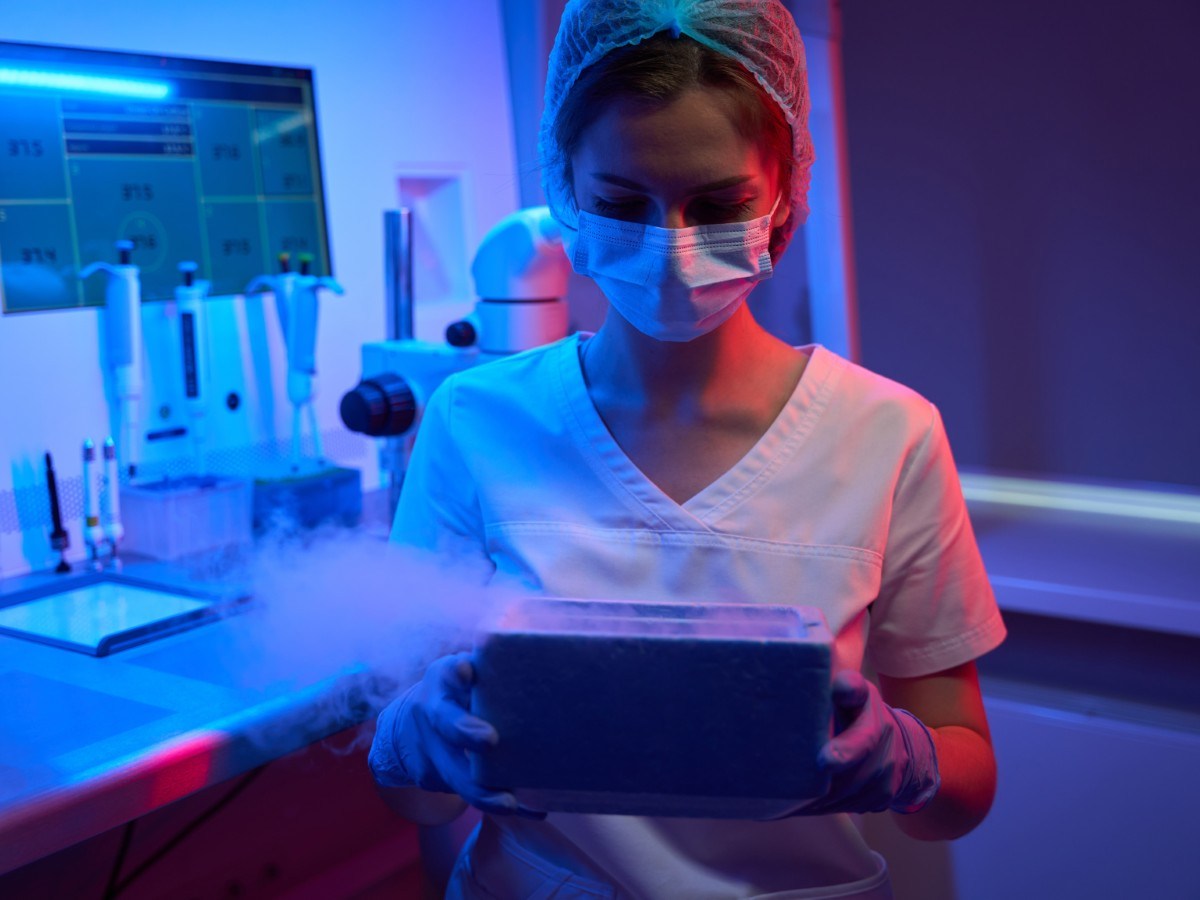
A 54-year-old woman has given birth to a healthy baby girl after in vitro fertilization (IVF) from an embryo that had been frozen 22 years before, according to an Instagram post shared by Genesis Athens Clinic on Wednesday.
Christina Rapti-Tzelepi gave birth to her daughter after her son, who was born from the same batch of frozen embryos, died in a tragic car accident in October 2025, at the age of 21, according to local news reports.
The embryos had been frozen on March 17, 2004, and in December 2025, Rapti-Tzelepi underwent IVF treatment with those embryos, the clinic said. At 54, she was the maximum age allowed in Greece for a woman to have IVF.
Rapti-Tzelepi's husband, Konstantinos Raptis, said in a letter, seen by local news outlets: "In 2025 our lives changed forever. The loss of our 21-year-old child left a void that no words can describe. Our house was filled with silence and time seemed to have stopped."
"In this darkness we decided to hold on to something that had been left behind in time: the embryos we had cryopreserved in 2004," he said. "Twenty-two years later, we went back to the beginning, this time with all the weight of loss, but also with a small, persistent hope."
The woman's gynecologist Dr. Konstantinos Pantos, who is also Secretary General of the Greek Society of Reproductive Medicine told Newsweek that the birth was a "deeply moving moment, both scientifically and personally." He said the baby girl was born at 39 weeks and two days, and weighed 3,490 grams.
He said the scientific team of Genesis Athens Clinic has "already collected the clinical and laboratory data from this case and will submit them for publication in an international scientific journal."
Konstantinos Raptis also said in a statement seen by local news outlets that the family was in a "race against time" to see the pregnancy through. "My wife reached, quite literally, the very limits of the age restrictions imposed by the existing legislation," he said.
He has called for the national IVF age limit to be lifted, saying that "older women have an immeasurable capacity to offer mature, conscious and unconditional love, as well as a stability that no statistic can ever fully measure." The family reportedly would like to have another child—and have nine more frozen embryos—but are unable to under the current law.
Pantos also said in a statement released on Instagram: "The birth of Christina Rapti-Tzelepi's daughter is a particularly important clinical and scientific development."
"At the same time, it is a story of endurance, love and hope, which we approach with absolute respect on the personal journey of the family," he said. "Medicine must function with rules and safety, but also with humanity."
He told Newsweek that Greece "currently sets a strict maximum age of 54 for IVF, with no case-by-case exceptions," and that "while literature associates advanced maternal age with increased perinatal risk, this outcome reminds us that individualized medical evaluation, cardiovascular health, uterine condition, and overall physical well-being, assessed case by case, rather than rigid, horizontal chronological age limits, should inform clinical decision-making."
Newsweek has the clinic via email for comment.
In July 2025, Lindsey, 35, and Tim Pierce, 34, welcomed their son, Thaddeus Daniel Pierce, a baby boy born in Ohio from an embryo that had been frozen around 31 years before, which reportedly set a new world record.
The couple had been trying to have a baby for seven years before deciding to adopt an embryo from Linda Archerd, 62, who had frozen her embryos in 1994.
Before Thaddeus' birth, it was believed that the longest an embryo had been frozen for prior to a successful birth was 30 years—a record held by a pair of twins born in 2022 to a couple in Oregon from embryos frozen in 1992. The twins were Lydia Ann and Timothy Ronald Ridgeway, born to Rachel and Philip Ridgeway.
Prior to that, the record was believed to have been held by Molly Gibson, who was born in 2020 from an embryo that had been frozen for nearly 27 years.
Update 9/11/26, 3:41 a.m. ET: This article has been updated with comment from Dr. Konstantinos Pantos.
Contact Newsweek editors on this story: Kara Dolman, Emma Lee-Sang and Tony Phillips.