One Sugar Found in Red Meat Was Linked to a 63% Higher Diabetes Risk - Newsweek
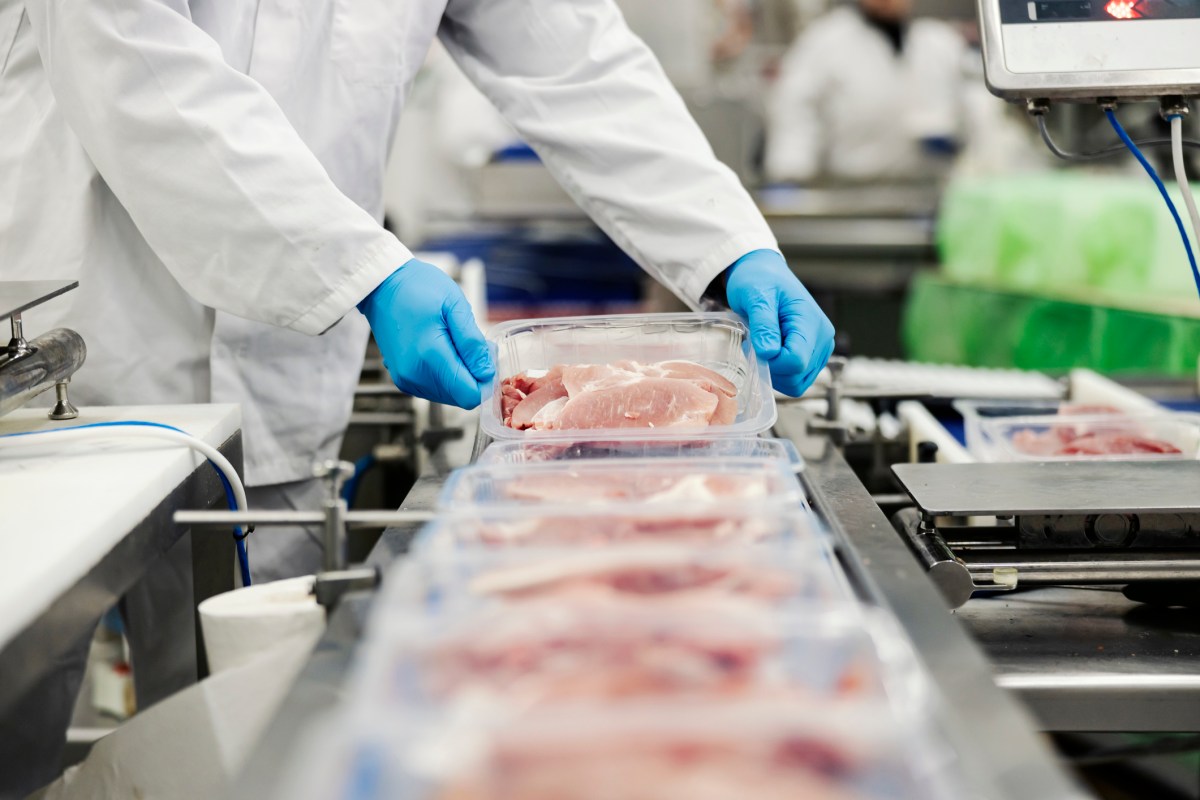
A sugar found naturally in red meat may help explain why high consumption of the food has long been linked to an increased risk of type 2 diabetes, according to new research.
Preliminary results of an observational study presented at the annual meeting of the European Association for the Study of Diabetes (EASD) in Milan, Italy, September 28–October 2, found that people with the highest intake of a sugar called N-glycolylneuraminic acid (Neu5Gc) had a significantly greater risk of developing type 2 diabetes than those consuming the least.
Researchers analyzed data from 89,953 adults taking part in France's NutriNet-Santé study, a long-running project investigating links between diet, lifestyle and health. Participants did not have type 2 diabetes or cancer when they joined the study and were followed for a median of 7.2 years.
Lead author Dr. Leopold Fezeu of Université Sorbonne Paris Nord in Bobigny, France, told Newsweek: “As is often observed with high red meat consumption, participants with the highest meat-derived Neu5Gc intake had a somewhat less favorable profile at baseline: slightly higher body weight, more frequent hypertension and blood lipid disorders, lower overall diet quality, and more smokers.
“This is precisely why we accounted for these factors in our analyses, including pre-existing hypertension and lipid disorders, family history of diabetes, lifestyle and diet quality.”
The link between higher Neu5Gc intake and type 2 diabetes remained significant after accounting for body weight and when early diabetes cases were excluded.
However, Fezeu noted that some participants may have already had prediabetes at the start of the study, and unmeasured lifestyle factors could have influenced the findings, meaning further research is needed to confirm the results.
Neu5Gc is a sugar naturally produced by most mammals and is found mainly in red meat, particularly beef and lamb, and in smaller amounts in dairy products. Humans cannot produce the sugar themselves because of an ancient genetic mutation.
Scientists say that when people eat foods containing Neu5Gc, the compound can be absorbed into the body and trigger an immune response because it is recognized as a foreign molecule. This ongoing immune activity has previously been linked to conditions including cardiovascular disease and cancer.
To investigate whether Neu5Gc could also play a role in diabetes, researchers estimated participants' intake using detailed dietary records and a database measuring the Neu5Gc content of different foods. Participants were then divided into five groups based on their intake of meat-derived Neu5Gc.
During the study period, 966 participants developed type 2 diabetes.
The analysis found that people in the highest Neu5Gc intake group had a 63 percent higher risk of developing type 2 diabetes than those in the lowest group, even after accounting for age, sex, physical activity, smoking, overall diet quality and existing health conditions.
Researchers also found a dose-response relationship, meaning the risk increased as Neu5Gc intake rose. People in the second-highest intake group had a 41 percent greater risk of developing type 2 diabetes compared with those in the lowest group.
Fezeu said in a statement that the findings support the idea that chronic inflammation may be one mechanism linking red meat consumption and type 2 diabetes.
"Our findings support chronic inflammation as a specific mechanism linking red meat consumption with T2D, partly beyond the amount of red meat a person eats and partly independent of body fat," Fezeu said.
The association remained significant after researchers considered body mass index (BMI), although it became weaker. The team estimated that obesity accounted for about 13 percent of the link between meat-derived Neu5Gc and diabetes risk, suggesting other biological mechanisms may also be involved.
London-based Dr. Flora Bailey, a general practitioner and metabolic expert who was not involved in the study, told Newsweek that the research is “interesting.”
“It gives us another possible explanation for the link we've previously seen between red meat and metabolic health,” she said. “The idea that our immune response to Neu5Gc could contribute to inflammation is certainly worth investigating further.”
However, she cautioned against drawing firm conclusions from the findings.
“The study is in its early stages, and for me the real value is that it gives researchers another avenue to explore rather than providing a definitive answer.”
When researchers adjusted for total red meat consumption, the association weakened and was no longer statistically significant. They said this suggests Neu5Gc may explain part, but not all, of the relationship between red meat and type 2 diabetes.
The study found no association between Neu5Gc obtained from dairy products and diabetes risk. However, people with the highest total dietary intake of Neu5Gc had a 37 percent higher risk of developing type 2 diabetes than those with the lowest intake, an association researchers said was largely driven by red meat consumption.
The researchers stressed that the findings are preliminary and have not yet been finalized or independently validated. Because the study was observational, it cannot prove that Neu5Gc directly causes type 2 diabetes. They also noted that unmeasured lifestyle and social factors may have influenced the results and that estimating Neu5Gc intake from dietary records could have introduced some inaccuracies.
Fezeu said future studies should investigate whether reducing exposure to Neu5Gc-rich foods, such as beef and lamb, could help lower diabetes risk and further explore the biological mechanisms behind the association.