Operation Prosper: 20 firearms recovered amid 2,570 drug-possession arrests - IOL
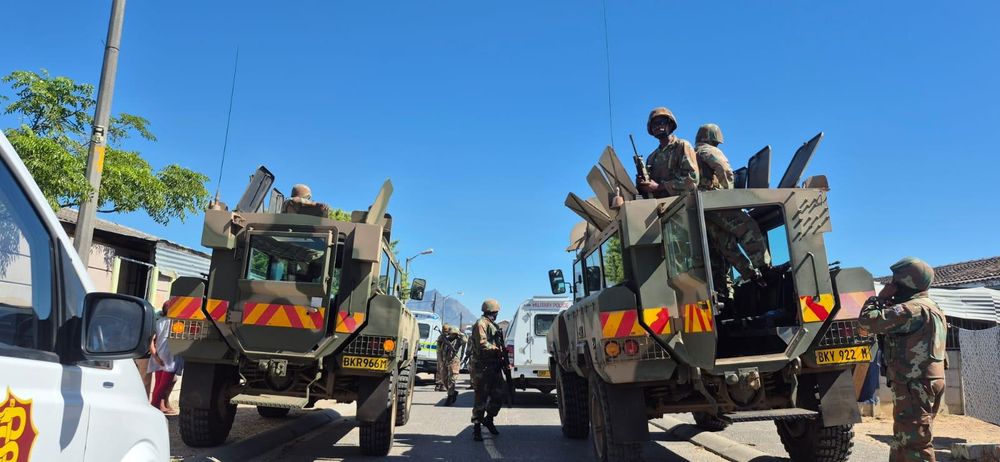
Only 20 illegal firearms were recovered across 17 Cape Flats gang hotspots during April under Operation Prosper, despite some of the city’s most gang-ravaged communities continuing to record dozens of murders.
The figures have raised questions about whether the costly SANDF-backed operation is reaching the gang bosses, gun suppliers and drug networks driving the violence, or whether it is relying too heavily on thousands of low-level drug possession arrests.
DA NCOP member Nicholas Gotsell had asked the Acting Minister of Police what measurable successes SAPS had achieved in the 17 identified gang hotspots between April 1 and 30 during the SANDF deployment.
The response shows that police made 2,570 arrests for possession of drugs and 135 for dealing in drugs.
By comparison, there were only 20 arrests for illegal possession of firearms, three for murder and six for assault with intent to cause grievous bodily harm.
Police recovered just 16 handguns and four homemade firearms during the month, along with 200 rounds of ammunition and eight magazines.
The figures come against a grim crime picture.
Between April and June 2026, 1,071 people were murdered in the Western Cape.
Several Cape Town precincts affected by gang violence remained among the worst-hit, with Mfuleni recording 73 murders, Nyanga 56, Delft and Philippi East 53 each, Harare 49 and Khayelitsha 44.
Against that backdrop, the recovery of only 20 firearms across 17 gang hotspots has sharpened questions about whether the operation is reaching the people supplying the guns used in shootings and gang murders.
Gotsell said the arrest figures themselves also deserved closer scrutiny.
“Of the roughly 2,800 arrests reflected in the Minister’s table, 2,570 were for drug possession. That is approximately 91%. There were almost 20 possession arrests for every one drug-dealing arrest,” he said.
“That cannot be the principal yardstick by which we measure the success of a major SANDF-supported anti-gang operation.”
Gotsell said the purpose of deploying soldiers to the Cape Flats was not simply to arrest people found carrying drugs, but to help restore stability and disrupt the organised criminal networks fuelling the violence.
He said the Minister’s response did not indicate how many gang bosses had been arrested, how many senior gang figures had been prosecuted or how many drug and firearm supply networks had actually been dismantled.
“That is the difference between policing symptoms and dismantling the criminal enterprise,” he said.
Gotsell also wanted to know how many of the arrests listed in the parliamentary response can directly be attributed to Operation Prosper, and how many may have resulted from ordinary SAPS operations or other law-enforcement agencies operating in the same areas.
Community Safety Portfolio Committee chairperson Ian Cameron said the cost of the deployment made those questions even more important.
“Operation Prosper is costing the public a significant amount of money. The question is whether it is actually delivering results that justify that cost,” Cameron said.
“Every legitimate arrest matters, but an extraordinary deployment cannot be judged primarily by high numbers of low-level street arrests. The real test is whether it is dismantling the criminal networks driving gang violence.”
Cameron said there also needed to be a clear breakdown showing which successes were achieved by SAPS, the SANDF, City of Cape Town LEAP officers or Metro Police.
“We should not count work already being done by existing law-enforcement partners as proof of the additional value of an expensive deployment,” he said.
He said the deployment should allow Crime Intelligence, the Anti-Gang Unit, detectives, the Hawks and prosecutors to move higher up the criminal chain.
“I would rather see fewer arrests if they are intelligence-led, prosecution-guided investigations that put major gang figures behind bars and dismantle their networks,” Cameron said.
He said authorities should disclose how many high-value targets had been arrested, how many organised-crime cases had been enrolled for prosecution, how many recovered firearms had been linked to murders and shootings, and how many supply networks had been identified.
The Minister said Crime Intelligence was gathering and analysing information relating to gang movements, retaliatory attacks, illegal firearms, drug trafficking networks and wanted suspects.
But Cameron said the public now needed to see what that intelligence was producing.
“If this extraordinary expenditure is not producing extraordinary results against the kingpins and criminal networks driving the violence, then we have to seriously question whether it represents value for money.”