Parliament raises concerns over R2.2 billion redevelopment of Telkom Towers - IOL
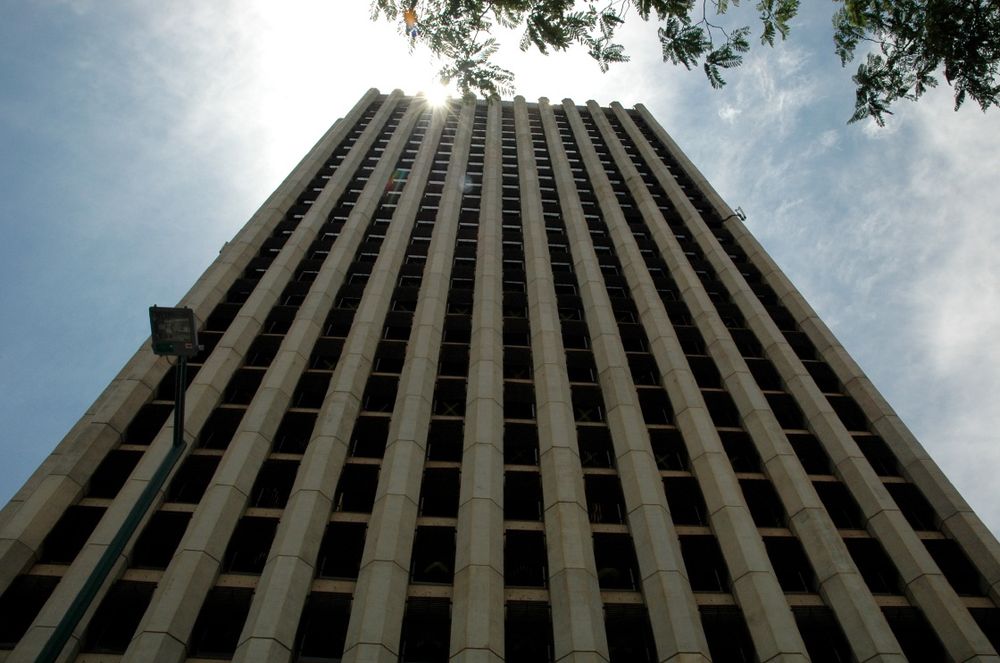
A R2.2 billion plan to redevelop Telkom Towers in Pretoria has come under scrutiny, with Parliament warning that government must account for losses already incurred before committing to another major investment in the complex.
Public Works and Infrastructure Minister Dean Macpherson said the department would issue a Request for Information to test private-sector interest in the redevelopment, which is estimated to cost between R1.8 billion and R2.2 billion.
Macpherson said the project would involve the refurbishment of all nine buildings under a rehabilitate-operate-transfer model.
“Once completed, the Department will have 106 000m2 of gross leasable area that can be used to maximise state revenue either by existing clients or new ones,” he said.
He said the redevelopment would also allow government departments currently housed in costly private leases to return to state-owned buildings and create an opportunity for Public Works and Infrastructure to provide accommodation to private-sector tenants.
Macpherson also revealed that the state had already spent about R1.4 billion acquiring, renovating and maintaining the complex, with a further R776 million in financial losses directly attributed to the historical mismanagement of the property.
The South African Police Service (SAPS) was identified as a potential user of the complex before it was transferred to the state in 2016, after the government bought it from the Telkom Retirement Fund following Telkom’s move to Centurion.
The North Tower was later earmarked for SAPS. In 2024, Parliament said about 90% of renovations had been completed, yet the building remained uninhabitable.
In August, the committee again raised concerns over SAPS’s failure to fully occupy the complex, saying the department had previously indicated that it did not intend to occupy the building. It also questioned the continued cost of private leases while state-owned buildings remain vacant or underused.
Portfolio Committee on Public Works and Infrastructure chairperson Carol Phiri said the losses linked to the property must be accounted for.
“We must work according to the law and the Constitution. The Public Finance Management Act (PFMA) is clear. Where the state has suffered losses in the procurement of assets, those losses must be determined, the money must be recovered and the people responsible must be held to account,” Phiri said.
She said the committee had repeatedly requested a forensic investigation into Telkom Towers and had raised concerns that the matter had not been brought to finality.
“Redevelopment cannot be used to distract from accountability,” Phiri said, insisting that losses must be quantified and recovery processes started before the new model is advanced.
The committee also said Parliament must be given the information needed to assess the proposed partnership and exercise its oversight role.
South African Property Owners Association chief executive Neil Gopal said the redevelopment could make commercial sense, but only if government established that the project was financially viable and supported by sufficient market demand.
“The committee tasked with this project should have done its full analysis on the financial impact and feasibility of this redevelopment,” Gopal said.
He said the financial model would likely be governed by National Treasury guidelines and recommendations on public-private partnerships, adding that public assets needed to be put to adequate use to generate revenue for the state.
Gopal added that the approach was not new, pointing to Intersite, a state-owned entity, which he said had successfully implemented a similar model during the 1990s.
“A market study of whether the precinct or node requires more commercial use would also be needed,” he added.
Gopal said government should also examine the return on investment and consider whether the redevelopment should be undertaken in phases.
“Generating revenue to reduce the ongoing costs would be essential to its success,” Gopal said.
Macpherson said the Request for Information (RFI) would test the project’s commercial viability and bankability, including funding assumptions and conditions for private-sector participation. It would also assess risk allocation, affordability and value for money, as well as operations, maintenance and long-term asset performance.
The department has also indicated that Public Works House and the Central Government Offices could form part of a broader precinct-scale approach during the feasibility process, although they remain separate from the Telkom Towers base project.
The RFI will be followed by a Request for Qualification process to identify companies with the technical and financial capacity to undertake the redevelopment, before qualifying bidders are invited to submit proposals.