Patrick Clancy talks about grief, forgiveness and the future with ‘60 Minutes’ after Lindsay Clancy mistrial
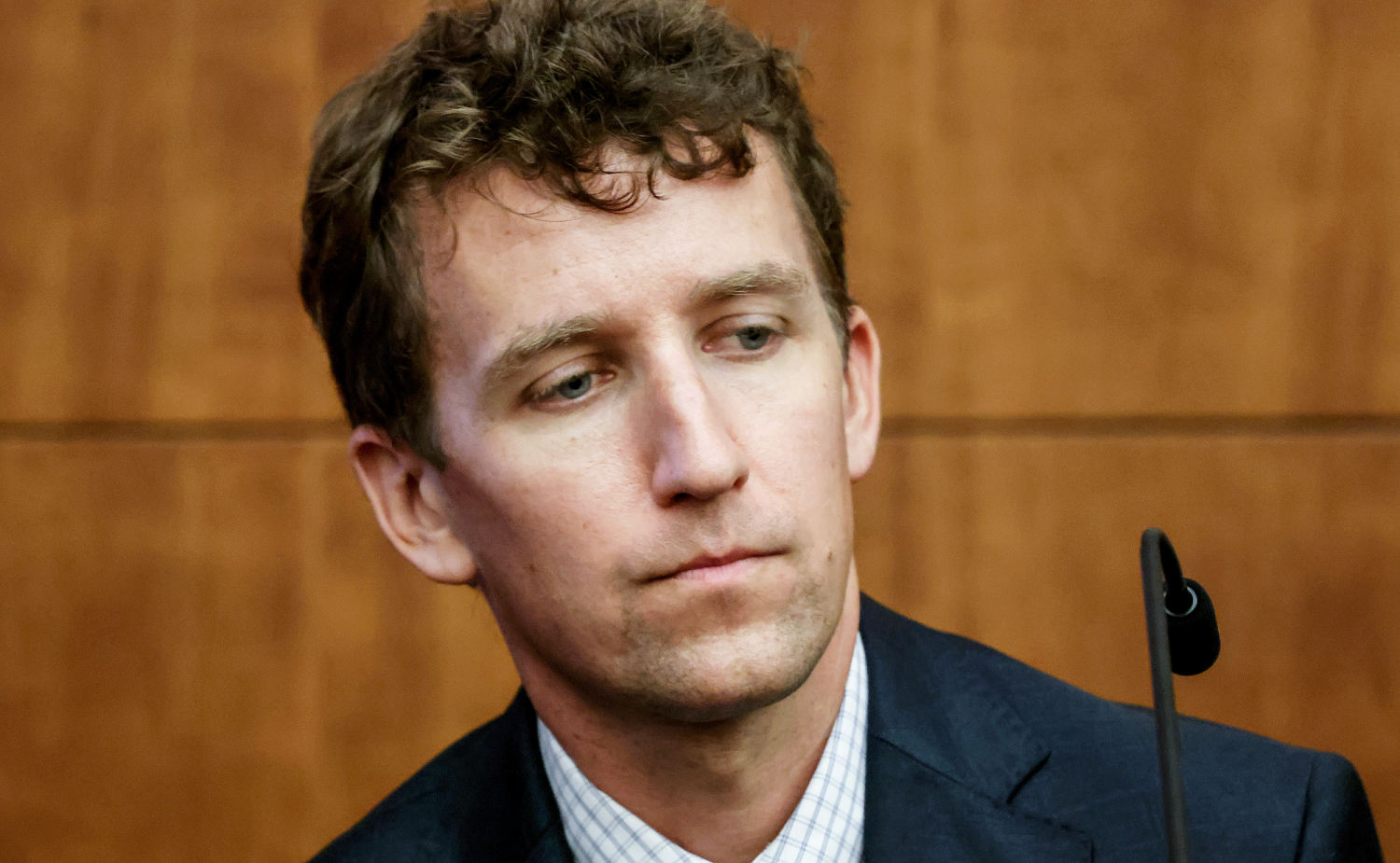
Patrick Clancy on the stand.David L. Ryan / The Boston Globe via Getty Images fileShareAdd NBC News to GoogleSept. 20, 2026, 9:47 PM EDTBy Marlene Lenthang and Phil HelselIn his first interview since his ex-wife’s trial, Patrick Clancy opened up about his grief at losing his three children and said that he tried his best before the tragic killings in Massachusetts.
“I think I did the best I could with what I had at the time,” he said in an interview with CBS’ “60 Minutes” that aired Sunday. “And I live with the outcome. I live with it every day.”
Lindsay Clancy, 36, sought treatment for depression and was hospitalized before she killed their three children Cora, 5, Dawson, 3, and Callan, 8 months, in January 2023.
Her high-profile murder trial, which ended with the jury split 11-1 and a mistrial declared on Sept. 4, centered on a defense that argued she was not criminally responsible in their deaths because she was suffering with postpartum psychosis.
Patrick Clancy said he did not know much about postpartum illness before.
“I could piece together what it was like to be really, really anxious or depressed. But I didn’t know how to manage a postpartum illness,” he said.
“I think mental illness has this ability to be tragically deceptive,” he said. “So I’m sure there are things that I didn’t see.”
Clancy had testified during the trial.
He took the stand for two days, recounting the horrors of the evening of Jan. 24. He described running errands at his then-wife’s behest, only to return home to find her with cuts to her neck and wrists after throwing herself out their bedroom window in a suicide attempt. In the basement, he found his children with exercise bands around their necks.
Patrick Clancy is sworn in at Plymouth Superior Court in Plymouth, Ma., on July 29, 2026.David L. Ryan / The Boston Globe via Getty Images filePatrick Clancy, who has since remarried, said on “60 Minutes” that he asked Lindsay Clancy if she remembered what happened.
“She said it was like a dream. And she remembered it much in the way you would remember after waking up,” he said.
He said the news headlines depicting “killer mom,” and “monster” were not accurate.
“I believe that it was her mental illness that caused that,” he said.
After finding his children in the basement, he hoped Callan might survive. The infant had been airlifted to a Boston hospital after the two others were found dead, and Patrick Clancy said he was told doctors were able to re-establish a heartbeat.
“That night, I really thought there was a chance that Callan would live,” he said.
“And I remember just thinking: Just give me one. Just give me one kid,” Clancy said. “And I would raise him as best I could. I would give him the best life I possibly could. I’d tell him about his brother and sister. And I was holding out hope for that.”
“And then when I got to the hospital, I saw the doctor and I saw the look on her face, and I knew it wasn’t going to be a good prognosis,” he said.
Clancy spent four days with his injured son at the hospital, time for which he said he grateful. He said he was able to lay next to his child and hold him, and his son died in his arms.
The highly-watched trial spawned a maelstrom of conspiracy theories, some going as far as accusing Patrick Clancy of committing the murders.
“It’s deeply harmful to the legacy of my children,” Clancy said in the “60 Minutes” interview. “It is a huge distraction from what really matters here, which is perinatal mental health, and it’s done real harm to real people.”
Lindsay Clancy’s defense attorney Kevin Reddington also rejected those conspiracy theories, telling NBC News, “it’s readily apparent that Patrick has been set upon and his life has been turned upside down into a nightmare that he doesn’t deserve. Period. Full stop.”
Patrick Clancy’s lawyer also slammed “so-called influencers and outright conspiracy theorists” who have published “what they know to be outright falsehoods that Patrick was somehow involved in the death of his young children and other vile claims.”
The attorney said “every appropriate measure will be pursued to hold them accountable, including legally.”
Patrick Clancy said that the online rumors and comments and conspiracy theories were hurtful.
“It’s painful to see, and it makes it difficult to be in public,” he said in the interview. “And it’s possible that some of those people, after seeing lie after lie after lie, they start to believe it. And that’s what we’re left with.”
Lindsay Clancy and her attorney Kevin Reddington listen as the judge declares a mistrial in her murder trial in Plymouth, Mass., on Sept. 4. Greg Derr / Pool AFP via Getty Images fileWhat happened in the trialDuring his testimony, Patrick Clancy described how wife’s mental state deteriorated despite meeting with psychiatrists, and changing medications and doctors. He said he had never seen Lindsay harm their children before.
He testified that earlier on the day of the killings, Lindsay appeared to be “having one of her best days.” She had taken her daughter Cora to a doctor’s appointment, and later built a snowman with the children.
Lindsay Clancy’s defense didn’t deny that she killed her children. Her attorney argued she was not criminally responsible in their deaths because she was suffering with postpartum psychosis, a rare condition that can alter a new mother’s sense of reality and is considered a psychiatric emergency.
Clancy claimed she heard a voice commanding her to kill her children, according to testimony at trial.
The prosecution had argued she was not suffering from psychosis and was deliberate in planning the killings and in sending her then-husband out on errands while she killed her children.
After the killings, Patrick Clancy had publicly issued a statement of support for his then-wife, saying she was kind and loving, and wishing for her to find peace. Asked on “60 Minutes” whether Lindsay Clancy had ever asked for forgiveness, Patrick Clancy said, “No. But I gave it to her.”
After the tragedy in Duxbury, a town of just 16,000 where he and his family lived, Patrick Clancy moved to New York City to seek a degree of anonymity.
On what would have been Callan’s first birthday, he went into St. Patrick’s Cathedral in Manhattan, lit a candle “and I said, ‘I love you, buddy.’”
“And I walk out on Fifth Avenue, and I start crying my eyes out,” he said. “And nobody cared.”
“I thought, ‘this is where I need to be. I can grieve,’” he said.
He met Dr. Rachel Danis in a running club and the two got married in April and are starting a family, they said on the program.
“I always try to take some of the weight from Pat,” Danis said on the news show. “I know I can’t fix — I can’t bring his kids back, but if I can honor them and allow Pat to grieve but also just continue to honor them in the present, I guess that’s all I can do.”
Clancy said he plans to tell his new family about the children that he lost.
“I think every parent can agree: You have different relationships with your kids, but they’re all your kids,” he said. “And I can’t wait to tell them about their brothers and sister.”
If you or someone you know is struggling or in emotional distress, call or text 988, or chat at 988lifeline.org 24/7, to reach the 988 Suicide & Crisis Lifeline. For additional resources, visit SpeakingOfSuicide.com/resources.
Marlene Lenthang is a breaking news reporter for NBC News Digital.
Phil HelselPhil Helsel is a reporter for NBC News.