Petrol subsidy puts govt, IMF at odds
Direct Source Verification:
This story is aggregated from The Express Tribune (tribune.com.pk). Full reporting rights and copyright belong to the primary publisher.
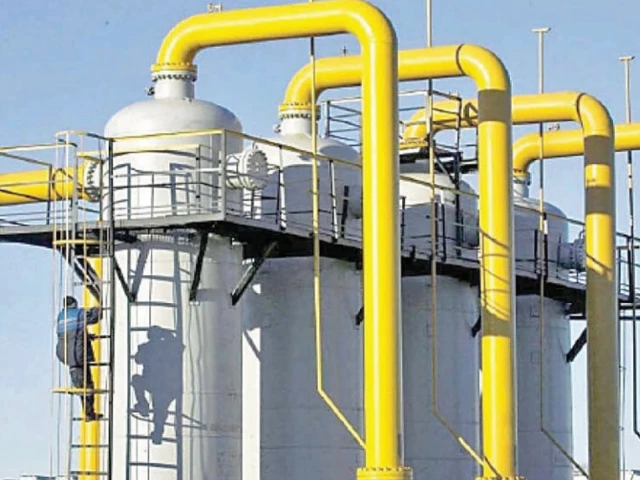
Deadlock persists over writing off Rs1.4tr receivables of gas firms
Talks between Pakistani authorities and the International Monetary Fund (IMF) hit a deadlock over fuel prices and writing off Rs1.4 trillion receivables of gas companies as the global lender reiterated to waive payments and give any subsidy through a targeted mechanism.
However, despite reservations there were no chances that the government would prematurely end the fuel compensation scheme for motorcyclists and small-car owners but its extension beyond three months may not be possible, the authorities said on condition of anonymity.
They said that the IMF was of the view that the actual fuel compensation cost may be higher than Rs75 billion for the three-month period. Likewise, the Pakistani authorities have not yet accepted the IMF's stance to write off the recoverable receivables of Sui gas distribution companies due to its implications for the gas distribution and exploration firms.
A detailed meeting on the gas-sector circular debt management plan is expected to take place next week after the earlier scheduled meeting was postponed. The IMF mission is holding discussions with various ministries as part of the fourth review of the $7 billion loan package and Article-IV consultations.
Sources said that during this week's meeting there was no clear consensus between the Pakistani authorities and the IMF team over a couple of issues related to the petroleum sector. The IMF was appreciative of the reforms introduced in the gas sector, particularly the reduction in the unaccounted for gas and stemming the flow of debt but it had divergent views on the two critical issues, they said.
Sources added that the Petroleum Division was of the view that the current fuel prices were unfair for the consumers. Its argument was that the imported cost of petrol before any tax and margin was roughly Rs250 but the consumer was paying Rs390 per litre after adding taxes.
Cost breakdown was shared with the IMF. In addition to the imported petrol price of Rs250, the government was charging taxes of nearly Rs110 per litre and added Rs27 per litre on account of various margins. Sources said that the IMF's mission was of the view that setting the priorities was the responsibility of the government. Under the commitment, Pakistan has assured the IMF that it will "refrain from introducing any fuel subsidy or cross-subsidy scheme". But the commitment was breached last month and the IMF wanted to rectify it.
During the staff-level meeting, the IMF again pressed to give only targeted subsidies. Sources said that the IMF reiterated that the government should write off receivables of the gas-sector companies due to the delay in making payments. But the Petroleum Division did not agree, saying the federal government could not go back from its commitments to the gas distribution and exploration companies.
Sources said that the Petroleum Division through the Finance Division had requested another meeting with the IMF team before the start of review talks on the circular-debt management plan. But the finance ministry could not ensure the meeting. In the last meeting, the IMF had asked Pakistan to write off the inter-corporate debt and waive late-payment surcharges estimated at Rs1.7 trillion.
To resolve the issue, Prime Minister Shehbaz Sharif had constituted a committee on implementing structural reforms in the petroleum sector. The government had held various meetings with the IMF from March to July but no solution could be found. The IMF has expressed reservations about using Rs850 billion worth of dividends of the gas companies to settle the debt and said that it was not fiscal neutral.
Pakistan had asked the IMF to suggest an alternative but a meeting with the fiscal affairs department of the IMF could not take place due to the finance ministry, said sources. One of the options was to increase prices but the government did not support such a proposal as it would directly affect all consumers, irrespective of income levels.
The Petroleum Division has proposed that the circular debt, estimated at Rs3.6 trillion, should be settled through tariff differential claims of Sui gas companies, which will pay off OGDC, PPL and GHPL.
The plan seeks a net cash injection in the companies while incorporating cash-flow projections and contractual obligations of the firms. It has been proposed that incremental dividends should be utilised only for OGDC, PPL and GHPL owing to major shareholdings of the government.
One of the concerns of the IMF was that how the proposal covered the leakage to non-controlling interest and minority shareholders and whether the stated coverage through additional inflows, including PDL and LNG-related savings, was realistic given previous discussions where LNG and the gas sector were framed as under severe stress.
The Petroleum Division reiterated that the underlying circularity originated from the tariff differential claims that represented a policy-driven public-service obligation, which stopped Sui companies from full-cost recovery and caused unpaid invoices. The proposal was presented as a mechanism to liquidate legacy receivables and restore credibility in the system, noting that many receivables were significantly aged and would otherwise remain impaired.
Original Source
https://tribune.com.pk/story/2632503/petrol-subsidy-puts-govt-imf-at-odds