PM Modi at BRICS summit: Dismantle ‘pyramid of privilege’ to make Global South a ‘rule-shaper’ - The Indian Express

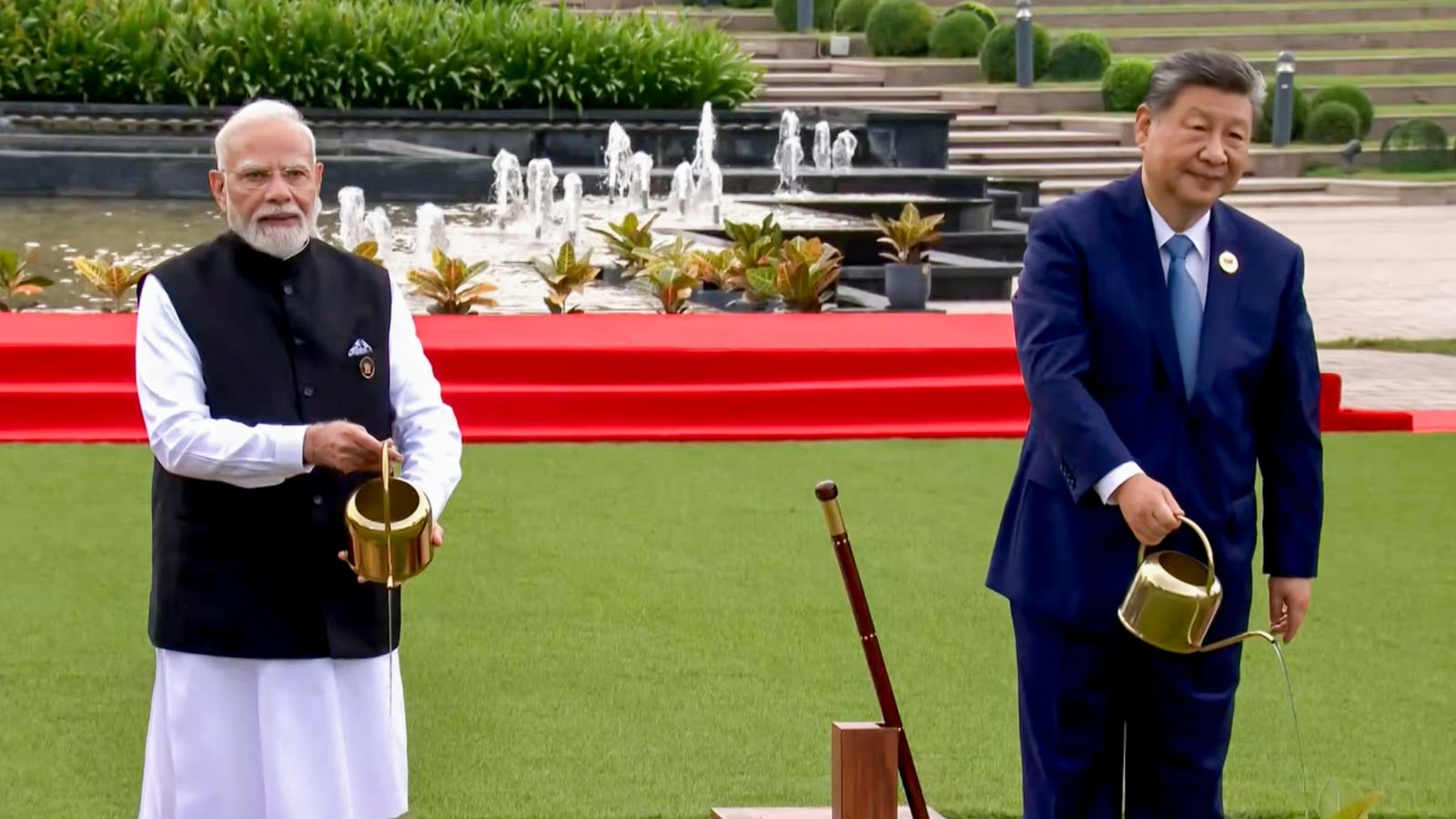
Underlining the “coming of age” of BRICS in its 20th year, Prime Minister Narendra Modi said Saturday that the grouping has carved a distinct identity for itself on the global stage and its members “respect each other’s perspectives and move forward through consensus”. He said they strive to progress “not by opposing anyone, but by taking everyone along”.
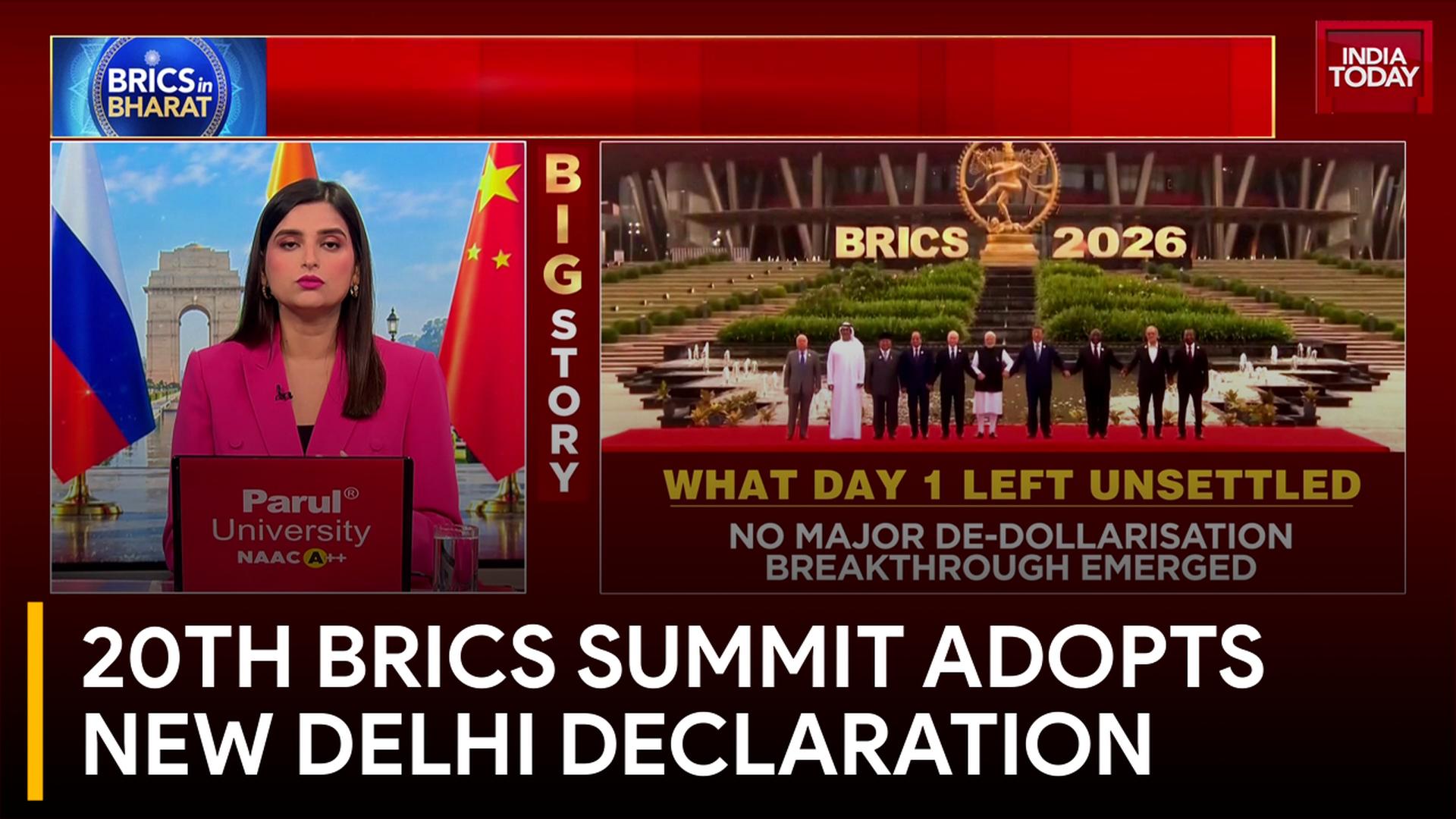
He made these remarks hours before the BRICS declaration was adopted through consensus. The UAE and Iran, at loggerheads ever since the start of the war in West Asia, came around after hectic negotiations over the last few days.
Pitching for the Global South’s presence at the table, Modi said the message from the summit hosted by India is clear: “If our future is shared, then the right to shape it must also be shared. From voice to impact. From privilege to partnership. Let this be the resolve of BRICS at 20.”
With Chinese President Xi Jinping, Russian President Vladimir Putin and Iranian President Masoud Pezeshkian among leaders at the summit, the Prime Minister said the Global South must become a “rule-shaper” and the existing “pyramid of privilege” structure in global governance must give way to a “platform of partnership”.
“In human life, the age of 20 marks the beginning of a new phase of maturity and responsibility. It is a stage where responsibilities are intertwined with dreams, and potential finds a new direction.”
“Today, BRICS, too, is at a moment of coming of age. Over the past 20 years, BRICS has carved a distinct identity for itself on the global stage. We respect each other’s perspectives and move forward through consensus. We strive to progress not by opposing anyone, but by taking everyone along,” he said.
“The time has now come for us to translate our unity and consensus within BRICS into concrete results on the global stage. We must work on a new and ambitious agenda for the next 20 years. We need to begin this process with our own working systems,” he said.
To keep track of the initiatives, the Prime Minister proposed a mechanism. “The BRICS chairship rotates annually, but this should not halt our institutional momentum. I propose a ‘BRICS Continuity and Implementation Mechanism.’ This would enable the follow-up of all initiatives and outcomes through the Troika (the troika refers to a framework comprising past, current and incoming chairs of the grouping).
We could create a secure digital repository where the nodal point, timeline and implementation status for every decision are recorded,” he said.
Proposing reforms in global governance, he sought representation for the Global South. “While strengthening BRICS, we must also chart the course for global reform. The current structure of global governance resembles a pyramid. Power and decision-making are concentrated at the top, while the countries that are affected by these decisions, yet unable to shape them, occupy the lower tiers,” he said.
“Today, the Global South stands in the front row of global crises but in the back row of decision-making. We must transform this pyramid of privilege into a platform of partnership, one where every country has a voice, every member has a stake, and human development lies at the heart of every endeavour,” he said. “I propose that we collectively formulate 10 proposals for global governance reform, aiming to shape them into a ‘BRICS Reform Roadmap’ by the next summit.”
Incidentally, the next summit will be hosted by China which has resisted India’s moves for a permanent seat at the UN Security Council.
In crafting this roadmap, Modi said, “We must focus on three key aspects: Representation, Responsiveness, and Rule-making. First, regarding representation: Reform of the UN Security Council can no longer be deferred. Text-based negotiations on this issue must be linked to a definite time frame and clear outcomes. Similarly, voting power, leadership positions and policy priorities within financial institutions must align with today’s economic realities. Nations that drive global economic growth should also play a commensurate role in steering global economic governance.”
On responsiveness, he said, “Public trust in global institutions will only be established if they prove capable of effectively resolving problems. We must focus on the speed, scale, and last-mile impact of our collective responses.”
He highlighted the plight of seafarers, many of them Indians. “Seafarers make a massive contribution to global trade, yet they often find themselves lacking support during difficult times. I propose the creation of a ‘Seafarers Emergency Support Network’. This network would link the maritime authorities and diplomatic missions of relevant countries, facilitating assistance with distress alerts, medical aid, family notifications, and evacuations,” he said.
“Third, regarding rule-making: Ensuring equal participation in defining future global rules is of paramount importance. Domains such as AI, cyberspace, outer space, biotechnology, and critical technologies are shaping not only future opportunities but also future rules.”
“We must strive to transform the Global South from a rule-taker into a rule-shaper. Through BRICS, we can provide young diplomats and policymakers from Global South nations with negotiation skills, practical training and legal expertise.”
In his address, President Xi said BRICS countries should firmly stand on the right side of history. “Xi called on BRICS countries to pioneer in innovative development, as well as in maintaining peace and stability, boosting mutual learning among civilizations, and improving global governance, noting that BRICS countries should steer the international order toward greater justice and equity, and work together to build a community with a shared future for humanity,” Xinhua reported.
Xi said that as the situation in the Middle East and the Gulf region continues to evolve, the war there has caused serious losses to people across the region and does not serve the common interests of the international community.
President Putin, according to the Kremlin, said “partnership within BRICS is consistently built on the principles of equality, good-neighbourliness, and mutual consideration of interests along with respect for one another’s cultural and civilisational diversity, history, traditions, and values. It stands to reason, then, that the credibility and influence of BRICS around the globe are steadily growing”.
President Pezeshkian, according to the Iranian embassy in New Delhi, said, “Sustainable security depends on full respect for national sovereignty and rejecting the model of security for some and insecurity for others.”
“Preventing the misuse of countries’ territories to threaten their neighbours is an inviolable principle. BRICS must stand against the normalization of attacks on civilian infrastructure and peaceful nuclear facilities,” he said.
Shubhajit Roy, Diplomatic Editor at The Indian Express, has been a journalist for more than 27 years now. Roy joined The Indian Express in October 2003 and has been reporting and writing explainers and analysis on foreign affairs for about 19 years now. Based in Delhi, he has also led the National government and political bureau at The Indian Express in Delhi — a team of reporters who cover the national government and politics for the newspaper. He has got the Ramnath Goenka Journalism award for Excellence in Journalism ‘2016. He got this award for his coverage of the Holey Bakery attack in Dhaka and its aftermath. He won the Ramnath Goenka Journalism award, 2023, for the second time for his reporting of the Oct 7 attacks on Israel and the war in Gaza. He also got the IIMCAA Award for the Journalist of the Year, 2022, (Jury’s special mention) for his coverage of the fall of Kabul in August 2021 — he was one of the few Indian journalists in Kabul and the only mainstream newspaper to have covered the Taliban’s capture of power in mid-August, 2021. ... Read More
Divya A reports on travel, tourism, culture and social issues - not necessarily in that order - for The Indian Express. She's been a journalist for over a decade now, working with Khaleej Times and The Times of India, before settling down at Express. Besides writing/ editing news reports, she indulges her pen to write short stories. As Sanskriti Prabha Dutt Fellow for Excellence in Journalism, she is researching on the lives of the children of sex workers in India. ... Read More