PRESIDENT'S SPEECH: Ramaphosa unpacks goverment's plan to fight gender-based violence and femicide - IOL
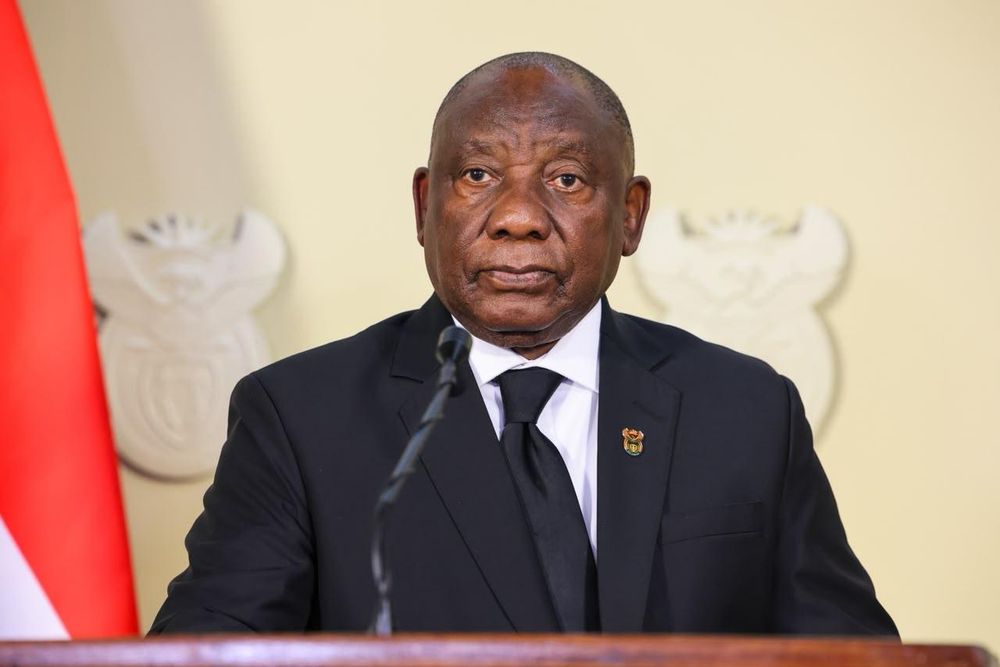
I address you tonight with the heaviest of hearts.
I speak as President of the Republic.
I also speak as a man, as a husband and as a father to daughters. But no man should look away from the violence to which women in our country are subjected.
The violence inflicted upon the women of South Africa is a source of profound pain and national shame.
The nation is angry. The women of South Africa are angry.
I share the grief at lives so cruelly and senselessly cut short.
On Sunday, the body of another woman was found in Springs.
This brings to 11 the number of women’s bodies found in Ekurhuleni since July.
Among those whose names we know are Busisiwe Mahlangu. Itumeleng Kekana. Nomfesane Mjobo. Gracious Nkomo. Elizabeth Moselakgomo. Dineo Motapane. Jabulile Ntimba. Ntombifuthi Nxumalo.
Beyond Ekurhuleni, we mourn ten-year-old Octavia Swarts from Kraaifontein.
Nomakhwezi Zitha from Delft. Taymin Platt from Eersterust. Josephine Tshabalala from Orlando East. Siyavuya Mlunguza from Komani.
Mariette Mouton, a seventy-three-year-old Bredasdorp grandmother.
Christina Nyalungu, a security officer at the University of Limpopo. Sibongile Mdali from Richmond. Fifteen-year-old Amogelang Motshwaedi from Dinokana village.
Pinky Shelembe and Ntombizana Mbanjwa from Richmond.
Amanda Kosani from Port Alfred who was killed on Women’s Day.
These are only some of the women and girls whose lives have been taken from us in recent weeks.
There are others whose names we do not yet know.
There are women lying tonight in government mortuaries waiting to be identified, waiting for someone to claim them, waiting to be taken home and laid to rest.
How can our hearts not be broken? How can we not be angry?
The violence being perpetrated against women in this country is inhuman.
Behind each of these terrible deaths was a human being – a daughter, a mother, a sister, a friend – whose life had value, whose future mattered and whose absence has left a family and a community grieving.
Across our country, women are living with the terrible fear that they may be next.
No woman should have to live with that fear.
What weighs on me most is that seven years ago, in this same month, I stood before the nation to speak about this same crisis.
Yet here we are, once more having to confront the terrible reality of violence against women in our country.
The names of the victims are new. The crime is not.
This cannot be accepted as a normal part of life in South Africa.
We must confront an uncomfortable truth.
What we have done has not been enough. We need to do much more.
It has not been enough to prevent women from being killed.
It has not been enough to make women safe in their homes, in our streets, on public transport, in workplaces and places of learning.
It has not been enough to change the attitudes and behaviour that enable violence against women.
As President of the Republic of South Africa, I acknowledge this.
Tonight, I want to update you on the killings in Ekurhuleni and on what is being done to bring those responsible to justice.
I also want to speak to you about the work we are doing as a government and as a country to end gender-based violence and femicide.
The killings of women in Ekurhuleni are receiving attention at the highest level of government and law enforcement.
The Inter-Ministerial Committee on Gender-Based Violence and Femicide has approved a comprehensive emergency response.
A specialised multidisciplinary investigation has been elevated to the national level under the coordination of the Deputy National Commissioner for Detective Services.
The investigation brings together detectives, Crime Intelligence, forensic specialists, investigative psychologists, digital investigators and other specialised capabilities.
Arrests have already been made in connection with some of these murders.
On Sunday morning, police arrested a suspect in connection with the killing of Ntombifuthi Nxumalo, whose body was found on Saturday.
Two suspects have been arrested and have appeared in court in connection with the killing of Jabulile Ntimba.
A suspect is in custody in connection with the murder of Busisiwe Mahlangu.
In the other cases, police have identified persons of interest and collected forensic material, including DNA, blood samples, clothing, cellphones and cellphone records.
The Council for Scientific and Industrial Research – the CSIR – is assisting with the digital forensic investigation.
There has understandably been widespread fear that the discovery of these women in close proximity could indicate the work of a single perpetrator.
At present, the police have not found evidence establishing that these killings were committed by a single perpetrator. All possibilities remain under investigation.
To the families of the women who have been brutally killed, I say that these cases will not be allowed to go cold.
The state is bringing together its available capabilities to establish what happened and to identify those responsible.
We will continue to provide the public with information as the investigations progress, without compromising the investigations or the rights of those involved.
If you know something, say something.
Only two of the women found dead in Ekurhuleni had been reported missing.
This is not a reproach to grieving families, who may themselves have faced uncertainty or difficulty in seeking assistance.
It is a reminder to all of us that there is no requirement to wait twenty-four hours before reporting a person missing.
If you have reason to fear that something is wrong, report it immediately.
Hours matter. Information matters. A photograph matters. A vehicle registration number matters.
A message, a telephone call or an observation that seems insignificant may provide the clue investigators need.
Alongside these investigations, we have significantly increased visible policing in Ekurhuleni.
These operations will continue for as long as they are required.
We cannot police our way out of gender-based violence alone.
We cannot arrest our way out of this crisis alone.
And we cannot wait until a woman is murdered before the state intervenes.
Our task must be to prevent the violence before it happens.
As all of government, we are determined that attention and resources be directed at all parts of the country where women are under siege from gender-based violence.
Since gender-based violence and femicide was classified as a national disaster last year, government has reprioritised resources and strengthened coordination across the criminal justice system and survivor-support services.
The National Council on Gender-Based Violence and Femicide is now operational and has a responsibility to coordinate and drive our national response.
Resources have been allocated to strengthen the Family Violence, Child Protection and Sexual Offences Units.
More resources will be allocated by the Minister of Finance in the Medium-Term Budget Policy Statement.
Sexual Offences Courts are being expanded.
Thuthuzela Care Centres continue to provide medical, forensic, counselling and legal services to survivors.
Shelter services are being expanded.
The processing of DNA and forensic evidence is being strengthened.
The law has been tightened to make it more difficult for perpetrators of gender-based violence and domestic abuse to obtain bail.
Across the country, police stations have established Victim Friendly Services and GBV desks.
Police officers continue to receive proactive training on issues related to gender-based violence.
But institutions and programmes mean little if they do not work when a woman needs them.
A woman who summons the courage to report abuse must not be turned away from a police station.
A woman seeking a protection order must not be sent from office to office.
A protection order must not become merely a piece of paper while an abuser continues to threaten his victim.
A forensic sample must not sit unprocessed while a perpetrator remains free.
A case must not collapse because a docket has been lost, an investigation has been poorly conducted or a survivor has been treated without dignity.
Where the state fails women, we must hold ourselves accountable and correct those failures.
To add to our continuing work to deal with gender-based violence and femicide, I am therefore announcing four immediate measures.
First, I have directed the Minister of Police and the Minister of Justice and Constitutional Development, working with the South African Police Service and, with due regard to prosecutorial independence, the National Prosecuting Authority, to undertake a national case-recovery operation focused on unresolved murders, attempted murders, rapes and serious sexual offences involving women and children.
Within 60 days, this audit must identify the number and age of unresolved cases, cases awaiting forensic evidence, cases in which suspects have been identified but not arrested, and cases in which investigative or prosecutorial action has been unreasonably delayed.
Within 90 days, individual recovery plans must be in place for priority cases and cases that have stalled. Each plan must identify the outstanding action, the responsible official and the deadline for moving the case forward.
Second, I have directed the Minister of Police, the National Commissioner of Police and the relevant forensic authorities to present, within 60 days, a funded plan to reduce forensic backlogs and establish clear turnaround standards for priority gender-based violence and femicide cases.
The plan must set out the size and age of the backlog, shortages of personnel and equipment, the resources required and the dates by which the backlog will be reduced.
Priority forensic samples in cases involving the rape or murder of women and children must be ring-fenced for urgent processing.
Progress against the turnaround standards must be reported publicly every quarter.
Third, every municipality must begin a women’s safety audit without delay. High-risk areas must be identified working with provincial governments and the police.
Within sixty days, these audits must identify broken streetlights, overgrown public spaces, abandoned buildings, unsafe transport routes and facilities, poorly secured parks and other conditions that place women at risk.
Within 90 days of completing the audit, the most urgent hazards must have been addressed or included in a funded implementation plan with clear completion dates.
The results of the audits and progress in correcting the identified hazards will be published so that communities can see what has been identified, what has been fixed and what remains to be done.
Provincial and municipal authorities must intensify enforcement of existing liquor laws and by-laws, particularly against unlicensed outlets and establishments that trade outside permitted hours.
Fourth, I have directed the Minister of Trade, Industry and Competition, working with the Ministers of Health, Social Development, Police and Cooperative Governance, to submit to Cabinet within 60 days a coordinated legislative and enforcement package to reduce alcohol-related violence.
Alcohol does not cause gender-based violence and it can never excuse it. Responsibility always lies with the perpetrator.
But harmful alcohol use is a significant aggravating factor in interpersonal violence, and it must be addressed as part of our wider prevention effort.
Women should not have to live in fear because government has failed to repair a light, clear a public space, process evidence or enforce a law.
Every sphere of government must understand that the safety of women is part of its responsibility.
Our constitutional obligation to jointly secure the well-being of all South Africans, to assist and support one another and to coordinate our actions compels us to fulfil this responsibility.
The Inter-Ministerial Committee and the National Council on Gender-Based Violence and Femicide will monitor these measures and issue consolidated public progress reports every quarter.
A first consolidated report must be issued within ninety days, with public progress reports every quarter thereafter.
These directives are not just a statement of good intentions.
They establish responsibilities, deadlines and a duty to submit reports on a regular basis to the nation.
These directives support the accelerated implementation of key pillars of the National Strategic Plan on Gender-Based Violence and Femicide, which continues to guide the work underway across all spheres of government and all parts of society.
We must prevent the violence before it starts because programmes, stronger laws, additional resources and more police officers will not, on their own, end violence against women.
Gender-based violence does not begin when a fist is raised.
It does not begin when a woman is raped or when a woman is killed.
It begins in attitudes that regard women as inferior.
It begins with the belief that a man has the right to control a woman.
It begins when jealousy is mistaken for love, when control is mistaken for protection and coercion is mistaken for affection.
When harassment is dismissed as harmless and abuse is regarded as a private family matter.
It begins when a man believes that because he provides financially for a woman, he owns her.
It begins when a man believes that because he is powerful, wealthy or influential, he is entitled to a woman’s attention or affection.
It begins when a man refuses to accept the word no.
We must confront the uncomfortable, devastating truth that the primary GBV hotspot is in the home and in interpersonal relationships.
A national study by the South African Medical Research Council found that more than 60 percent of the women murdered in 2021 and 2022 were killed by an intimate partner.
Too often, the greatest threat to a woman is not an unknown perpetrator.
It is someone the woman knows, trusts or loves.
This is why prevention must begin in our homes.
It must begin with how we raise our sons; with what boys learn about girls, anger, rejection and consent, and with what they learn from watching the men around them.
We must decide what we want our sons to learn.
Our schools, universities, places of worship, sporting organisations and workplaces all have a role to play.
But there is one group that has a particular responsibility. The men and boys of South Africa.
For too long, gender-based violence has been treated as a women’s problem to solve.
Women march, organise, protest and comfort survivors.
Women change their routes home, avoid going out at night and warn one another about dangerous places and dangerous men.
We have placed the burden of male violence on women.
The solution to violence against women cannot be to make women less free.
We cannot build a safer country by turning women into prisoners of precaution.
Women should not have to reorganise their lives around the threat of male violence.
The freedom promised by our Constitution cannot be a freedom enjoyed fully by men and cautiously by women.
That is why I am speaking directly tonight to the men and boys of South Africa.
Challenge the friend who humiliates his partner.
Challenge the colleague who harasses women.
Challenge the relative who abuses his wife or girlfriend.
It is time for good men to stop being silent men.
We salute the many South African men who are already speaking out, including prominent figures such as Siya Kolisi and Temba Bavuma, who have used their public platforms to urge men to confront violence against women and to become better men.
That conversation must take place everywhere: in homes, sports clubs and workplaces; in churches, mosques, synagogues and temples; in taxis and shebeens; on university campuses and around family tables.
We must mobilise all of society through various community-based structures – including discussions in the National Dialogue that is currently underway – about our collective responsibility to bring gender-based violence and femicide to an end.
Responsibility for violence always belongs to the person who commits it.
No woman causes herself to be abused.
No relationship gives one person ownership over another.
And no man has the right to take the life of a woman because she chooses to leave him.
We owe every woman and girl in South Africa a country in which she does not have to calculate where she may walk, what time she may travel, what she may wear, whom she may trust or whether saying no will put her life in danger.
The women of South Africa should not have to fight gender-based violence alone.
The men of South Africa must stand up and fight it with them.
This is a fight that we must take up as a nation, together.
I have directed the Minister of Sport, Arts and Culture to strengthen the work of the Moral Regeneration Movement and to ensure that it contributes meaningfully to changing the attitudes, social norms and practices that enable violence against women.
We acknowledge the work of faith-based organisations, community organisations, women’s and youth formations, educational institutions, traditional leaders and many other structures that confront gender-based violence every day.
In just under two months from now, South Africa will join the peoples of the world as we embark on 16 Days of Activism against Gender-Based Violence.
Let us use those 16 days to mobilise a formidable social movement that imbues our activism with purpose and determination.
Seven years ago, I spoke to the nation about this crisis.
Seven years from now, no President should have to stand before this nation and say these same words again.
Let that be the commitment we make tonight.
And to keep acting until every woman and every girl in South Africa can live in freedom, in dignity and in safety.
Let us honour the women whose lives have been taken not only through our words, but through what we do from this day forward.
Tonight, I want to update you on the killings in Ekurhuleni and on what is being done to bring those responsible to justice.
I also want to speak to you about the work we are doing as a government and as a country to end gender-based violence and femicide.
The killings of women in Ekurhuleni are receiving attention at the highest level of government and law enforcement.
The Inter-Ministerial Committee on Gender-Based Violence and Femicide has approved a comprehensive emergency response.
A specialised multidisciplinary investigation has been elevated to the national level under the coordination of the Deputy National Commissioner for Detective Services.
The investigation brings together detectives, Crime Intelligence, forensic specialists, investigative psychologists, digital investigators and other specialised capabilities.
Arrests have already been made in connection with some of these murders.
On Sunday morning, police arrested a suspect in connection with the killing of Ntombifuthi Nxumalo, whose body was found on Saturday.
Two suspects have been arrested and have appeared in court in connection with the killing of Jabulile Ntimba.
A suspect is in custody in connection with the murder of Busisiwe Mahlangu.
In the other cases, police have identified persons of interest and collected forensic material, including DNA, blood samples, clothing, cellphones and cellphone records.
The Council for Scientific and Industrial Research – the CSIR – is assisting with the digital forensic investigation.
There has understandably been widespread fear that the discovery of these women in close proximity could indicate the work of a single perpetrator.
At present, the police have not found evidence establishing that these killings were committed by a single perpetrator. All possibilities remain under investigation.
To the families of the women who have been brutally killed, I say that these cases will not be allowed to go cold.
The state is bringing together its available capabilities to establish what happened and to identify those responsible.
We will continue to provide the public with information as the investigations progress, without compromising the investigations or the rights of those involved.
If you know something, say something.
Only two of the women found dead in Ekurhuleni had been reported missing.
This is not a reproach to grieving families, who may themselves have faced uncertainty or difficulty in seeking assistance.
It is a reminder to all of us that there is no requirement to wait twenty-four hours before reporting a person missing.
If you have reason to fear that something is wrong, report it immediately.
Hours matter. Information matters. A photograph matters. A vehicle registration number matters.
A message, a telephone call or an observation that seems insignificant may provide the clue investigators need.
Alongside these investigations, we have significantly increased visible policing in Ekurhuleni.
These operations will continue for as long as they are required.
We cannot police our way out of gender-based violence alone.
We cannot arrest our way out of this crisis alone.
And we cannot wait until a woman is murdered before the state intervenes.
Our task must be to prevent the violence before it happens.
As all of government, we are determined that attention and resources be directed at all parts of the country where women are under siege from gender-based violence.
Since gender-based violence and femicide was classified as a national disaster last year, government has reprioritised resources and strengthened coordination across the criminal justice system and survivor-support services.
The National Council on Gender-Based Violence and Femicide is now operational and has a responsibility to coordinate and drive our national response.
Resources have been allocated to strengthen the Family Violence, Child Protection and Sexual Offences Units.
More resources will be allocated by the Minister of Finance in the Medium-Term Budget Policy Statement.
Sexual Offences Courts are being expanded.
Thuthuzela Care Centres continue to provide medical, forensic, counselling and legal services to survivors.
Shelter services are being expanded.
The processing of DNA and forensic evidence is being strengthened.
The law has been tightened to make it more difficult for perpetrators of gender-based violence and domestic abuse to obtain bail.
Across the country, police stations have established Victim Friendly Services and GBV desks.
Police officers continue to receive proactive training on issues related to gender-based violence.
But institutions and programmes mean little if they do not work when a woman needs them.
A woman who summons the courage to report abuse must not be turned away from a police station.
A woman seeking a protection order must not be sent from office to office.
A protection order must not become merely a piece of paper while an abuser continues to threaten his victim.
A forensic sample must not sit unprocessed while a perpetrator remains free.
A case must not collapse because a docket has been lost, an investigation has been poorly conducted or a survivor has been treated without dignity.
Where the state fails women, we must hold ourselves accountable and correct those failures.
To add to our continuing work to deal with gender-based violence and femicide, I am therefore announcing four immediate measures.
First, I have directed the Minister of Police and the Minister of Justice and Constitutional Development, working with the South African Police Service and, with due regard to prosecutorial independence, the National Prosecuting Authority, to undertake a national case-recovery operation focused on unresolved murders, attempted murders, rapes and serious sexual offences involving women and children.
Within 60 days, this audit must identify the number and age of unresolved cases, cases awaiting forensic evidence, cases in which suspects have been identified but not arrested, and cases in which investigative or prosecutorial action has been unreasonably delayed.
Within 90 days, individual recovery plans must be in place for priority cases and cases that have stalled. Each plan must identify the outstanding action, the responsible official and the deadline for moving the case forward.
Second, I have directed the Minister of Police, the National Commissioner of Police and the relevant forensic authorities to present, within 60 days, a funded plan to reduce forensic backlogs and establish clear turnaround standards for priority gender-based violence and femicide cases.
The plan must set out the size and age of the backlog, shortages of personnel and equipment, the resources required and the dates by which the backlog will be reduced.
Priority forensic samples in cases involving the rape or murder of women and children must be ring-fenced for urgent processing.
Progress against the turnaround standards must be reported publicly every quarter.
Third, every municipality must begin a women’s safety audit without delay. High-risk areas must be identified working with provincial governments and the police.
Within sixty days, these audits must identify broken streetlights, overgrown public spaces, abandoned buildings, unsafe transport routes and facilities, poorly secured parks and other conditions that place women at risk.
Within 90 days of completing the audit, the most urgent hazards must have been addressed or included in a funded implementation plan with clear completion dates.
The results of the audits and progress in correcting the identified hazards will be published so that communities can see what has been identified, what has been fixed and what remains to be done.
Provincial and municipal authorities must intensify enforcement of existing liquor laws and by-laws, particularly against unlicensed outlets and establishments that trade outside permitted hours.
Fourth, I have directed the Minister of Trade, Industry and Competition, working with the Ministers of Health, Social Development, Police and Cooperative Governance, to submit to Cabinet within 60 days a coordinated legislative and enforcement package to reduce alcohol-related violence.
Alcohol does not cause gender-based violence and it can never excuse it. Responsibility always lies with the perpetrator.
But harmful alcohol use is a significant aggravating factor in interpersonal violence, and it must be addressed as part of our wider prevention effort.
Women should not have to live in fear because government has failed to repair a light, clear a public space, process evidence or enforce a law.
Every sphere of government must understand that the safety of women is part of its responsibility.
Our constitutional obligation to jointly secure the well-being of all South Africans, to assist and support one another and to coordinate our actions compels us to fulfil this responsibility.
The Inter-Ministerial Committee and the National Council on Gender-Based Violence and Femicide will monitor these measures and issue consolidated public progress reports every quarter.
A first consolidated report must be issued within ninety days, with public progress reports every quarter thereafter.
These directives are not just a statement of good intentions.
They establish responsibilities, deadlines and a duty to submit reports on a regular basis to the nation.
These directives support the accelerated implementation of key pillars of the National Strategic Plan on Gender-Based Violence and Femicide, which continues to guide the work underway across all spheres of government and all parts of society.
We must prevent the violence before it starts because programmes, stronger laws, additional resources and more police officers will not, on their own, end violence against women.
Gender-based violence does not begin when a fist is raised.
It does not begin when a woman is raped or when a woman is killed.
It begins in attitudes that regard women as inferior.
It begins with the belief that a man has the right to control a woman.
It begins when jealousy is mistaken for love, when control is mistaken for protection and coercion is mistaken for affection.
When harassment is dismissed as harmless and abuse is regarded as a private family matter.
It begins when a man believes that because he provides financially for a woman, he owns her.
It begins when a man believes that because he is powerful, wealthy or influential, he is entitled to a woman’s attention or affection.
It begins when a man refuses to accept the word no.
We must confront the uncomfortable, devastating truth that the primary GBV hotspot is in the home and in interpersonal relationships.
A national study by the South African Medical Research Council found that more than 60 percent of the women murdered in 2021 and 2022 were killed by an intimate partner.
Too often, the greatest threat to a woman is not an unknown perpetrator.
It is someone the woman knows, trusts or loves.
This is why prevention must begin in our homes.
It must begin with how we raise our sons; with what boys learn about girls, anger, rejection and consent, and with what they learn from watching the men around them.
We must decide what we want our sons to learn.
Our schools, universities, places of worship, sporting organisations and workplaces all have a role to play.
But there is one group that has a particular responsibility. The men and boys of South Africa.
For too long, gender-based violence has been treated as a women’s problem to solve.
Women march, organise, protest and comfort survivors.
Women change their routes home, avoid going out at night and warn one another about dangerous places and dangerous men.
We have placed the burden of male violence on women.
The solution to violence against women cannot be to make women less free.
We cannot build a safer country by turning women into prisoners of precaution.
Women should not have to reorganise their lives around the threat of male violence.
The freedom promised by our Constitution cannot be a freedom enjoyed fully by men and cautiously by women.
That is why I am speaking directly tonight to the men and boys of South Africa.
Challenge the friend who humiliates his partner.
Challenge the colleague who harasses women.
Challenge the relative who abuses his wife or girlfriend.
It is time for good men to stop being silent men.
We salute the many South African men who are already speaking out, including prominent figures such as Siya Kolisi and Temba Bavuma, who have used their public platforms to urge men to confront violence against women and to become better men.
That conversation must take place everywhere: in homes, sports clubs and workplaces; in churches, mosques, synagogues and temples; in taxis and shebeens; on university campuses and around family tables.
We must mobilise all of society through various community-based structures – including discussions in the National Dialogue that is currently underway – about our collective responsibility to bring gender-based violence and femicide to an end.
Responsibility for violence always belongs to the person who commits it.
No woman causes herself to be abused.
No relationship gives one person ownership over another.
And no man has the right to take the life of a woman because she chooses to leave him.
We owe every woman and girl in South Africa a country in which she does not have to calculate where she may walk, what time she may travel, what she may wear, whom she may trust or whether saying no will put her life in danger.
The women of South Africa should not have to fight gender-based violence alone.
The men of South Africa must stand up and fight it with them.
This is a fight that we must take up as a nation, together.
I have directed the Minister of Sport, Arts and Culture to strengthen the work of the Moral Regeneration Movement and to ensure that it contributes meaningfully to changing the attitudes, social norms and practices that enable violence against women.
We acknowledge the work of faith-based organisations, community organisations, women’s and youth formations, educational institutions, traditional leaders and many other structures that confront gender-based violence every day.
In just under two months from now, South Africa will join the peoples of the world as we embark on 16 Days of Activism against Gender-Based Violence.
Let us use those 16 days to mobilise a formidable social movement that imbues our activism with purpose and determination.
Seven years ago, I spoke to the nation about this crisis.
Seven years from now, no President should have to stand before this nation and say these same words again.
Let that be the commitment we make tonight.
And to keep acting until every woman and every girl in South Africa can live in freedom, in dignity and in safety.
Let us honour the women whose lives have been taken not only through our words, but through what we do from this day forward.