Race to evacuate war-damaged Gaza buildings after deadly apartment block collapse
GAZA/CAIRO, Sept 23 - Officials in Gaza say plans to evacuate people from war-damaged buildings after the deadly collapse of an apartment block last week face major challenges, including a lack of demolition equipment and limited land to relocate residents.
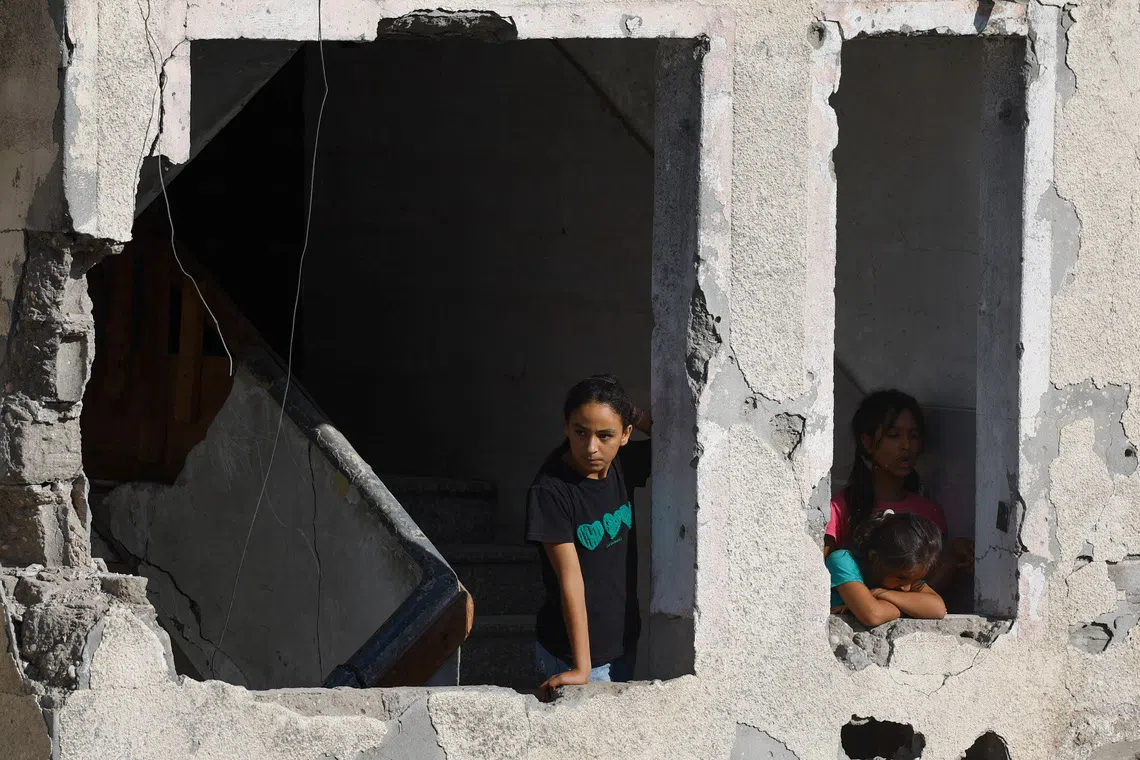
Nearly a year since a ceasefire ended major fighting between Israel and Hamas, officials say tens of thousands of people, with few options for shelter, are living in buildings damaged during Israel's military campaign, despite repeated warnings that they should leave.
In the early hours of September 16, the danger became clear when the Al-Saada building in Gaza City's Al-Rimal neighbourhood collapsed, killing 21 people. At least 45 survivors were rescued from the rubble.
Gaza officials say more than 2,000 buildings have been classified as being at risk. Other war-damaged buildings have previously collapsed, causing casualties, including amid winter storms.
"These buildings now represent ticking time bombs for residents and displaced people in many places," said Husni Muhanna, spokesperson for the Gaza City municipality, adding that this presented a "real danger" with the weather set to deteriorate into the winter.
On Sunday, Gaza authorities announced an emergency plan to evacuate people from 255 buildings most at risk of collapse and demolish them.
An Egyptian-led relief body had offered to provide transport to move those evacuated to designated shelters, said Ismail Al-Thawabta, head of the Hamas-run Gaza government's media office.
But he said the plan faced major obstacles, "including some families refusing to evacuate unsafe buildings despite the warnings, severe funding shortages, a lack of heavy equipment needed for safe demolition, and limited safe land available to relocate displaced people."
Large-scale reconstruction in Gaza has yet to begin, with US-brokered efforts to get Hamas to disarm and Israeli forces to withdraw largely stalled. A population of more than 2 million lives confined to about a third of the enclave, mainly housed in makeshift tents or overcrowded rooms in damaged buildings. Deadly Israeli airstrikes, which Israel says target militants, have continued.
Most of Gaza's buildings were destroyed by airstrikes or bulldozed by Israeli forces, and almost all others have suffered damage.
Palestinian and UN officials blame Israel's restrictions on Gaza for the lack of heavy machinery to clear rubble and materials and equipment to rebuild homes.
In response to a request for comment, Israel's military said it was committed to minimising harm to civilians and that any activities, including against "terrorist infrastructure", were carried out based on operational necessity.
COGAT, the Israeli military agency that coordinates aid, said entry of heavy equipment and reconstruction materials would not be authorised until Hamas disarmed. It said Hamas exploited humanitarian aid, something the Palestinian militant group denies.
Alessandro Mrakic, head of the United Nations Development Programme office in Gaza, said a shortage of equipment meant people had to dig through the rubble with their hands when the Al-Saada building collapsed, and that oil and spare parts were needed to keep the machinery already in Gaza in service.
He estimated the number of buildings at risk of collapse at 400. "We know that these buildings will collapse, especially now with the upcoming winter," he said. "We are running against time."
The Al-Saada building was in an area that was hit by Israeli bombardment two days after a Hamas-led attack on Israel on October 7, 2023, triggered Israel's offensive in Gaza. Israel launched heavy airstrikes followed by a ground campaign which it said were aimed at destroying Hamas and its underground network of tunnels.
Mohammad Arafa, head of the Gaza Engineers Association, said that based on assessments by fellow engineers who inspected the Al-Saada building over the past year, its collapse resulted from structural weakness after bombardment damaged several concrete pillars supporting its foundations.
But people had sheltered there because they had nowhere else to go, said Feryal Abu Ghanem, whose daughter-in-law was staying with her family when the building collapsed and was among those killed.
Bassam Naseer, a displaced man living in another damaged building nearby, said he feared the same thing would happen there. "No one is looking after us. The conditions are very difficult," he said.
After the Al-Saada's collapse, the Israel Defense Forces said in a social media post that it had not struck the building during the war. It did not respond to questions about residents saying it had struck the building, or about whether the building had been damaged by strikes on the surrounding area.
Eyad Azzam, who lost his pregnant wife and a 3-year-old son in the Al-Saada building's collapse, showed a video on his mobile phone of another son, Abdel-Rahman, trapped in the wreckage of the building before he was pulled to safety.
Abdel-Rahman, 7, had reached towards his mother, hoping to protect her from fallen rock, his father said. "He put out his hand and it wasn't a rock that had fallen, it was the entire ceiling."
People continued to live under damaged ceilings or columns for lack of other options, Azzam said.
"Today people say, 'This is a dangerous place to live in.' But where shall I go?" he said. "Even in the street there's no place." REUTERS