RAW founder Kao warned Mujib of coup. He didn't listen, then came the massacre
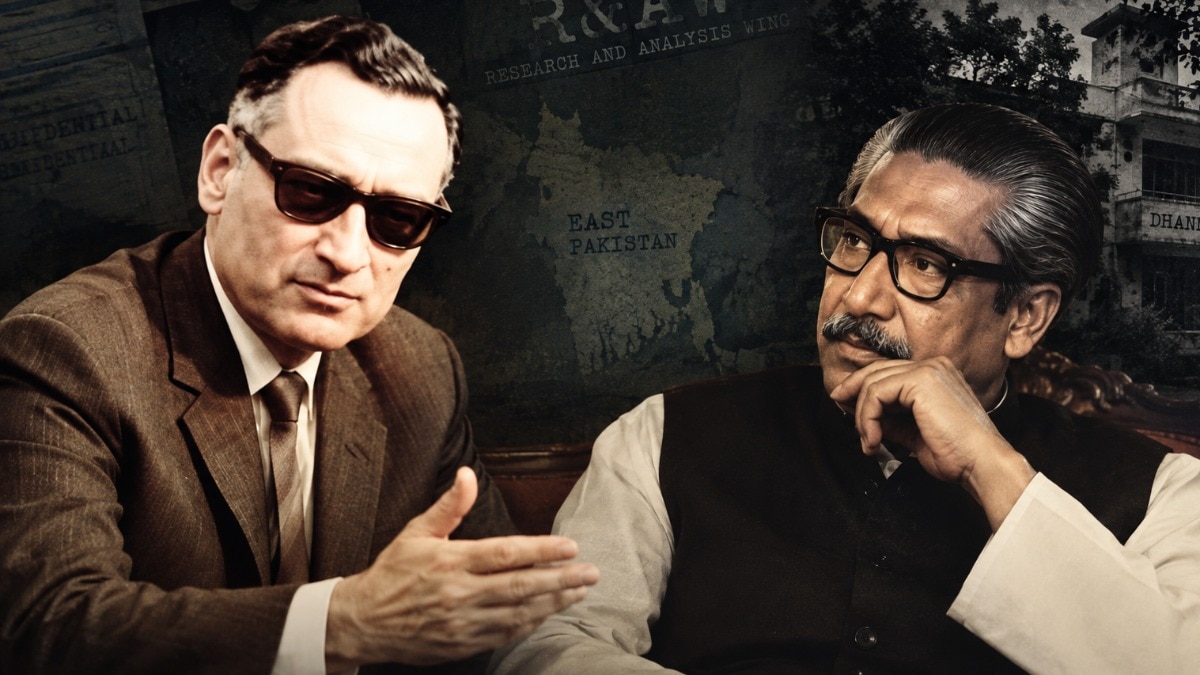
Sometime in 1974, Research and Analysis Wing (R&AW or RAW) founder Rameshwar Nath Kao had travelled to Dhaka, disguised as a paan (betel leaf) exporter, with a warning. Men inside the army of Bangladesh were plotting against Sheikh Mujibur Rahman, then the Prime Minister of Bangladesh. But, Mujib did not believe his own men would kill him.
Months later, in the early hours of August 15, 1975, soldiers stormed into Mujib's residence at Dhaka's Dhanmondi Road 32. Bangladesh's founding leader was brutally killed along with his wife, three sons and several other members of his family. RN Kao's warning had not been vague either. Accounts say Indian intelligence had information about the military units involved, while an account said Kao even named officers suspected of plotting the coup. A second warning followed months later. But Mujib still remained unconvinced.
The episode from the RAW's nascent years is worth revisiting today as India's external spy agency completes 58 years. Created on September 21, 1968, the agency was built under Kao, the Intelligence Bureau (IB) officer chosen by Prime Minister Indira Gandhi to head India's new external intelligence service. Kao hand-picked a band of early operatives, who would come to be known as the "Kao Boys".
RN Kao is also described as one of the architects of Bangladesh's liberation, given RAW's covert role in the 1971 War and its support for the Mukti Bahini.
So, what exactly did Kao know about threats to Mujibur Rahman? When did he warn Mujib? And why did the Bangladesh leader dismiss information that came directly from the chief of the intelligence agency of the country that had helped create Bangladesh just three years earlier?
A detailed account of the episode comes from journalist Asoka Raina's 1981 book Inside RAW: The Story of India’s Secret Service. According to an account in Raina's book, several Bangladeshi army officers, including Major Syed Faruque Rahman and Major Khandaker Abdur Rashid, met at the residence of then deputy army chief Ziaur Rahman around June 1974.
A scrap of paper discarded after the meeting was allegedly recovered by a clerk, passed to an R&AW operative and ultimately reached Kao in New Delhi.
Convinced that the intelligence warranted direct intervention, Kao approached PM Indira Gandhi. The source was considered so sensitive that, according to this account, Kao did not want his identity exposed. But how could India's spy chief secretly meet the PM of Bangladesh?
Raina's account said Kao flew into Dhaka disguised as a "paan exporter" and was driven to a prearranged meeting site. The meeting between Kao and Mujib, according to the book, lasted about an hour.KAO WALKED MUJIB INTO THE GARDEN
The meeting took place on Bangabhaban's lawn after Kao insisted on a walk. Once beyond earshot, Kao told him that R&AW had intelligence indicating a threat to his life and, according to Dhaka-based outlet, The Daily Star's reconstruction, mentioned names of officers believed to be preparing a coup. However, Mujib was not convinced.
"Kao was unable to convince Mujib that a coup was brewing and that his life was threatened, in spite of being given the names of those suspected to have been involved," Asoka Raina's 1981 book Inside RAW: The Story of India’s Secret Service.
"The euphoria that 'these are my children, and they can do me no harm,' proved to be his death knell," added Raina.
Kao did not press the argument further, but told Mujib that the intelligence was reliable and promised more details. And, this was not, crucially, the last warning.RAW PROVIDED MORE DETAILS TO MUJIBUR RAHMAN
In March 1975, Kao sent a senior RAW officer to Dhaka. This time, the intelligence was even more specific. The officer gave Mujib details about the units and ranks of serving and dismissed military personnel allegedly involved in preparations for a potential coup. Once again, according to Raina's account, Mujib was unconvinced.
There is unusually strong corroboration for the broad sequence from Kao himself.
Writing in the April 23-29, 1989, issue of Sunday, a Calcutta-based magazine, Kao said Mujib had been informed that "conspiracies against his life were being planned" in two army units, which he identified as the "artillery and cavalry".
"Unfortunately, the Shiekh ignored all these warnings," Kao wrote, according to a reproduction of his account by Bangladeshi newspaper Prothom Alo.
Former RAW officer B Raman later provided another window into Kao's thinking. In his book, The Kaoboys of RAW, Raman recalled criticism after the assassination that Indian intelligence had failed in Bangladesh. Kao rejected that charge.
"How can the RAW be held responsible if Mujib won't take our warnings seriously?" Raman recalled Kao asking him. Raman wrote that RAW knew about Mujib's growing unpopularity within sections of the Bangladesh armed forces and plots against him, and that Indira Gandhi had been kept informed.THEN CAME AUGUST 15, 1975, WHEN MUJIBUR'S FAMILY WAS SLAUGHTERED
In the early hours of August 15, 1975, the real threat came knocking on Dhanmondi 32, a building later turned into a museum, and vandalised by Islamists after PM Sheikh Hasina's ouster in August 2024. Incidentally, Sheikh Mujibur Rahman’s daughters Sheikh Hasina and Sheikh Rehana were in Brussels, Belgium, when their family was massacred in Dhaka. It was a coincidence that saved their lives.
Around 350 personnel of the Bangladesh Army stormed Mujib's Dhanmondi residence, killing him along with much of his family. His wife Sheikh Fazilatunnesa Mujib, sons Sheikh Kamal and Sheikh Jamal, nine-year-old Sheikh Russel, daughters-in-law Sultana Kamal and Rosy Jamal, and brother Sheikh Abu Naser were among those killed. Coordinated attacks were also carried out elsewhere in Dhaka which claimed the lives of other members of his extended family.
Major Faruque and Major Rashid, names that appear in accounts of the conspiracy preceding the assassination, were among the military officers subsequently identified with the events of August 15. Bangladesh eventually prosecuted the assassination case, with 12 former army officers sentenced to death.
The assassination toppled the Mujib-led political order that had emerged from Bangladesh's Liberation in 1971 and the year-long struggle. The assassination began a turbulent period of coups and military dominance in Bangladesh.
In the end, one can say that the RAW might not have predicted the massacre of August 15 down to its date, hour or method, but it did know of the threat Mujibur Rahman was facing. The RAW saw the conspiracy taking shape, close enough for RN Kao to travel to Dhaka and warn Mujib personally. Mujib chose to trust his men, a faith that proved fatal when soldiers stormed into Dhaka's Dhanmondi 32 before dawn.- EndsPublished By: Sushim MukulPublished On: Sep 21, 2026 18:22 IST