Renault Triber Turbo review, first drive: The little MPV finally gets its big break
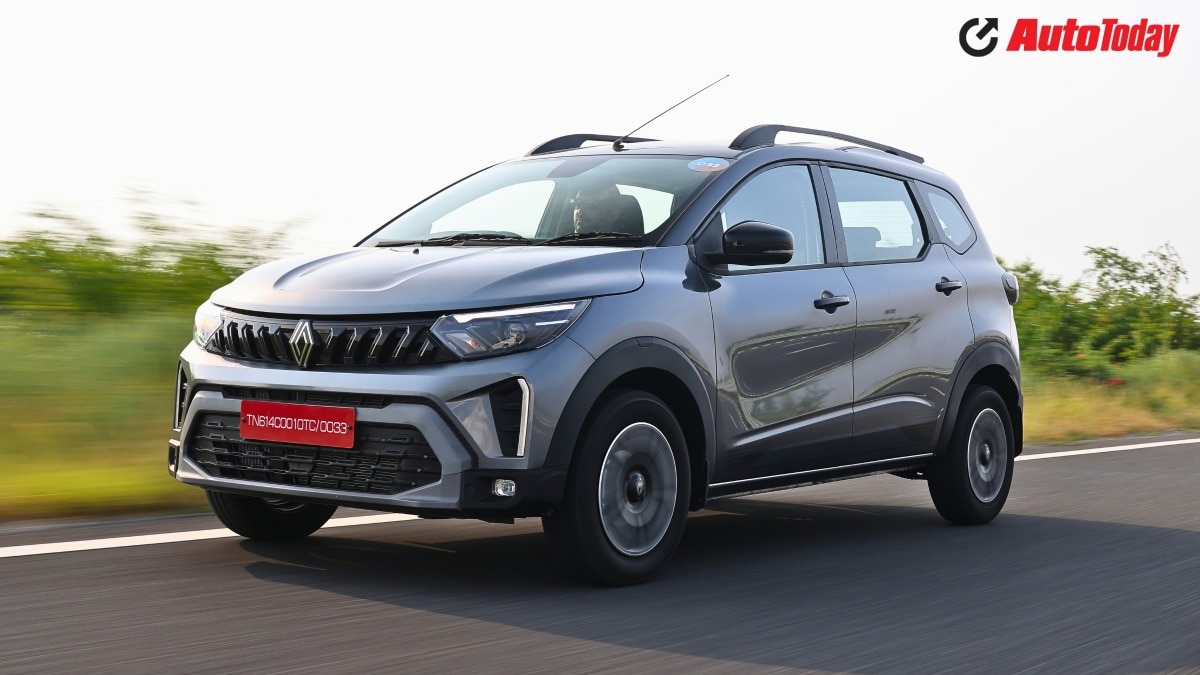
The measure of a good human being isn’t how successful or wealthy they become, but how much they improve themselves along the way. Success, after all, is not always about becoming something entirely different. Sometimes it is about recognising your shortcomings, working on them and becoming a better version of yourself. Cars, surprisingly, can be judged by much the same measure. The Renault Triber is a particularly good example of that philosophy. From the outside, the Triber Turbo looks largely unchanged, retaining its familiar proportions and styling.
Look at the Turbo from the outside and very little seems to have changed. The proportions remain familiar, the styling is essentially the same, and there isn’t a great deal of theatre to announce that this is the most powerful Triber yet. In fact, the easiest way to identify it is the Turbo badge at the back. But beneath that familiar skin is a car that has undergone considerably more work than its appearance suggests. Renault has effectively taken the Triber apart, worked on the bits that needed improvement and put it back together. Yet beneath its familiar exterior lies a car that has received far more work than its looks suggest, That is important because the Triber has always been an interesting proposition. Its greatest achievement was never performance; it was packaging. Here was a car that could seat seven people while staying under four metres, and could transform itself between people carrier and luggage haulier with remarkable ease. The second row slides and reclines, the third row is easy to configure, and the boot can expand from 84 litres with all seven seats in use to 625 litres in five-seat configuration and 1,065 litres with the second and third rows folded and removed, respectively.
The weakness, however, was always hiding underneath the bonnet. The naturally aspirated 1.0-litre, three-cylinder, petrol engine did its job, but 72bhp and 96Nm meant that the Triber could feel like it was working rather hard when asked to move seven people and their luggage. It was perfectly adequate for its intended purpose, but there was always a sense that the cleverness of the rest of the car deserved a little more from the engine. The Turbo is Renault’s answer to that long-standing criticism. Renault has reworked the platform, engine, thermal systems, suspension, brakes and electronics, making the Triber Turbo feel significantly more evolved.
The much-awaited Turbo that fans and critics alike have wanted for years. More importantly, Renault hasn’t simply fitted a turbocharger to the existing car and hoped for the best. The platform, engine management, thermal management, structure, suspension, brakes and electronic systems have all been worked on. The result is a car that looks almost unchanged but feels considerably more evolved once you get behind the wheel.What’s changed on the Triber Turbo? Renault’s RGEP platform underpins the Triber Turbo, supporting flexible ICE, CNG, AMT and CVT powertrain configurations.
The foundation for all of this is Renault’s RGEP, or Renault Group Entry Platform. It is designed as a flexible architecture for Renault’s smaller vehicles, with provision for different powertrain configurations, including ICE, CNG, AMT and CVT applications. For the Triber Turbo, though, its importance is that Renault has used the platform as the basis for a comprehensive re-engineering exercise rather than treating the turbocharged engine as an isolated upgrade. In essence, it is a heavily reworked version of the older CMF-A platform. The 1.0-litre three-cylinder turbo-petrol HR10 develops 100bhp at 5,000rpm and 180Nm at 3,500rpm.
The headline change is, of course, the engine. The 1.0-litre, three-cylinder, turbo-petrol (HR10) produces 100bhp@5,000rpm and 180Nm@3,500rpm. Those figures represent a substantial step up from the naturally aspirated Triber, but the torque figure is perhaps the more important one in everyday driving. At 180Nm, the Turbo actually produces more torque than the turbo-petrol engines in the Kiger and Duster. Renault claims a 0-100kmph time of 10.8 seconds and a certified fuel-efficiency figure of 21kmpl, making it not just the more powerful Triber but, according to Renault’s certification, the most fuel-efficient petrol seven-seater.
There is also a new Renault Engine Management System, or REMS, controlling the new powertrain, which is one of the main reasons for the aforementioned higher torque figure. The turbo-petrol engine also gets a completely new thermal-management system, developed with Bosch. Renault says the system uses technology also seen in high-end hybrid and electric vehicles, and has a 35 per cent higher air intake to improve cooling efficiency.
The cooling system itself uses a BLDC fan, along with an upper and lower air guide. The objective isn’t simply to cool the engine more aggressively, but to do so quietly, intelligently and efficiently. It is the sort of work that rarely gets noticed by the person driving the car, but becomes increasingly important when a small three-cylinder engine is being asked to produce substantially more power and torque. Renault has therefore paid attention not only to what the engine produces, but also to how it manages the additional thermal load.
The structural changes are equally important. Renault says the Triber has received new structural enhancements aimed at improving crash safety and durability. That additional work matters because the Turbo isn’t simply a faster version of the same car; it is a heavier and more powerful one. Renault has consequently worked on the underlying structure before addressing the dynamics, which in theory should mean that the Triber Turbo is a safer car on the whole, but we’ll wait for the crash test to confirm that claim. The suspension has been extensively re-engineered.
The suspension has consequently been re-engineered in considerable detail. Renault has introduced an offset spring design, contractive springs, optimised damper tuning and advanced valve technology known as MTV or multi-tuning valves. Front and rear anti-roll bars have also been added. The individual changes have their own purposes too.
The front anti-roll bar contributes to body control, while Renault has paired it with low-drag callipers, with the latter also helping reduce drag and improve fuel efficiency. At the rear, the anti-roll bar works with the revised spring setup to enhance side-force compensation. The MTV and optimised damper tuning, meanwhile, are intended to improve the way the suspension responds rather than simply making it stiffer. It is a more considered approach than simply bolting on harder springs and calling it sporty.
The braking and electronic systems have also been specifically tuned for the Turbo. ABS, traction control and vehicle dynamic control have received special calibration to account for the higher performance and increased mass. Renault quotes a 39-metre braking distance from 100-0kmph, while the ESC system was jointly tested at Renault’s Chennai test tracks with Aumovio India. The company says the broader calibration was aimed at delivering high-speed stability, effortless parking, and good steering returnability during low-speed U-turns.
That attention to steering is worth mentioning because it comes through in the real world, albeit with a small qualification. Around town, the steering is light and easy, which is exactly what you want in a compact MPV. Parking is effortless, U-turns require little effort and threading the Triber through narrow urban spaces is pleasantly straightforward. At highway speeds, however, I would have liked more weight to build into the steering. It can feel a little twitchy at times, particularly around the straight-ahead position. It isn’t a serious complaint and doesn’t take away from the car’s overall stability, but it is something worth being mindful of when the road opens up.
Renault has also worked on NVH, and that is one of the changes you notice almost immediately when compared with the naturally aspirated Triber. The Turbo is quieter and feels more polished when you start pushing it. The three-cylinder thrum is still there, but the engine doesn’t sound as strained as the naturally aspirated unit when asked to build speed. The five-speed manual also gets more clearly defined gear gates, which makes the transmission feel more precise and deliberate.Does it really drive differently? The Turbo feels noticeably more energetic than the naturally aspirated car.
Most definitely. All of that engineering starts to make sense once the Triber Turbo gets moving. The first thing you notice is that it feels considerably more sprightly than the naturally aspirated car. But reducing the Turbo to a simple performance upgrade would be missing the point. The biggest difference isn’t that you can reach 100kmph quicker; it is that the car now feels less strained while doing ordinary things. Overtaking, climbing gradients and accelerating with passengers aboard will require less effort. The biggest difference is the stronger torque delivery, with 180Nm at 3,500rpm providing more usable performance across the mid-range.
The torque delivery is what makes the biggest difference. With 180Nm available from 3,500rpm, there is a much healthier spread of usable performance through the middle of the rev range. You don’t have to constantly chase the top end to make progress, and the engine responds more willingly when you squeeze the accelerator. That makes the Triber feel more relaxed in traffic and more capable on the highway, especially when there are several people aboard. For a family MPV, that kind of flexibility is arguably more useful than an impressive stopwatch figure.
The revised chassis complements the engine rather well. The additional anti-roll bars and revised springs and dampers give the body better control when you change direction, while the underlying suspension remains sufficiently compliant for the sort of roads the Triber will encounter every day. There is less of a feeling that the body needs a moment to settle after a quick steering input. The Turbo feels more tied down, and that additional composure becomes particularly useful once you start exploiting the engine’s extra performance. The steering, however, remains the one dynamic area that could have been bet
The steering, however, remains the one dynamic area where I would have liked a little more. As mentioned earlier, its lightness is ideal around town and makes the Triber exceptionally easy to manoeuvre, but the steering doesn’t weigh up as much as I would have preferred as speeds increase. There are moments when it can feel slightly twitchy, particularly on the highway, and you find yourself making small corrections where a little more resistance would have made the car feel calmer. It isn’t something that spoils the experience, but it is a characteristic worth knowing about before settling into a long high-speed run.
The brakes, on the other hand, feel reassuring. The pedal has a predictable response, and there is enough confidence under harder braking to make use of the additional performance without second-guessing the chassis. The specially tuned ABS, traction control and vehicle dynamic control systems stay largely in the background, which is precisely how they should behave. The engineering here is less about making the Turbo feel dramatic and more about ensuring that its extra performance remains predictable. The five-speed manual performs better than its numbers would suggest.
The five-speed manual is also better than the numbers might suggest. The gear gates feel more defined than before, and the engine’s torque spread means that you aren’t constantly shifting simply to keep the car moving. It feels like a well-matched combination for the Triber’s intended use. There is, however, one thing I would have liked Renault to change: a sixth gear.
At 100kmph, the Triber Turbo is turning around 2,500rpm in fifth, while 120kmph brings that figure close to 3,000rpm. Neither figure is unreasonable, and the improved NVH means that the engine doesn’t become particularly intrusive at those speeds. But considering how much work Renault has done to make the Turbo more refined, a sixth gear would have made highway cruising quieter and more relaxed. It would also have allowed the engine to exploit its healthy torque reserve more effectively. The improved NVH is notable, with the Turbo staying more composed under hard acceleration than the naturally aspirated Triber.
That said, the improvement in NVH itself deserves credit. The naturally aspirated Triber can get vocal when driven hard, whereas the Turbo feels more composed even when you are asking more from it. There is a greater sense of maturity to the powertrain, and that helps the Triber feel like a more complete car rather than simply a faster one. The better-defined gear gates add to that impression, giving the driver a greater sense of mechanical connection with the drivetrain. The Turbo could have used more visual differentiation, with a few extra exterior and interior touches to make it feel special.
Would I have liked more differentiation between this and the standard Triber? Absolutely. A few more visual changes, perhaps some subtle interior touches, would have made the Turbo feel more special. But I also understand Renault’s approach. The Triber has never been about making a statement outside the showroom. Its appeal lies in what it can do once you start using it, and the Turbo improves precisely that part of the experience.
The result is a Triber that remains remarkably true to its original brief. It is still compact, still easy to drive in the city, still capable of carrying seven people and still capable of swallowing a surprising amount of luggage when required. The difference is that the engine finally feels like it belongs in the same conversation as the rest of the car. Renault hasn’t changed the Triber’s personality; it has simply given that personality a little more confidence.
And perhaps that is the most interesting thing about this car. The Triber Turbo doesn’t try to become something it isn’t. It doesn’t pretend to be a hot hatch, an SUV or a sporty MPV. It is still the same clever little seven-seater, only now it has the performance, chassis control, braking and refinement to make better use of everything it was already capable of doing. Sometimes the most meaningful evolution is not about becoming someone else. It is about finally becoming the version of yourself you should have been all along.Verdict The Triber Turbo adds performance, refinement and sharper dynamics while retaining its space and versatility, making it a more complete version of Renault’s clever seven-seater.
The Renault Triber Turbo finally addresses the one area where this clever seven-seater always felt compromised: performance. At Rs 7.84 lakh for the Evolution, Rs 8.53 lakh for the Techno and Rs 8.99 lakh (all prices, ex-showroom) for the Emotion variant, the Turbo costs Rs 1.11 lakh, Rs 1.09 lakh and Rs 94,000 more respectively than the corresponding naturally aspirated variants. For that premium, you get considerably more performance, improved refinement, sharper dynamics, and a much more capable powertrain without sacrificing the Triber’s space and versatility. What’s more, there will be a CVT-equipped version and a CNG version with two underbody tanks that won’t eat into the boot space. It's great to see the Triber finally getting the attention it always deserved. All things considered, the Turbo is still the same clever Triber, just a much more evolved version of it.
Not too long ago, Abhinav was creating storybook scenarios with scale models of his favourite motorcycles and cars. Now he gets to do it for a living, albeit in 1:1 scale, all the while happily suffering unhealthy obsessions to do with two-strokes and Toyotas.