Republican senator says his own party are ‘tone deaf’ as GOP spends millions to try to hold back Democratic blue wave
Want to bookmark your favourite articles and stories to read or reference later? Start your Independent Membership today.
National Republican campaign groups are pouring massive sums into Senate races across the country as fresh polling indicates the party is struggling to defend typically reliable red territory ahead of the midterms.
The National Republican Senatorial Committee has launched a $46 million ad campaign across key states - allocating $11 million to Ohio, $9 million to Iowa, $8 million to North Carolina and $2 million to Alaska, according to the New York Post.
Additionally, the Senate Leadership Fund — a political action committee aligned with Senate Majority Leader John Thune — is putting $100 million behind Texas Attorney General Ken Paxton, with plans to keep buying airtime through Election Day. Recent surveys, such as a Marist College Poll, show Paxton trailing Democrat James Talarico, 44 percent to 50 percent.
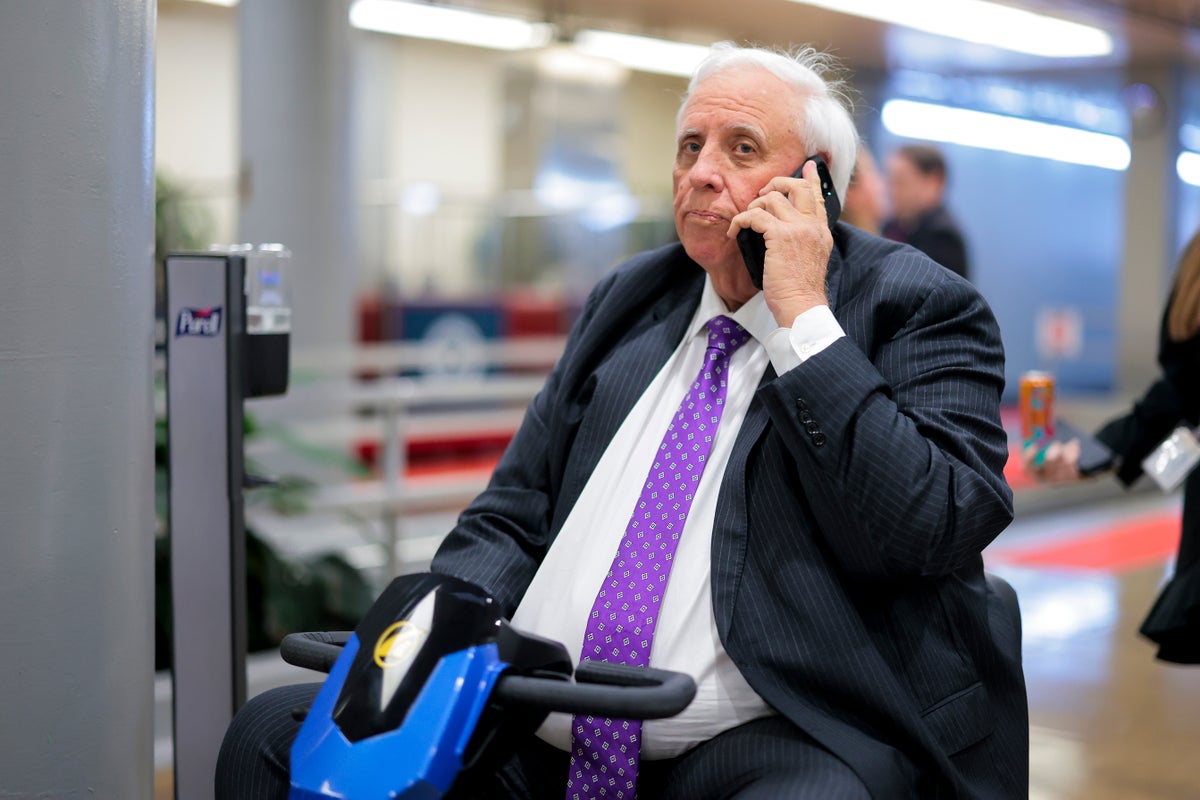
Senator Jim Justice, a West Virginia Republican, openly criticized his party’s current approach.
“You’ve got Republicans scrambling everywhere,” Justice told the publication. “When — my lord of living, all we had to do was really be in touch with the people four or five months ago … We’ve done all kinds of great stuff. You know, but we’re tone deaf in a lot of ways.”
A source familiar with the strategy told the Post that the heavy spending was a “red wall kind of thing,” and added: “We only spend money where we think we can make a difference.”
The financial push highlights growing concerns inside the party about both congressional chambers. With Republicans holding a tight 53-47 Senate majority, a loss of just four seats would hand control back toDemocrats.
Republican candidates in traditionally conservative states are increasingly breaking with the White House on key issues as their polling numbers slip.
In Ohio, where President Donald Trump won by 13 points over Kamala Harris in the 2024 White House race, former Democratic Senator Sherrod Brown now holds a 4-point lead over appointed Republican Senator Jon Husted. Quantus Insights puts the race in a virtual deadlock, with Brown at 45.6 percent to Husted's 45.3 percent.
Husted recently said the Iran war “needs to come to an end as quickly as possible,” though he abstained from a War Powers resolution vote Thursday that aimed to stop military action.
In Iowa, which Trump won with 56 percent of the vote, Democrat Josh Turek is deadlocked with Republican Ashley Hinson. A recent Marist College Poll puts Turek at 50 percent to Hinson’s 42 percent among registered voters.
Political analysts are adjusting their forecasts accordingly. Larry Sabato shifted Iowa to a “toss-up” and Kansas to “leans Republican,” while the Cook Political Report moved 15 House seats toward Democrats Friday, including changing New Jersey Representative Tom Kean’s seat to “lean Democrat.”
Erin Covey, of the Cook Political Report, told the Post that Ohio and Iowa “look especially dire for Republicans” because of tariffs and rising gas prices.
“What’s worse environmentally for them compared to 2018 is the economy,” Covey said, citing the midterm election in which Democrats flipped 40 House seats.
Cook Political Report analyst Amy Walter wrote that the economy had turned into an “anvil” for Trump, making it risky for him to campaign in competitive areas where his presence could drive up Democratic turnout.
Tracking polls from Economist/YouGov show Trump underwater in every state except Idaho, Wyoming and West Virginia. His upcoming campaign swings are set for safe Republican territory in Oklahoma and Alabama rather than battlegrounds.
In Kansas, where a Republican hasn’t lost a Senate race in 100 years, Senator Roger Marshall is clinging to a narrow polling lead. The latest Emerson College Polling-Nextar Media Survey shows Democratic challenger Adam Hamilton at 45 percent to Marshall’s 43 percent.
“When ICE operates in Kansas, it needs to coordinate with our local law enforcement,” Marshall said Thursday following immigration sweeps in the state.
Party strategists believe big ad spending and Democratic divisions over socialism will help them hold off the challenge.
“A lot of our races are being nationalized,” the Republican source told the New York Post, but noted that “Iowa, New Hampshire, Maine – those places are still very siloed” with local factors that give GOP candidates an edge.