Republicans Are Quietly Removing Trump From Their Campaign Websites - Newsweek
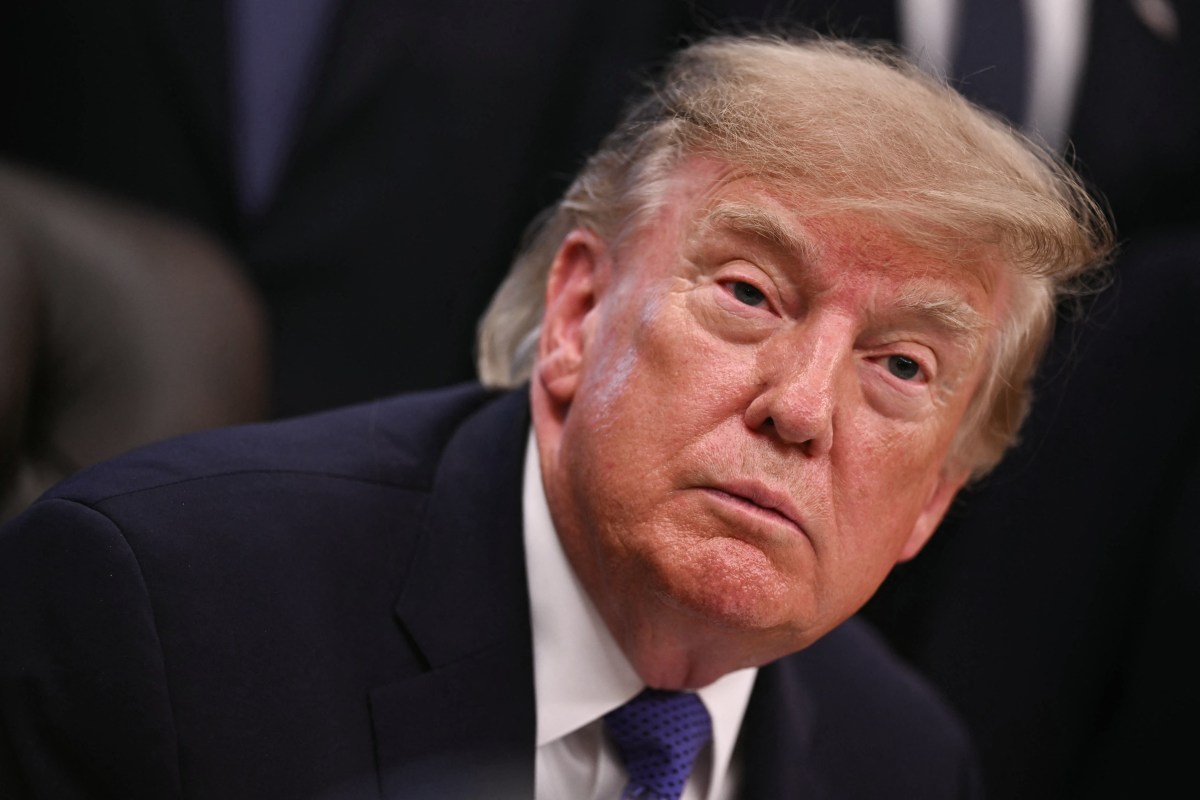
Republican lawmakers vying for election to the House or Senate are wiping images of President Donald Trump and references to him from their campaign websites, one of many signs that his low approval ratings are prompting candidates to distance themselves from the president and his agenda weeks away from the 2026 midterms.
According to certain pollsters, Trump’s standing among voters has dropped to record lows in recent days, with support on issues like the economy, the Iran war and international trade hitting troubling levels for the administration and the GOP. This has coincided with a number of Republicans, including many of Trump’s longtime backers, publicly breaking with him on key areas of policy.
The president has told voters and members of his party to "pretend that I’m on the ballot" when campaigning in what looks to be a challenging election for Republicans. But many of those running on the GOP ticket across the country appear to be taking the opposite approach.
By comparing current and archived versions of campaign websites using the Wayback Machine, Newsweek can reveal that a number of those in toss-up races have downplayed their relationship with the commander in chief, as well as their support for his national agenda, while shifting the focus to local issues and those—like affordability—that remain top of voters’ minds going into November.
Republican National Committee national press secretary Natalie Baldassarre said that many of the candidates analyzed by Newsweek "continue to reference the president through text and photos on their websites.” She accused Newsweek of "a lame attempt to manufacturer Republican collapse" and said that the president "will be out in full-force this October stumping for many of our battleground candidates and touting his historic achievements in their states."
White House Spokesperson Davis Ingle also responded, calling Trump “the unequivocal leader, best messenger, and unmatched motivator for the Republican Party.”
Newsweek focused on House and Senate races that are currently considered competitive by pollsters and analysts such as the nonpartisan Cook Political Report. Comparing older versions of candidates' websites with current iterations reveals a clear absence of Trump as the respective campaigns enter their final stretch.
Until at least June 6, the campaign page for Michael Whatley, running against the Democratic former Governor Roy Cooper in the North Carolina Senate race, had the former Republican National Committee (RNC) chair standing alongside Trump as the main image on the website. This has since been replaced with a picture of Whatley exiting a plane, with the Trump picture downsized and shifted to the bottom of the homepage.
Ohio Senator Jon Husted, the incumbent Republican locked in a tight race against Democrat Sherrod Brown, previously featured a "gallery" section on his main page that was topped with images of Trump and him together. This section, visible on his website in January, has now been removed.
Last month, House candidate Michael Bouchard, running to represent Michigan's 10th Congressional District, had a photo of himself and the president at the top of his website’s "Meet Mike" introduction. This has since been directly replaced with an image of Bouchard alongside his mother and father, Oakland County Sheriff Mike Bouchard.
The "Endorsed by President Donald J. Trump" sticker which until early August featured at the top of Bouchard’s website has now been swapped out for the more-neutral "Republican Nominee for MI-10."
Florida House candidate Mike Beltran has likewise removed what was a prominently placed image of Trump from his website—visitors are now instead greeted by a picture of Beltran and his family. Direct references to Trump have also dropped from four to zero, with "Mike Beltran has stood with President Trump every step of the way" among the deleted statements.
As well as the image change, the slogan at the top of the main page—“Fighting for Florida. Putting America First"—has been altered to "Fighting for Florida. Putting Tampa Bay First."
Beltran’s "about" page no longer makes note of the fact that he has been "standing firm with Trump from the moment he came down the escalator in 2015." No direct references to the president now appear on this page.
"That wasn’t a political calculation. It was conviction," it used to say.
Until mid-August, the Florida Republican Scott Singer wrote that, if elected, he would "work with President Trump to advance the America First agenda."
Going by the latest version of his campaign page, this pledge has since evolved to working "with President Trump and colleagues in Congress to advance common-sense solutions to improve our economy and protect our nation."
And an increased focus on direct—and often affordability-related—priorities over vague "America First" and pro-Conservative commitments has coincided with the decreased focus on a candidate's relationship with Trump.
The "about" section of Beltran’s page previously described the Florida candidate as a "proven conservative" and "undefeated fighter"—but now dubs him a "husband, father, fighter for Tampa Bay."
The subheading that Beltran is "one of only seven Florida GOP legislators who never wavered from President Trump" has also been replaced, now touting his "proven record of delivering real results for Florida families on healthcare, cost of living, and creating jobs."
In August, Beltran’s listed "secure the border," "Save America Act" and "Working Families Tax Cut" at the top of his nine-issue "platform" page—the candidate noting that he strongly backs the president’s approach to these three issues.
The latter two now get no mention on the page, while "secure the border" has dropped to the ninth spot out of 13, succeeded by previously unmentioned matters like "lower healthcare costs & expand access" and "lower the cost of living & keep more of what you earn."
A similar shift has occurred on Bouchard’s website. The Michigan Republican previously had three advertised campaign priorities: "Economy," "Immigration & Security" and "Education." These three have now been supplemented with "Affordability," "Medicare & Social Security" and "Health Care."
Last week, screengrabs revealed that the Republican Byron Donalds, running for Florida governor, had removed images of Trump and references to the president from his website. His campaign told Newsweek at the time that the edits reflected "Byron’s focus on the issues that matter most to Floridians—affordability, insurance costs, and government transparency."
The president responded to the news—first reported by The Miami Herald—with a nearly 500-word post to Truth Social, in which he called it a "fake story, with no sources," and described Donalds as "a very close friend of mine, a man I endorsed very early."
But even before the changes to his website were uncovered, Donalds had been among the growing number of Republicans willing to express their opposition about the president or his policies.
Earlier this month, Donalds told Fox News he had "concerns" about Trump’s plan to send $5,000 checks to Americans if Republicans could retain the House and Senate come November.
Many others from the president’s party cast doubt on the merits or feasibility of this plan, as some have done on other matters like his immigration agenda and the war with Iran. This comes as polls show waning support for the president, including among Republicans and those who voted for him in 2024, as well as a tough contest for the party in this year's elections.
"Trump is now more of a liability than an asset," said Mike Madrid, a Republican political strategist, who said that Republicans have "always chosen to live with him" but are now "seeing more value in distancing from him."
"It’s unprecedented," he told Newsweek, "and will likely prove devastating in November."