Richards Bay emerges as Africa’s next energy hub - IOL
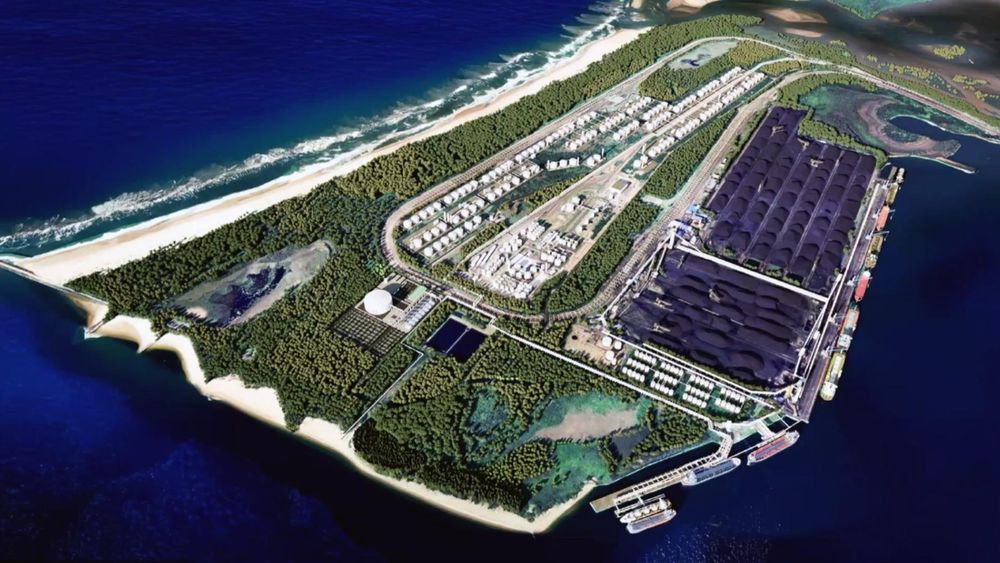
Proposed layout of the Zululand Energy Terminal. The marine facility in the Port of Richards Bay has been identified for a liquefied natural gas (LNG) import terminal incorporating a floating storage unit. The writer posits that Richards Bay is uniquely positioned for energy security, industrialisation and economic growth.
We stand at the precipice of an exciting hill. For decades, Richards Bay was recognised as one of Africa’s most vital ports, serving as a critical export gateway for minerals, manufactured goods and bulk commodities.
We would be remiss if we did not acknowledge a period of malaise, but today, the city stands on the threshold of an even greater opportunity. At a time when Africa is seeking energy security, industrialisation and economic growth, Richards Bay is uniquely positioned to become a catalyst for all three. Its role should therefore be understood not only as a provincial development initiative but as a strategic platform for national competitiveness and continental integration.
Richards Bay possesses a combination of advantages that few African cities can match. It has one of the continent’s largest deep-water ports, giving it access to key regional markets, established industrial infrastructure and direct access to major rail and road corridors.
These attributes make it an ideal location for energy and industrial development. KwaZulu-Natal has increasingly identified Richards Bay as the centrepiece of its long-term growth strategy, positioning the city as a national energy hub capable of attracting investment into gas-to-power projects, renewable-energy manufacturing, green hydrogen, energy storage and liquefied natural gas (LNG) infrastructure.
The significance of this extends far beyond provincial borders. As Africa’s economies grow and urbanise, reliable energy will become one of the continent’s most important competitive advantages. Richards Bay will play a central role in delivering that future. The most immediate beneficiary of this development will be KZN itself. Large-scale investment in energy infrastructure will stimulate construction activity, create employment opportunities and generate demand across numerous sectors.
This speaks squarely to KZN’s 2035 Provincial Growth and Development plan, a blueprint for integrated advancement. One of the most exciting aspects of Richards Bay’s development is its ability to support industrialisation. Historically, economic growth in Africa has often been constrained by insufficient energy infrastructure.
The availability of affordable and reliable energy is a prerequisite for manufacturing, mineral beneficiation, and petrochemicals among others. The development of liquid natural gas (LNG) import facilities, liquid bulk terminals, fuel storage infrastructure, and gas distribution networks will create an industrial ecosystem capable of attracting significant domestic and international investment.
This industrialisation agenda aligns closely with South Africa’s broader economic objectives of increasing manufacturing capacity, reducing reliance on imports and creating higher-value jobs. For KZN, this could position Richards Bay as an anchor for a wider development corridor. For South Africa, it could help revive industrial competitiveness.
For Africa, it could demonstrate how a port city can become a platform for energy-enabled manufacturing and regional trade.
The economic multiplier effect could be substantial. Every major infrastructure project creates opportunities. New industrial developments will increase municipal revenues, encourage skills development and support the growth of secondary industries throughout Zululand and northern KZN.
South Africa faces an increasingly urgent challenge commonly referred to as the “gas cliff”. Existing gas supplies from Mozambique’s mature Pande and Temane fields are expected to decline over the coming years, creating risks for industrial operations and energy-intensive sectors that rely on natural gas.
The planned LNG import infrastructure in Richards Bay can help address this challenge by providing a new channel to import, store and distribute natural gas to power producers and industrial users.
This is not merely an infrastructure project; it is a strategic national asset.
A reliable gas supply can support the development of gas-fired power stations, including proposed gas-to-power capacity in Richards Bay.
Such developments can help stabilise South Africa’s electricity supply while complementing the country’s growing renewable-energy capacity. By strengthening energy security, Richards Bay can help unlock investment confidence across the country, enabling industries to expand production, create jobs and improve competitiveness.
Beyond South Africa, Richards Bay has the potential to become one of Africa’s most important energy gateways. The continent continues to face substantial energy deficits, with many countries seeking reliable access to affordable fuels and modern energy infrastructure. Richards Bay’s strategic location on the Indian Ocean positions it as a natural entry point for global LNG supplies and energy-related trade flows.
As trade under the African Continental Free Trade Area continues to expand, with 48 countries ratifying it and an estimated US$450 billion in revenue by 2035. Ports that can efficiently facilitate the movement of energy products, industrial goods and raw materials will become increasingly valuable.
Richards Bay can potentially serve not only South Africa but also neighbouring countries and emerging regional markets.
Importantly, Richards Bay’s future is not limited to traditional energy sources. Its development plans can potentially include renewable energy manufacturing, green hydrogen production, and energy storage technologies.
This creates a powerful opportunity for South Africa to pursue a balanced energy transition, one that is cognizant of energy security and economic growth while gradually expanding cleaner energy industries. Rather than choosing between development and sustainability, Richards Bay can demonstrate how the two can advance together.
The development of Richards Bay represents far more than a collection of infrastructure projects. It is a strategic economic opportunity that can reshape KwaZulu-Natal, strengthen South Africa’s energy security and position Africa for a more industrialised and prosperous future.
With its world-class port, expanding energy infrastructure, growing investment pipeline and strategic location, Richards Bay is emerging as one of the continent’s most important economic growth nodes. If successfully executed, the city could become a model for how energy development, industrialisation and regional integration can work together to create jobs, attract investment and unlock long-term prosperity for Africa.
For KZN, Richards Bay is a growth engine. For South Africa, it is an energy lifeline. For Africa, it is a gateway to the future.
(Lekalake, Executive Vice President for KZN Client Coverage at Standard Bank Corporate and Investment Banking. Her views do not necessarily represent those of the National Media Group)