Rodrigo Duterte camp challenges experts' report, seeks 'greater medical certainty' - GMA Network
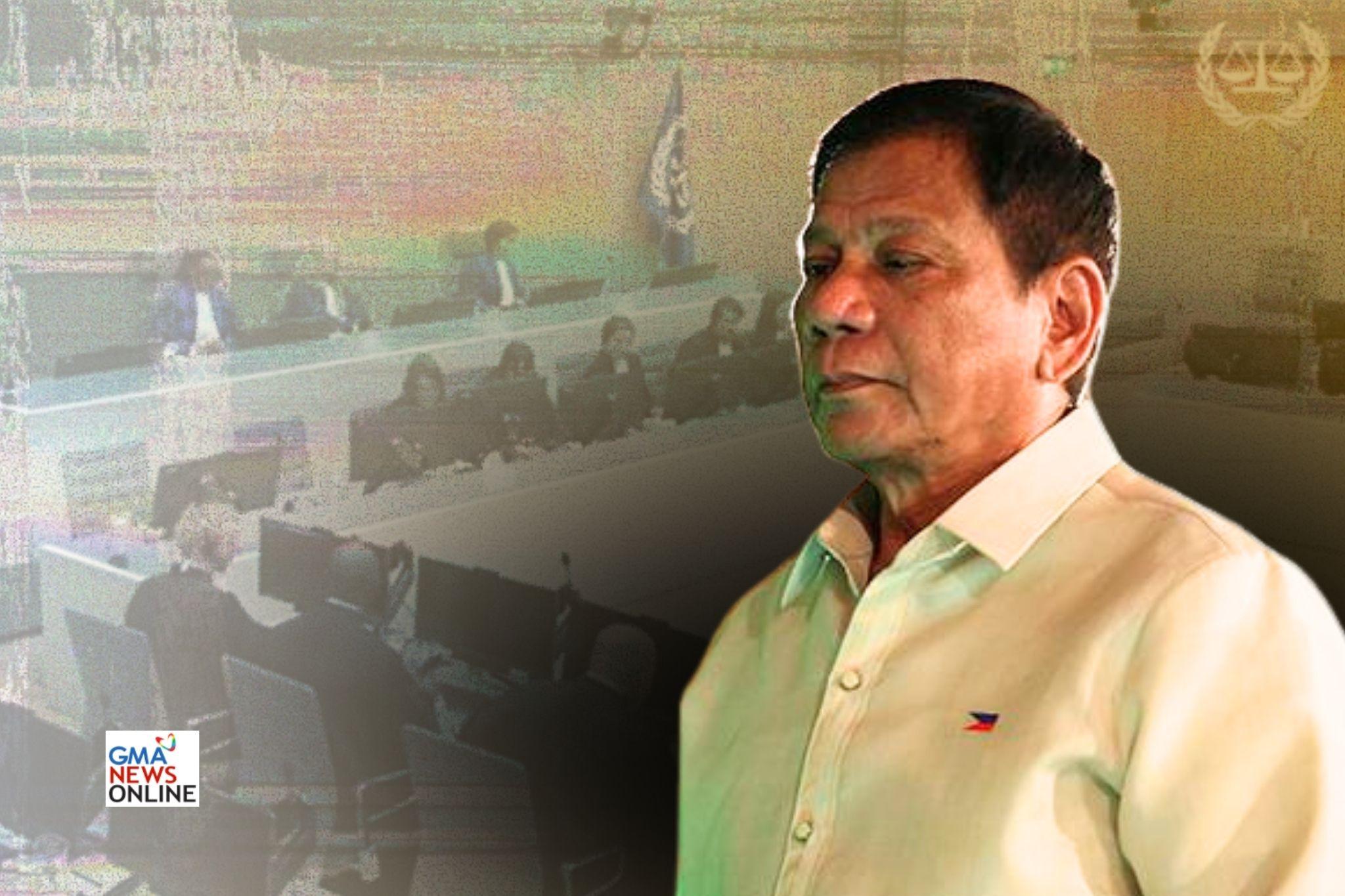
Former President Rodrigo Duterte’s defense team has asked the International Criminal Court (ICC) Trial Chamber III to allow the parties to question the experts about their findings and conclusions regarding his fitness to stand trial.
In a filing on September 14, Duterte’s counsel Peter Haynes questioned the court-appointed medical experts’ still-confidential reports, which the Office of the Prosecutor interprets as demonstrating the former president’s “reduced effort and unreliability during assessments.”
The specifics of these reports have been redacted in the filings of the defense and the Office of the Prosecutor.
Haynes said the examinations showed “significant memory impairment that prevents him from retaining recent information and reliably accessing memories.”
“This makes it difficult for him to engage meaningfully with the charges, the alleged incidents, the tens of thousands of disclosed items of evidence, let alone give proper instructions to his Lead Counsel, whose name he only sometimes remembers,” Haynes added.
“As a result, the Defense will, in reality, be preparing the case without meaningful input from the accused.”
The defense also asked the Trial Chamber to seek “greater medical certainty” and direct the experts “to complete ancillary examinations” to ascertain “the nature and extent of Mr. Duterte’s cognitive impairments.”
“This would allow the experts to confirm or exclude, once and for all, the possibility that his performance was the result of his failing to apply himself fully and would allow the Trial Chamber to interpret their final assessments on a properly informed basis," Haynes said.
Haynes argued that “the Panel’s assessment is incomplete and inadequate,” and that “the Panel has left the Trial Chamber and parties in a situation of significant uncertainty as to how the cognitive difficulties identified in Mr. Duterte should be properly interpreted.”
According to the defense, the three court-appointed experts recorded “largely consistent” results depicting “serious deficits” that could limit Duterte’s ability to participate effectively in the proceedings, with some scores indicating impairment ranging from “moderate to severe.”
The experts, however, considered that the results could not be relied upon as an accurate measure of his cognitive condition because of the “possibility that his performance was the result of his failing to apply himself fully.”
Haynes further argued that the experts themselves could not determine whether it was due to “malingering or a lack of motivation” or “from a genuine inability to carry out and complete the tests as a consequence of an underlying neurological condition.”
The defense pointed to a qualification made by one of the experts.
“Professor [REDACTED] expressly made clear that his reference to underperformance was valid only ‘in the absence’ of any neurological disorders,” Haynes added, saying that Duterte’s condition has not yet been established.
According to Duterte’s lawyers, that qualification is significant because the experts have not definitively ruled out an underlying neurological condition that could explain his test results.
The defense argued that further examinations should have been conducted before the Chamber relies on the experts’ conclusion that Duterte retains the capacities to stand trial.
"Setting aside the issue of underperformance, the Defense struggles to understand how the Panel could have concluded that Mr. Duterte retains all the capacities necessary to participate meaningfully in the trial, when the answers he provided during the interviews – and, even more significantly, the medical records made available to them – reasonably point to a different conclusion," Haynes said.
Haynes said interviews conducted by the unnamed professors with Duterte, 81, showed, among other things, that he believed he was living in 2007 or 2008; that he was unable to correctly identify members of his own family, particularly his grandchildren; that he believed his last election had taken place 46 years ago and that he was 84 or 85 years old; and that he could not accurately recall which relatives had recently visited him or who the current President of the United States was.
"There is a direct link between these kinds of consistent memory lapses on fundamental questions, and Mr. Duterte’s ability to provide instructions or assist in the preparation of his defense, given that they make it impossible for his Counsel to place confidence in the information he provides about past events," Haynes said.
"These lapses also undermine Mr. Duterte’s ability to testify in his own defense. Where he cannot remember when he was last elected in the Philippines, for example, any finding that Mr. Duterte could give accurate testimony in his own defense would accordingly be unreasonable."
The defense’s filing comes as the Trial Chamber III considers Duterte’s fitness to stand trial, an issue his lawyers have also linked to his continued detention.
Acting Prosecutor Mame Mandiaye Niang has already submitted to the Trial Chamber III that it is unnecessary to reassess Duterte’s fitness at this stage. However, if the Chamber orders such, the Prosecution asks that it “should be carried out by the same Panel to ensure continuity.”
The prosecution has also notified the Chamber of the expert panels’ “practical suggestions” to facilitate the former president’s “effective participation”.
The practicality and implementation of these measures, which the prosecution considers “reasonable”, are still subject to the Trial Chamber’s review.
The Trial Chamber III will convene on Wednesday, September 16, from 10:30 a.m. local time (4:30 p.m. in the Philippines) for the third status conference hearing.
It has yet to publish a document regarding Duterte’s attendance before the court.
The former president last appeared publicly via a video stream on March 14, 2025, during his initial appearance hearing before the ICC Pre-Trial Chamber I.
Duterte’s trial for crimes against humanity in connection with his administration’s war on drugs is scheduled to begin on November 30. —VBL, GMA News