Roger Marshall’s chances of losing to Adam Hamilton in Kansas after debate - Newsweek
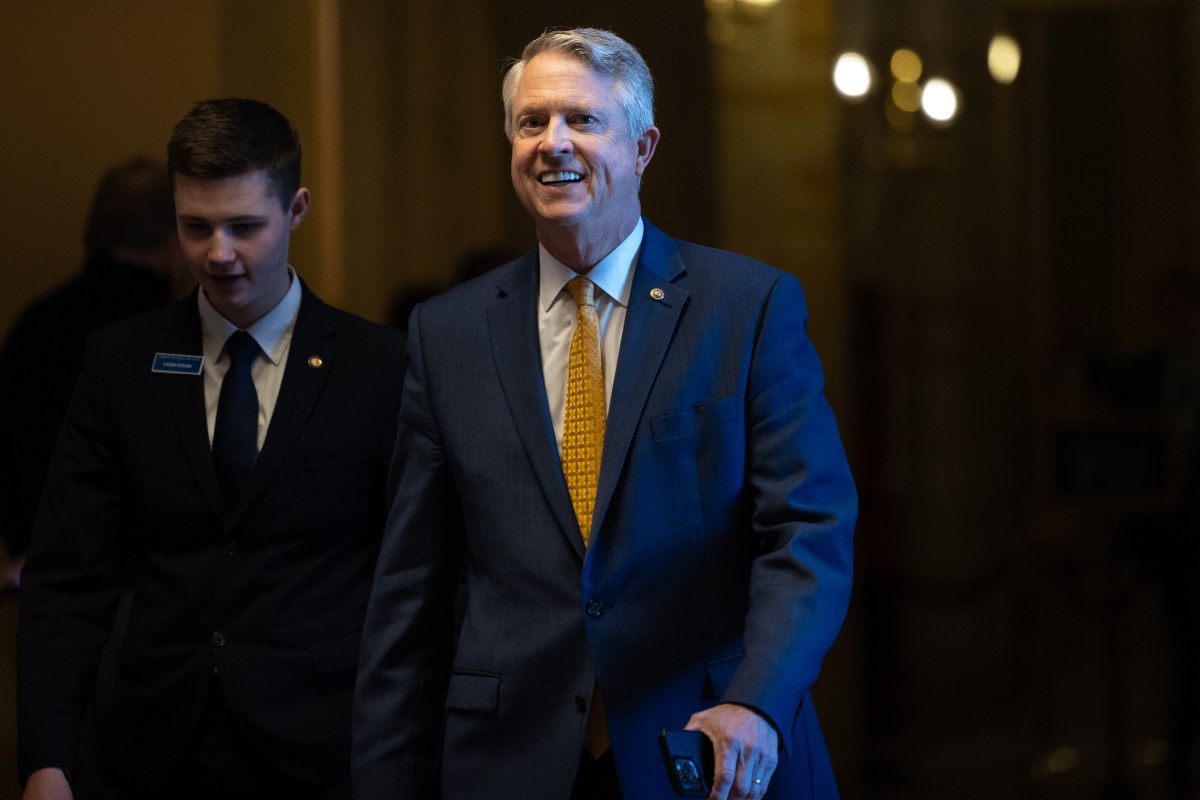
Republican Senator Roger Marshall is holding onto a narrow lead in the Kansas Senate race, according to the latest poll of the unusually competitive contest in the normally solidly Republican state.
But his chances of winning reelection may have dwindled as he faced a hostile crowd during his first debate with Democratic challenger Adam Hamilton, a liberal megachurch pastor, at the Kansas State Fair on Saturday.
Marshall was repeatedly booed during the debate and, at one point, the audience broke into a chant of "shame on you" as Marshall defended suing patients over unpaid medical bills. That came as moderators questioned him about a report published in The New York Times on September 8 that said Marshall had filed more than 700 lawsuits against patients with outstanding bills during his decades-long career as an obstetrician-gynecologist.
It comes as the Senate race in Kansas has become one of the more closely watched Senate contests of the 2026 midterms cycle.
Republicans are fighting to preserve their slim majority in the Senate this fall, and face a difficult task given the party in power typically loses seats in midterm elections. Democrats face a difficult path to the Senate majority, needing to flip four Republican-held seats to retake control of the chamber.
Polls have indicated unexpectedly competitive contests in several conservative states and Democrats have eyed an opportunity to make inroads in Republican territory as President Donald Trump’s approval ratings have dropped amid voter concerns about the economy and the war in Iran.
Democrats have not won a Senate race in Kansas since 1932 and haven’t come close to winning one in the past 50 years, but several polls have indicated the race could be close this year in a state that Trump carried by 16 points in the 2024 election.
Vice President JD Vance is scheduled to make a stop in Olathe, Kansas, on Monday to show support for Marshall, highlighting the importance of the race.
Newsweek has contacted the Marshall and Hamilton campaigns for comment via emails sent outside regular business hours.
Marshall remains the favorite, though some polls have indicated the race could be very close.
A co/efficient poll, conducted between September 8 and 10 among 915 likely voters, found Marshall leading Hamilton, 49 percent to 44 percent, with 5 percent saying they were undecided. The poll has a margin of error of plus or minus 3.22 percent.
Other recent surveys have shown a tighter race.
A Global Strategy Group poll conducted between August 12 and 16 among 800 likely voters found Hamilton narrowly ahead, 44 percent to 43 percent. However, Hamilton’s advantage was within the survey’s margin of error of plus or minus 3.5 percent.
Another poll conducted in August gave Marshall a narrow lead. The Public Policy Polling survey, conducted between August 7 and 8 among 569 voters, showed Marshall leading 46 percent to 45 percent. It was not clear what the survey’s margin of error was.
Election forecasters have said the Senate race in Kansas has become more competitive since Hamilton won the Democratic nomination in August, though Marshall is still favored to win. The Cook Political Report shifted the contest from "solid Republican" to "likely Republican" after Hamilton’s primary win.
But prediction markets remain much more favorable to Marshall.
Kalshi gives Marshall a 79 percent chance of winning, compared with about 21 percent for Hamilton. Similarly, Polymarket gives Marshall an 80 percent chance of winning and Hamilton a 21 percent chance.
Marshall sued more than 700 patients over unpaid bills that ranged from as little as $101 to several thousand dollars over the course of his decades-long medical career, the Times reported. Some 81 patients were arrested after missing court appearances related to those cases.
About half the lawsuits were filed under Marshall's name and the rest were filed by Heartland Regional OBGYN, the Great Bend medical practice that Marshall solely owned from 1998 to 2012 and then co-owned until 2019, the newspaper reported.
Most of the patients who were sued lived in Barton County, a rural area where the rates of uninsured people and poverty are above-average, according to the newspaper. The patients were routinely charged an 18 percent annual interest rate on outstanding bills and some had their bank accounts garnished, the report said.
Steven Johnson, an attorney who often represented Marshall in debt cases, told the Times that the warrants and arrests were necessary to ensure debtors attended court dates. "If defendants were allowed to appear only when they wanted to without any consequences the court would get no business done," he said.
Marshall's campaign defended his record, arguing that he had long treated patients regardless of their ability to pay and that warrants were issued by judges, not doctors.
Payton Fuller, a spokeswoman for Marshall's campaign, said the hospital "provided millions in uncompensated care" and "used the exact same billing and outside collection procedures as every other business or hospital in Kansas."
The latest co/efficient survey found Marshall's favorability rating was underwater, with 42 percent holding a favorable view and 44 percent an unfavorable one.
But the same survey found him leading Hamilton by five points, suggesting some voters who hold negative views of the senator may remain willing to support him over his Democratic challenger.
The survey found Hamilton’s favorability rating was a net positive, with 34 percent holding a favorable view and 27 percent holding an unfavorable view of him.
But Hamilton appears to be more of an unknown for some Kansas voters. Some 39 percent of respondents said they had no opinion of him, while just 14 percent said the same of Marshall.
Hamilton, a first-time candidate, is the founder of Church of the Resurrection in Leawood, the nation’s largest United Methodist church.
He built his church from a few members meeting in a funeral home chapel in 1990 into a 25,000-member congregation with nine locations across the Kansas City area. He gained national attention by writing more than 30 books, mostly on Christian theology.
He won the Democratic nomination in August after campaigning as a faith-based moderate capable of competing in conservative Kansas.
He raised $3.6 million during the first two months of his campaign, leading Democrats to argue that the Senate race in Kansas could be more competitive than expected this year.
Marshall has branded Hamilton as "too woke for Kansas."
But Hamilton described himself as a centrist, running partly on "bringing people together." His congregation is nearly evenly split between Democrats, Republicans and independents, he said.
During Saturday's debate, Hamilton sharply criticized Marshall's support for Trump's tariff policies, healthcare cuts and foreign policy decisions.