
Rural development must go beyond election ceremonies - IOL
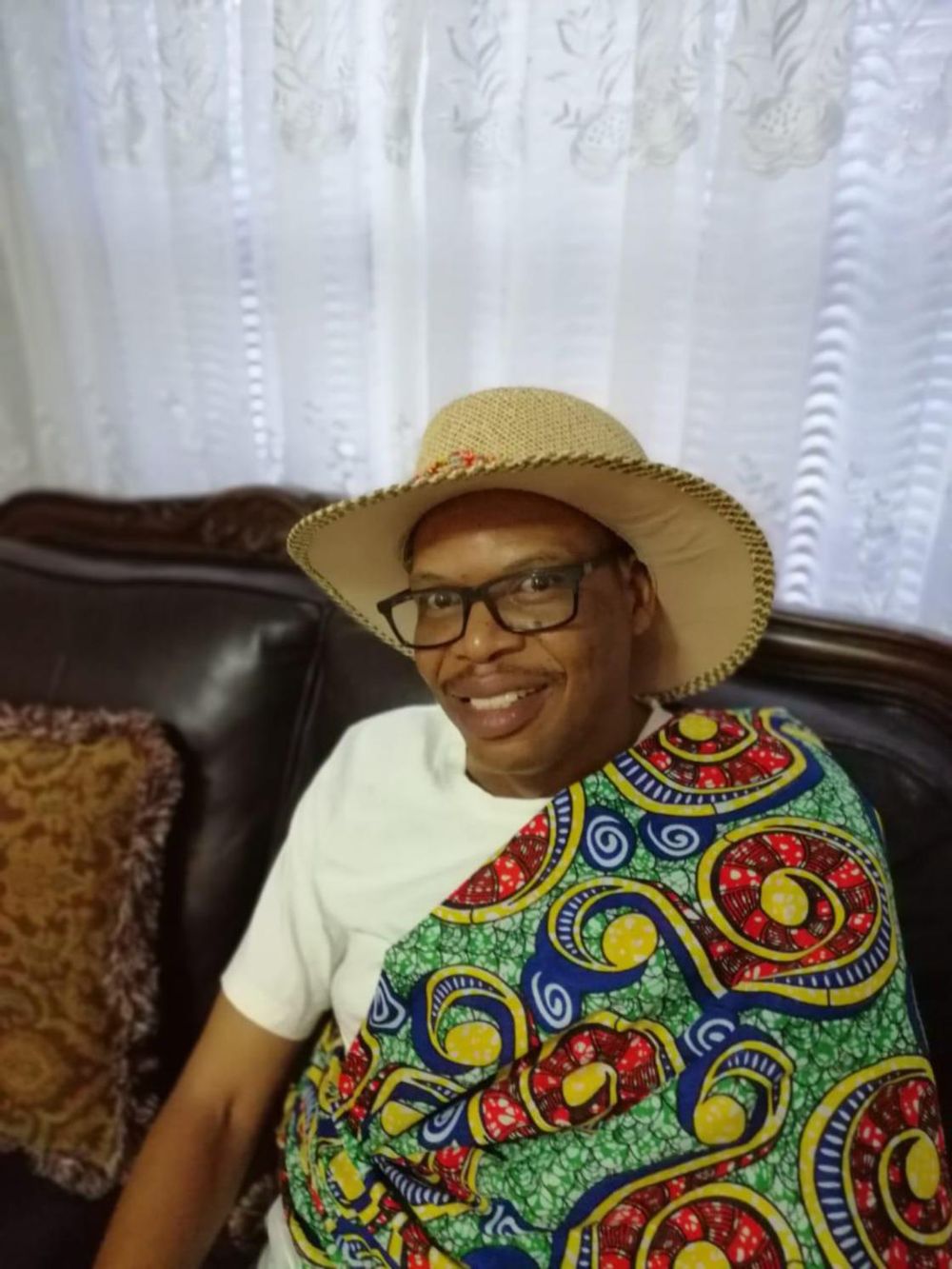
Dr Mabila Mathebula is an author, ghostwriter and life coach, and has a PhD in Construction Management.
Dr Mensa Otabil wrote a book titled Beyond the Rivers of Ethiopia, where he reveals God’s purpose for the Black race. He records that Black people have added value in singing, even if the preaching may not be up to scratch.
According to Floyd Dickens, Jr. and Jacqueline B. Dickens, added value “is the cultural background we have to supplement our education, training and work experience”.
Dr Patrice Motsepe of the Motsepe Foundation enhanced this notion when he paid a courtesy visit to the Bantu Church of Christ in the Eastern Cape.
The Evangelical Presbyterian Church in South Africa beautifully sings a chorus with the following lyrics, “Nghenelela Jehova leswi swi lava wena ntsena”. Roughly translated into English, “some challenges are stupendous in nature to an extent that they warrant the interposition of the Divine order”.
Equally, the challenges besetting the Bareki community of Ephraim Mogale Local Municipality in Limpopo are beyond the Premier, MECs, and Executive Mayor; these challenges warrant the intervention of the Honourable President Matamela Cyril Ramaphosa.
It is palpable that honourable is a title or an epithet evoking reverence; it is for this reason that parliamentarians address one another as honourable as part of their parliamentary decorum.
Simply put, honourability should be a badge of honour for those who discharge public duty with a view to impacting future generations. Those who zero in on the next election during electioneering at the cost of future generations do not deserve the title honourable.
Last week, I observed dyed-in-the-wool politicians under the leadership of Mr Stanley Mathabatha, deputy minister of Land Reform and Rural Development, handing over reconfigured title deeds to the communities of Mokgwaneng, Mamaneng, Matatadibeng, and Ditholeng, collectively called Bareki Community.
The community members bussed to the venue and were offered a free meal, which was a good feast for the hungry. To the villagers who have always lived with the spectre of poverty and unemployment, the title deeds handover ceremony was a thing of positive pride indeed.
It is strange that politicians still treat rural people as instruments or tools of their electioneering campaigns. Unfortunately, the chains of poverty still hobble rural people from free thinking. Proper free people do not relish being the instruments of others.
In 1891, Pope Leo XIII, in his encyclical Rerum Novarum on the ‘Rights and Duties of Capital and Labour’, said: “To misuse men as though they were things in the pursuit of gain… is truly shameful and inhuman.”
However, emotional blackmailers do not feel any shame for their manipulative actions.
While governments throughout the world still have power and can perform important functions according to their missions, they are clearly becoming less relevant in the eyes of many constituents.
There was a time when the majority of the population voted for the ANC. Today, the profile of non-voters is changing. Increasingly, dissatisfied citizens are casting a vote of no confidence by dropping out of the election process. This is a sign of declining relevance.
It is also apparent that the government’s basic operating theories are outdated. The idea that the government can engineer a social revolution with social grants and the RDP housing policy is based on flawed theory.
Charles Handy observes that “the communist world was brought down by its bureaucratic rigidity and its inability to harness the energies and enthusiasm of its people in pursuit of its cause”. Political organisations should avoid this paradigm paralysis.
Learners are taught citizenship in Life Orientation, yet their leaders treat citizens as subjects. Subjects are like slaves and are meant to do as they are told. On the other side of the coin, citizens are the point and strength of a nation. They have rights, but also obligations; they are active, or should be, not passive.
However, if people are going to become active citizens, it must first be made easier for them; they must be able to see some of the results of their vote as they appear in local differences. To become directly involved, they must also see their involvement as a chance to make a difference.
The Bareki Community is underdeveloped; the original farm owners were migrant workers who bought land under countervailing pressures in the 50s. The next generations could not become farmers because they were deeply engrossed in the liberation Struggle.
People have title deeds, but there is no hard infrastructure. The community was once under Mpumalanga Province but is now ring-fenced within Limpopo Province. Regardless of the demarcation, they used to receive water from Dr JS Moroka Local Municipality. It is notable that since last November, they have not had water, and the authorities have told them that their water was cut off because the Sekhukhune District Municipality owes Dr JS Moroka Local Municipality some money.
People spend approximately R1 000 a month on water; they buy water from people who have the privilege of owning boreholes. The land is there, but there is no water. You know what water is worth. People can raise cattle. They can also do subsistence farming. The place is probably a shambles. Villagers are treated like driftwood or a rudderless boat.
People have come to the end of the rope. The dirt roads are in bad shape; there is little or no maintenance. Public transport is awful; villagers walk long distances every day. Walking is a mode of transport in Africa and Asia. It is rare for Western transport researchers to include walking in policy and planning.
Our leaders must take a leaf out of the book of the Most Honourable Elijah Mahammad of the Nation of Islam. He was a perfect example of honourability and visionary leadership; he could see behind the hills. His approach to lifting his people uphill was not welfare-centred but ‘workfare’ centred.
He proposed an economic blueprint for the Black Americans. Among other interventions, he encouraged his people to purchase real estate, buy farms, and timberland. Timber should be converted into lumber to build wooden homes for themselves.
He also advised them to purchase clay land. With clay land and hill land, people could manufacture their own bricks and build brick houses. I hope that our leaders will listen to the community’s concerns.
The words of Adam Smith are worth recalling: “Great nations are never impoverished by private, though they are sometimes by public, prodigality, and misconduct.”
Smith was a moral philosopher first and economist second. Our forebears should be shrinking in their graves in horror. A title deed is nothing if people do not have the requisite services. The ceremony was like playing tennis with the net down.
Dr Mabila Mathebula is an author, ghostwriter and life coach, and has a PhD in Construction Management.