Rural families face barriers as South Africa’s reading crisis deepens - IOL
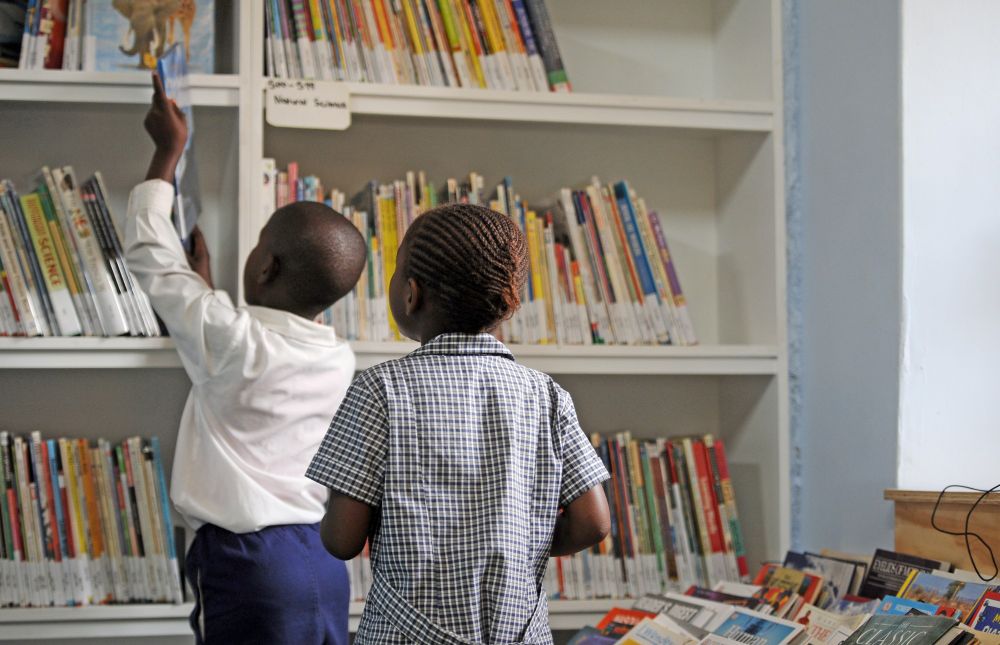
South Africa’s reading crisis hits children in poor and rural communities hardest, with many lacking books, learning materials, and the support needed to build strong reading skills.
The latest Funda Uphumelele findings show that only 31% of Grade 1 learners, 33% of Grade 2 learners, and 31% of Grade 3 learners reached the national home-language reading benchmark. By Grade 3, 15% of learners assessed could not read a single word.
The survey, conducted in 2025 involving about 28 000 learners at 710 schools, was the first nationally representative assessment of foundational reading skills across all 11 official languages. It also exposed sharp inequalities linked to language, province and socio-economic status, with children in wealthier schools more likely to reach the benchmarks.
Seriti Institute said those numbers reflect what its teams are seeing in homes and communities through its aRe Bapaleng programme, which has worked with more than 135 000 parents and caregivers across all nine provinces.
Programme co-ordinator Nhlophiseng Masiza said families in deep rural areas often had limited access to resources that could support their children’s reading and learning.
“One of the biggest barriers we identified is limited access to books and other age-appropriate reading materials,” she said.
Masiza said many families did not have books at home, while some communities had no libraries where parents and children could access reading materials or digital resources. Parents who work far from home also often have little time to help their children with homework and reading.
However, she said parents should not be blamed for a problem they cannot solve alone.
Masiza said families could build reading into everyday life through simple activities such as sharing stories, talking about pictures, asking children questions, and letting them choose books they enjoy.
“Most importantly, parents and caregivers need to understand that they do not have to be teachers.”
She said families needed practical support, including access to age-appropriate books, simple activities they could do at home, and guidance on making reading enjoyable even when time was limited.
Masiza said the response inside classrooms also needed to improve, with teachers requiring practical support, quality reading materials, and ongoing training.
She said greater attention should be given to phonological awareness, phonics, vocabulary, comprehension, fluency, and reading for meaning, while learners falling behind should be identified early.
Through the aRe Bapaleng programme, National Youth Service team leader Mothusi Jacob Moatshe visited about 30 households in Biesiesvlei in the North West and supported Grade R to Grade 3 learners at Zoohuis Primary School.
Moatshe said he encountered children struggling with basic writing, including some who could not confidently write their own names.
“With support and regular practice, we were able to help them improve,” he said.
Education expert Professor Mary Metcalfe warned that South Africa cannot afford to wait until children reach higher grades before dealing with reading problems.
“Children who cannot read for meaning by Grade 4 fall further and further behind,” Metcalfe wrote in June 2025, noting that the curriculum increasingly requires learners to read independently across subjects.
She said investment in foundation-phase literacy must become a national priority, with evidence-based planning and the resources needed to close gaps before children fall too far behind.
The government has a reading strategy in place to improve literacy in classrooms and homes. The National Reading and Literacy Strategy 2024-2030 is intended to improve reading and comprehension in the lower grades, with the government also developing reading benchmarks to identify learners who are falling behind early. The strategy includes a focus on home-language literacy and monitoring implementation at district level.
In March 2026, Basic Education Minister Siviwe Gwarube told Parliament that the strategy focuses on reading for meaning, strengthening literacy in African languages and bilingual settings, improving access to quality reading materials, supporting teachers through professional development and classroom guidance, and involving parents and caregivers in reading at home and school.
However, in June 2026, Parliament’s Portfolio Committee on Basic Education said it remained concerned that too many children were leaving the foundation phase unable to read for meaning. The committee called for urgent and coordinated interventions, including stronger teacher training, quality learning materials, teacher coaching, and classroom support.