Russia will celebrate almost killing Boris Johnson – this is Putin’s plan for chaos
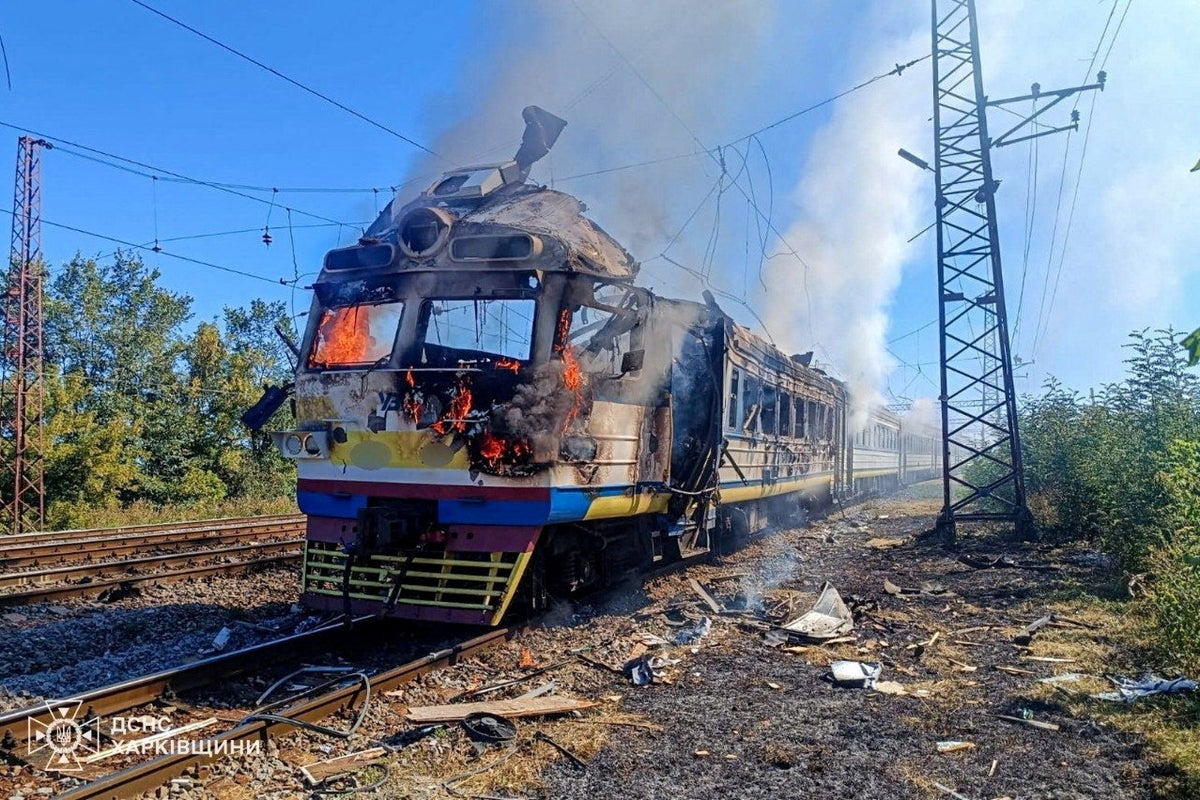
If blowing up a petrol station and railway carriage close to a train carrying two former European prime ministers and the man who used to run America's war in Afghanistan, the CIA - and rewrote US military doctrine - was an accident, it isn’t one the Russians are admitting to in the Kremlin.
Boris Johnson, Carl Bilt - once Sweden’s PM - and general David Petraeus, the “warrior priest” of America’s War on Terror, are tiptop scalps for Vladimir Putin’s collection and his external spy agency, the FSB, will get kudos for nearly taking them.
Johnson, especially, is a national hero in Ukraine. His record in Britain, where he enhanced Russia’s strategic standing by helping take the UK out of Europe, doesn’t worry frontline soldiers in a country that is grateful for his stentorian support from the early days of the 2022 full-scale Russian invasion.
On the back foot economically, facing the possibility of a collapse of command and control systems inside his own forces which are losing around 30,000 a month dead, Putin has been raising the prospect of a European adventure.
Over the last week or so, his forces have rattled the Polish cage with drone assaults, like the one that hit Johnson’s train and a regular shuttle from Poland to Kyiv, on or near Ukraine’s border crossings.
There are reports too of manoeuvres in Belarus and a possible winter drive on Kyiv, of expanded Russian movements close to Baltic states. The Ukrainian president may have come close to death when a Russian drone delayed an aircraft carrying him to meetings recently.
Putin’s forces have been trying to cut, survey, and infect with technological viruses the very lifeblood of modern economies - undersea communications cables.
The Kremlin has been stirring the pot beyond its borders and has threatened to punish Britain for maintaining Johnson’s support, which includes weapons programmes and plenty of covert activity.
The application of the Garazimov Doctrine, Moscow’s view that victory can be chaos and instability among enemies, is going well. What better way to show the ability to get the Scandinavian countries, London, and remind non-Trumpian America that Russia matters than sending a jet-powered drone into action close enough to singe their hair?
Johnson, Bilt and Petraus were returning from the Yalta Security Conference where Poland’s foreign minister, Radoslaw Sikorski, had called for aggressive exercises by Nato along the borders of Russia’s Baltic enclave, Kaliningrad - to keep the Russians off balance.
This effort to reclaim the initiative in Europe, where Poland is now a major player in defence and diplomacy, is a bid to offset the effects of the Garazimov Doctrine.
In attacking border areas and almost killing Petraeus, Putin will not have angered his friend, Donald Trump. The 47th president cannot stand the pro-democrat former special forces military guru. He may even relish the idea that the former CIA boss got a late-life war time close shave.
Putin, and his henchmen in targeting cells, are signalling power - and reach. Just as Ukraine has been able to stretch over a thousand miles into the Russian Federation to attack its strategic sites, such as oil production centres and air bases, so Moscow wants to show that it can drop a bomb where it wants, when it wants, and right on the doorstep of the European Union.
"It is entirely possible that the Russian drone's intended target was the diplomatic train, which departed the station earlier than scheduled after train timetables were adjusted in real time because of the constant threat of Russian strikes," Ukraine's railway operator, Ukrzaliznytsia, said on Telegram.
Johnson, who was evacuated from his carriage along with all passengers on both trains as drones were tracked heading their way, said the attacks were “random and senseless” on social media.
They were not. They may have been “lucky strikes” by Moscow but they serve a powerful purpose - they test Europe’s resolve along with other provocations to see whether the continent, and Britain, can or will take a stand - and what that might be?