Saba Faisal calls virality an 'illness', slams out-of-context edits
Direct Source Verification:
This story is aggregated from The Express Tribune (tribune.com.pk). Full reporting rights and copyright belong to the primary publisher.
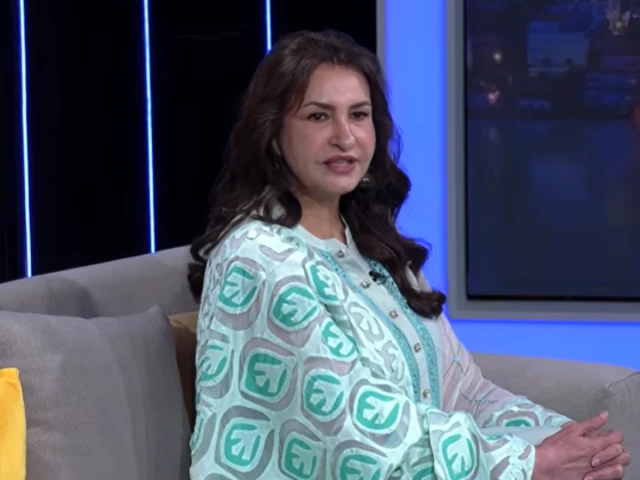
Actor also opens up about industry etiquette, punctuality, role selection and the career milestone that was 'Humsafar'
Veteran actor Saba Faisal has addressed the culture of viral clips in a recent interview with Vasay Chaudhry, describing how her words are routinely edited out of context and the toll it has taken on a reputation she has spent decades building.
Faisal, who has never shied away from speaking her mind on shows and has previously weighed in on debates surrounding marriage and family, said the problem was less about what she said and more about how her remarks were repackaged online.
"I don't even say anything, and yet it still happens," she said, adding that she had started taking longer breaks from public appearances because of how often innocuous remarks were spliced into controversy.
She was blunt about the damage such editing could cause. "The respect and honour we have built over our entire lives gets severely disturbed when a couple of words are spliced together and edited into the video," she said, describing a practice that prioritised virality over the truth of what was actually said.
For Faisal, the trend had curdled into something closer to a sickness. "Virality is a strange illness that has become so widespread. People have such an obsession with going viral, and becoming viral is the easiest thing in the world."
Her concerns extended beyond social media to what she viewed as a breakdown in professional courtesy within the entertainment industry. Faisal argued that criticism of senior artists had become too casual and too public, particularly when disagreements on a set could be handled privately.
"You sit and criticise artists, and those people criticise who have no standing here, who have achieved nothing, who have nothing to their credit," she said, arguing that internal issues should be resolved privately rather than aired on television.
"Whether it is Sajal [Aly] or anyone else, a seasoned artist whom a major production house invests money in, you cannot just sit on a channel and criticise them like that. We are all people from within the same industry; we are all here for one another," she said.
Faisal then turned to a quality she considers essential to professional success: punctuality.
"A successful person is always someone punctual, who values time, and who knows how to subtract their personal ego from their work," she said, calling consistency "the ultimate secret to success" while lamenting that fewer people in the industry seemed to prioritise it.
Asked about the industry's enduring appetite for saas-bahu dramas, Faisal pushed back against the idea that the genre was simply a reflection of actors' creative choices.
"It's not for me; it's because of people's approach and mindset," she said. "The segment of society that watches television has these exact problems and ways of solving them, which is why production houses invest money in them."
She was equally candid about her own approach to choosing roles. "Whichever character offers me a good margin, good pay, and maximum screen time, I will do it."
Looking back on her career, Faisal singled out Humsafar as the project that changed the way she approached acting.
"I was always cast as a good-looking lady wearing sarees with heavy makeup," she said of her earlier roles. "When I got Humsafar, I learned what an actor's true thirst is, what an actor wants, and how to perform. That proved to be a milestone in my acting career."
Away from industry politics, Faisal credited a deliberately positive outlook with helping her navigate setbacks.
"A positive mindset should be a weapon for everyone. It gives you support during difficult times and when you hit rock bottom," she said, adding that she had come to see hardship as something that ultimately refined character rather than broke it.
That philosophy also shaped how she viewed time itself. "The present moment is the best; it is the most supreme," she said, arguing that nostalgia could often make the past appear better than it actually was.
It was an outlook she carried into her personal life as well, where she remained a firm believer in traditional family values and mutual respect — a stance she had voiced before and continued to stand by despite the criticism it had sometimes drawn.
Original Source
https://tribune.com.pk/story/2630755/saba-faisal-calls-virality-an-illness-slams-out-of-context-edits