
SAPS 10111: R19.3m spent as ageing technology, staffing shortages persist - IOL
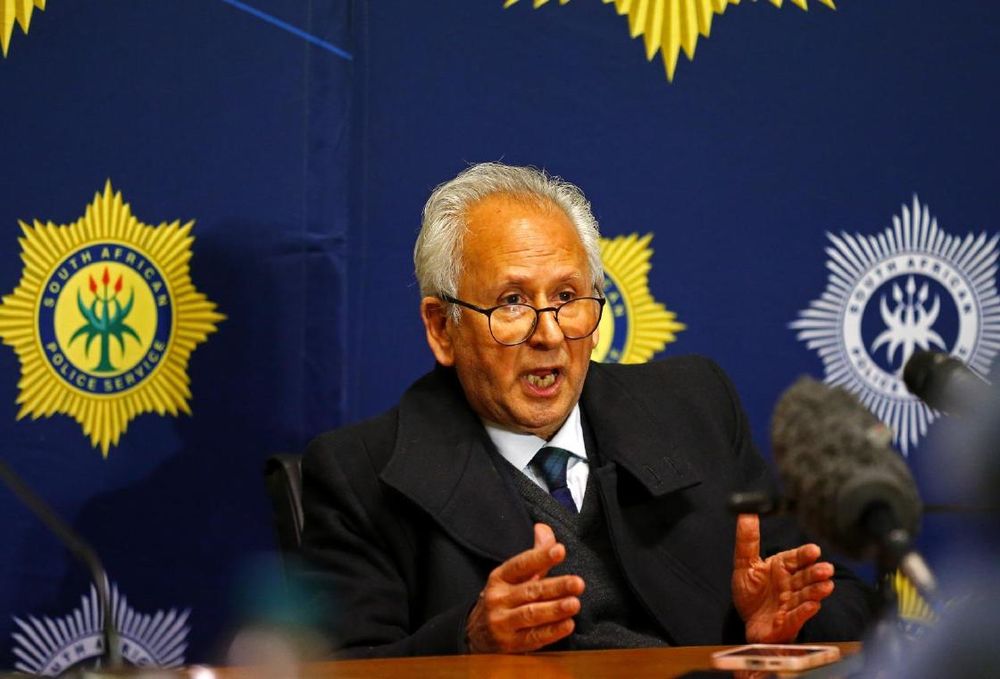
Acting Police Minister Firoz Cachalia says the police service spent about R19.3 million on 10111 systems over five years, while ageing technology and staffing shortages continue to affect the emergency call service, but the three main systems supporting 10111 have not been upgraded.
South Africa’s 10111 emergency call centres continue to face staffing shortages and ageing technology, despite years of efforts to improve a service relied on by people seeking urgent police assistance.
The 10111 service operates 24 hours a day for police emergencies.
Operators take information from callers and assign complaints to the relevant SAPS unit for a response.
SAPS spent about R19.3 million on the GEMC3 and Mobile Data System used at the centres over the past five financial years, but no capital investment was made to modernise or replace the three main systems supporting 10111.
The figures were provided by Acting Police Minister Firoz Cachalia in response to questions from DA MP Ian Cameron about the cost, maintenance, upgrades and performance of the emergency call service.
The Cisco Unified Communications Manager infrastructure used by the centres has reached its official End-of-Life and End-of-Support status, meaning software updates, security patches and manufacturer technical support are no longer available.
Cachalia said this presented “operational, reliability, cybersecurity, and system sustainability risks”.
The challenges facing the 10111 service are not new.
In 2023, then police minister Bheki Cele told Parliament that more than seven million emergency calls had been dropped over the 2020/21, 2021/22 and part of the 2022/23 financial years.
At the time, only 41.5% of the required personnel were deployed at 10111 centres. IOL reported in January 2024 that the centres were meant to have 3,344 personnel but had 1,315 as at April 2022.
SAPS subsequently introduced a 10111 Reform Project Plan, with 535 newly trained constables allocated to the centres as part of efforts to strengthen their capacity.
But staffing and technology remain challenges.
The centres rely on three main systems: the Cisco telephone system, the Global Emergency Mobile Communications Command and Control (GEMC3) system and the Mobile Data System (MDS).
Annual expenditure on GEMC3 and MDS was R4.04 million in 2021/22, R4.15 million in 2022/23, R2.70 million in 2023/24, R3.19 million in 2024/25 and R5.20 million in 2025/26.
The spending covered software licences, standby services, routine maintenance and support for GEMC3, as well as maintenance of the MDS by the State Information Technology Agency (SITA).
No capital investment was made to modernise or replace the Cisco, GEMC3 or MDS systems during the five-year period.
The amount spent specifically on Cisco could not be determined because the telephone system forms part of SAPS’s wider Unified Communications environment.
Cachalia said the Cisco system was maintained under a service-level agreement with SITA.
“No upgrades or enhancements were implemented on the Cisco telephony system during the period under review. The system was maintained in terms of the Service Level Agreement (SLA) between SAPS and the State Information Technology Agency (SITA),” he said.
SAPS has formally submitted a procurement and technical request to SITA for a modern, fully supported communication solution to replace the obsolete infrastructure.
The proposed intervention is intended to restore network stability, strengthen cybersecurity and compliance, improve system reliability and ensure seamless communication across the affected provinces.
SAPS is also working to replace GEMC3 with an Incident Management System with Computer-Aided Dispatch (CAD) capability.
A Request for Bid was advertised through SITA in 2025, but the tender was cancelled in April 2026.
“SITA is currently in the process of republishing the bid,” Cachalia said.
The replacement process therefore remains in procurement while the current infrastructure continues to support 10111 operations.
The technology problems are compounded by shortages of call-centre operators.
Cachalia said the number of available operators was not sufficient to consistently meet incoming call volumes, particularly during peak periods.
“The ratio of available Call Centre operators to incoming call volumes is not adequate to consistently meet demand, particularly during peak periods, which may contribute to delays in answering calls and places additional pressure on available personnel,” he said.
SAPS continues to assess staffing requirements at the centres, with interventions aimed at strengthening human-resource capacity and improving operational efficiency.
The pressure on 10111 is also reflected in SAPS’s own performance reporting.
The 2023/24 annual report recorded a national average abandoned-call rate of 26.44%, while some centres had average response times ranging from eight to 35 minutes.
The report said SAPS had failed to adequately establish the capacity needed to operate the centres and warned that emergency incidents might not be effectively attended to.
The report also recorded a 10111 reform project, including the allocation of 535 new constables to the centres.
The 10111 centres continue to handle millions of calls each year.
According to the 2024/25 SAPS annual report, 20 command centres received 8,510,839 calls during the financial year.
About 845,795 were recorded as police-related emergency calls.
SAPS said the large volume of non-police-related calls places significant pressure on personnel and can hinder the prioritisation of genuine emergencies.
SAPS also relies on multilingual personnel to assist callers who cannot communicate in English.
Cachalia said members who speak various South African languages are used where available to facilitate communication with callers.
“The multilingual capacity of personnel is utilised, where available, to facilitate communication with callers and ensure that their complaints or requests for police assistance receive the necessary attention,” he said.


