Saudi cancels some oil cargoes after pipeline hit, top buyer chasing alternatives
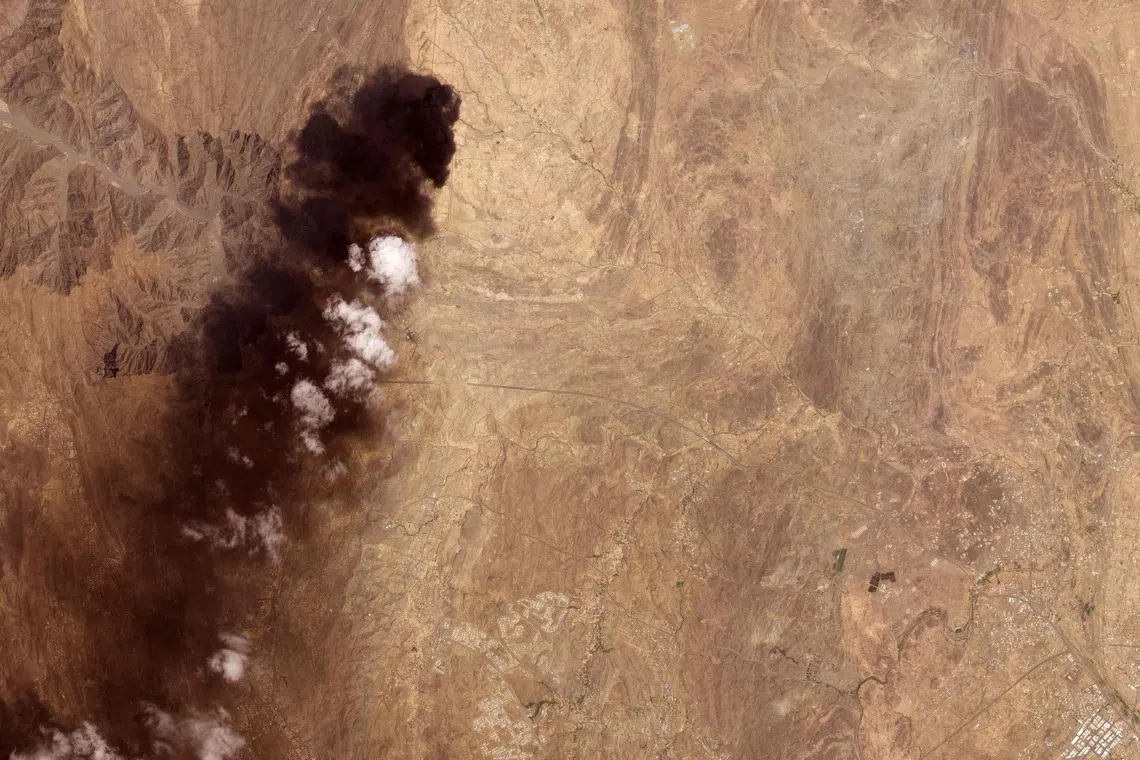
A satellite image taken by Planet Labs PBC on Sept 8 showing smoke billowing from an Aramco oil depot near the Saudi city of Abha following a Houthi attack.
LONDON/WARSAW - Saudi Arabia has cut oil shipments to Europe after drone attacks damaged its key export pipeline to the Red Sea, trade sources told Reuters, prompting top customers such as Poland to rush to seek alternatives as cargo prices topped US$120 (S$152) a barrel.
The attacks, which Saudi Arabia has blamed on Iraqi militia, forced the kingdom on Sept 11 to shut its East-West desert oil pipeline, which has spared it from the worst of the impact of the closure of the Strait of Hormuz over the last six months.
Oil trading and shipping sources said on Sept 15 that Saudi Arabia had informed European customers that some September-loading crude cargoes will be cancelled and oil loadings at the Red Sea port of Yanbu had been suspended.
State oil company Saudi Aramco declined to comment.
The cut in Saudi flows through the Red Sea will prompt Saudi Arabia to try to export more oil via the Strait of Hormuz using so-called dark shipments similar to those already used by the United Arab Emirates and Iraq, trading sources said.
Such shipments have allowed Gulf oil producers to export 7 million to 9 million barrels per day, which is 30 per cent to 40 per cent of pre-war volumes.
The supply disruption supported oil prices, with Brent oil futures trading near US$108 a barrel and cargo prices in Europe’s physical market even higher, with key benchmark dated Brent at around US$122 per barrel, LSEG data showed.
Saudi Arabia loaded 22 million barrels of oil across 12 vessels at Ras Tanura/ Juaymah in the week of Sept 7 to 13, as opposed to 6 to 7 vessels per week for the prior three weeks, data from Vortexa showed.
Reuters could not immediately determine how many cargoes to Europe would be cancelled or for how long Yanbu loadings would be suspended.
Polish integrated oil firm Orlen PKN.WA was rushing to find crude oil cargoes from the North Sea and further afield to replace disrupted Saudi imports, five industry sources said.
Aramco became Orlen’s top supplier in 2022 and now supplies around 40 per cent of its oil, helping wean it off Russian oil but making it reliant on the Saudi producer.
Orlen declined to comment on details of specific commercial transactions, but said it actively manages its supply portfolio to ensure the uninterrupted operation of its refining assets.
“Adjusting and optimising purchase volumes is a standard, ongoing part of the Orlen Group’s operations, driven by both current production needs and changing market conditions,” an Orlen spokesperson told Reuters.
Orlen purchased several cargoes of crude oil in spot tenders on Sept 11 and Sept 14, the sources said.
It picked up North Sea grades including Grane, Johan Sverdrup and Johan Castberg, two said. It also tendered for grades further afield including US WTI Midland and Kazakh CPC Blend, two sources added.
It issued another tender on Sept 15 to buy North Sea or Algerian crude for October delivery and Guyanese crude for November delivery, one trader said, but results were slow to surface.
Orlen and subsidiaries operate oil refineries in Poland, Lithuania, and the Czech Republic.
The Baltic port of Gdansk in Poland received around 160,000 bpd of Saudi crude this year to date, and Lithuania’s Butinge received 63,000 bpd, data from analytics firm Kpler showed.
No further details on the tenders were available and the results could not be directly confirmed with the counterparties.
Feedstock deliveries to Orlen refineries are proceeding without disruption, the company spokesperson said. REUTERS