
September 28, 2026 - PBS News Hour full episode - PBS
Problems playing video? Report a Problem | Closed Captioning Feedback
Before you submit an error, please consult our Video Help page.
Problems playing video? Report a Problem | Closed Captioning Feedback
Before you submit an error, please consult our Video Help page.
Major corporate funding for the PBS News Hour is provided by BDO, BNSF, Consumer Cellular, American Cruise Lines, and Raymond James. Funding for the PBS NewsHour Weekend is provided by...More
Problems playing video? Report a Problem | Closed Captioning Feedback
Before you submit an error, please consult our Video Help page.
PBS News Hour is available to stream on pbs.org and the PBS app.
GEOFF BENNETT: And I'm Geoff Bennett.
On the "News Hour" tonight: The Trump administration rolls back Biden era fuel efficiency standards for cars and trucks.
AMNA NAWAZ: High mortgage rates deal a blow to a housing market that's already unaffordable for many.
GEOFF BENNETT: And how the Trump Justice Department is shattering the post-Watergate norm of the agency operating free from political interference.
CLAIRE FINKELSTEIN, University of Pennsylvania: With this administration, there are -- there's fewer and fewer truly independent agencies that can act without influence from the White House.
(BREAK) GEOFF BENNETT: Welcome to the "News Hour."
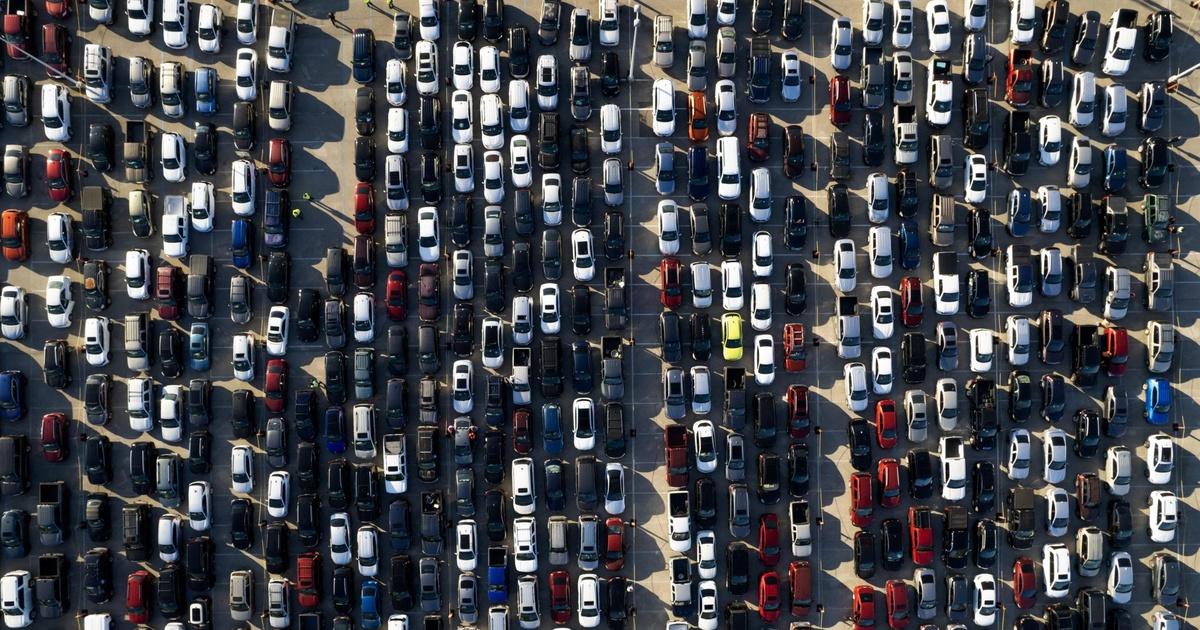
The Trump administration is rolling back tougher federal fuel economy standards for new vehicles, giving automakers more flexibility over how fuel-efficient their cars and trucks must be.
AMNA NAWAZ: The move reverses policies meant to increase fuel efficiency to encourage greater use of electric vehicles.
According to the administration, the fleet-wide average will be 34.9 miles per gallon in 2031.
Under the Biden era rules, the average would have been over 50 miles per gallon.
And this new standard relaxes requirements for automakers to control pollution.
The boost for gas-powered vehicles comes as the war in Iran continues to drive up oil prices.
For more on what these changes mean, I'm joined by David Shepardson, who covers transportation for Reuters.
AMNA NAWAZ: So let's just start with the basics here.
What exactly did the Trump administration change today?
DAVID SHEPARDSON: So, as you said, it took the Biden rules, which would have increased efficiency quite dramatically in some years by 10 percent from 50 miles per gallon average to 35 miles per gallon.
That's a big benefit to auto companies that in the past would have had to use credits or buy credits from a Tesla or Rivian to meet those requirements.
And it's really part of the administration's multipronged strategy to make it easier to buy gas-powered vehicles and de-emphasize and in some cases make it more expensive to buy E.V.s.
AMNA NAWAZ: We heard from the transportation secretary, Duffy, today.
He said this will allow automakers to make vehicles American people want to buy, not what Washington is forcing them to build, in his words.
And the Trump administration says this move was going to reduce the cost of a new vehicle by $1,300.
Is there evidence to back up that claim?
DAVID SHEPARDSON: So, it's true that, by their estimate, about $1,289 per vehicle in technology costs are going to be reduced on the auto companies' part.
Companies like GM are going to see a $20 billion reduction in their estimated costs between now and 2031.
However, there's no guarantee or requirement that the auto companies pass that savings onto the consumer in forms of a lower price.
It's also worth noting that, by their estimate, the fuel costs through the life of the vehicles would increase by about $1,600 on average.
So it would actually cost more over the life of the vehicles than the upfront savings.
Vehicles are over $50,000 on average.
There's a lot of inflationary pressures on cars.
The administration is looking at ways to try to reduce that cost, upfront cost.
AMNA NAWAZ: You mentioned what this could mean for automakers.
In your conversations, how are they reacting to today's rules?
DAVID SHEPARDSON: Well, look, they didn't like the Biden rules.
mandate, as the Trump administration calls.
However, it was part of a multipronged strategy to force auto companies to build more E.V.s and ultimately likely get to an all-E.V.
By having high standards, the easiest way to comply would have been through building E.V.s.
Now, in this new world, you don't have to build E.V.s.
Because there's no regulatory benefits.
tax credit, and so it is much more of a market-based strategy, and the government's not requiring these efficiency improvements that would give people benefits, even if they're not necessarily willing to pay for it.
AMNA NAWAZ: So do we yet know what this means for the E.V.
market and for future production ahead?
DAVID SHEPARDSON: Well, I think the jury is still out.
A lot depends on 2028 and then the next rounds of elections.
Certainly, between now and then, the -- all the regulatory triggers to force auto companies to build more E.V.s, more efficient vehicles are gone, with one exception, California.
Congress is still trying to revoke -- Republicans in Congress, rather, California's right to also regulate vehicles, require electric vehicles.
So that's sort of the last -- really last actor standing here.
But, without that, I do think it's going to be, with the all the regulatory rules pushed aside, a lot easier to build less efficient vehicles that might have a cheaper upfront price at the dealership.
AMNA NAWAZ: And we have seen some pushback from environmental groups already, of course.
They're arguing less fuel-efficient cars mean more gas will be burned, which leads to dirtier air.
Simply speaking here, what do we know?
Has anyone looked at what these new rules would mean for emissions and moving forward?
DAVID SHEPARDSON: So, by the Trump administration's own admission, this would increase gasoline use through 2050 by close to 5 percent, or, by one estimate in all the thousands of documents, about 120 billion gallons of fuel between now and 2050 in addition.
So that's roughly $300 billion, $400 billion in costs that the drivers are going to have to pay.
On the other hand it is going to be cheaper to buy vehicles.
There are some -- they say it'll be -- that means cheaper vehicles.
It means people buy vehicles faster.
It means a benefit for road safety.
When you're talking about 15 million vehicles a year and Americans spending $300 billion, $400 billion, we're talking massive numbers.
It's hard to quantify all the pluses and minuses as you add them up, but certainly the upside is cheaper vehicles potentially, depending on how much of the savings.
The downside is more emissions, as you pointed out, more gasoline burned, and a push away from E.V.s.
AMNA NAWAZ: So, on that balance, if you're a consumer out there thinking about buying a new car or a new truck, what should you take away from today's announcement?
And when will consumers see the impacts of these rule changes?
DAVID SHEPARDSON: It takes auto companies a long time to change vehicles.
Product cycles are three, four, five years.
So in terms of things like the credits companies get, this is air conditioning credits, other off -- they're called off-cycle credits for meeting these standards, they no longer count.
So you can expect auto companies are going to probably pull some of that auto vehicles.
And I do think you will either see some reduction in price or some perhaps lower price options for consumers.
But the reality is without the tax credits, without sort of the government put -- deciding or trying to encourage the companies or to build more fuel-efficient vehicles, it's really up to them.
You have to value fuel efficiency and try to take the long run.
Is it worth it to pay more men up front to get the hybrid or plug-in hybrid to get more efficient driving, or do I rather have a cheaper vehicle up front and maybe not have to spend as much to buy the vehicle at the showroom?
AMNA NAWAZ: David Shepardson covers transportation for Reuters.
GEOFF BENNETT: Cleanup efforts are under way after a powerful nor'easter battered parts of the East Coast this weekend, bringing dangerous waves, flooding, and damaging winds from New England to New Jersey.
The storm also knocked out power for many.
JEFFREY BROWN: The same coastline that drew crowds all summer was hit this weekend with dangerous waves up to 14 feet.
MAN: Levels of flooding that I have not seen down here.
JEFFREY BROWN: In New Jersey, the tidal waves swamped low-lying neighborhoods, turning streets into waterways.
MAN: Crazy storm, and it's just I can't believe this is all happening right now.
JEFFREY BROWN: And on Long Island and in Massachusetts, wind gusts brought the storm right to some residents' doorsteps.
SUE MASTRIA, Wareham, Massachusetts, Resident: I was asleep at 3:00 a.m.
JEFFREY BROWN: As of last night, the slowly weakening storm was centered near Cape May, New Jersey.
It moved through New York City, Long Island and much of Southern New England over the weekend.
In New York, a Housing Authority worker was killed Saturday after a falling tree struck him during the storm.
While the city was spared for most of the heavy downpour, dangerous winds affected tourists still attempting to make the most of their trip.
ADOLFO MENDOZA, Tourist in New York City: Kind of changed our plans.
We were supposed to go to the Yankees game tonight, and that got canceled.
ADOLFO MENDOZA: So -- but we're making the best of it.
ADOLFO MENDOZA: So we will enjoy the day.
JEFFREY BROWN: Travel was also impacted throughout the Northeast, with hundreds of flights canceled or delayed over the weekend in both New York and Boston.
At times, more than 100,000 customers across the Northeast and mid-Atlantic were without power.
In Massachusetts, the storm also exposed wood believed to be from a sailing vessel that wrecked off Nantucket's South Shore in 1884.
Meanwhile, Pacific storms on the West Coast brought their own set of challenges.
In Mexico, heavy rain, high surf, and strong winds from Hurricane Polo prompted evacuations, port closures, and school cancellations.
ERICK, Cabo San Lucas, Mexico, Resident (through translator): Climate change is a part of this.
Hurricanes and cyclones are stronger, not only in Mexico, but around the world.
JEFFREY BROWN: The Category 3 hurricanes swirled over the Pacific Ocean over the weekend, and residents today braced for life-threatening flooding.
Beaches were closed along parts of California's coast, for fear of secondary impacts.
This comes as another hurricane, Nolo, battered the Hawaiian Islands with strong winds, heavy rain, and flash floods.
National Guard troops worked to rescue residents as the Big Island narrowly avoided a direct hit.
Nolo turned off the coast for 36 hours as it moved away.
For the "PBS News Hour," I'm Jeffrey Brown.
GEOFF BENNETT: In the U.K., counterterrorism police say they're releasing five British nationals on bail after they were arrested in connection with a possible plot at an air base.
The men were initially detained on suspected explosives offenses.
They remain under investigation with what officials called stringent conditions.
The base, RAF Fairford, is home to U.S.
Today, Iran's embassy in London denied any involvement in the alleged plot, but U.K.
officials say they're still looking at possible links to Iran, Russia, or nonstate actors.
Counterterrorism Coordination Committee): Be assured we are considering this from every possible angle, including that this may be actively committed by proxies or individuals either knowingly or unknowingly working on behalf of a foreign state.
GEOFF BENNETT: Dozens of homes were evacuated yesterday as bomb disposal teams investigated three suspicious vehicles.
Residents have since been allowed back home, and the investigation is ongoing.
Prosecutors in Central New York say they are reopening a criminal investigation into an alleged sexual assault at a Cornell University fraternity back in 2024.
The move follows a civil lawsuit filed this month by a former student who says she was drugged and assaulted by seven fraternity members.
The Tompkins County district attorney says the case will be presented to a grand jury for possible indictments.
Officials in Ukraine say at least seven people were killed and more than 80 were wounded today in the latest Russian strikes.
In Kyiv, survivors clung to the window ledges of Ukraine's National Academy of Sciences after a Russian jet-powered drone struck the building.
It's just the latest Ukrainian landmark to be hit by Russian attacks.
A separate strike set this medical center ablaze.
Officials say several people were injured.
Kyiv's mayor called the attacks an effort to destabilize Ukraine's society.
VITALI KLITSCHKO, Mayor of Kyiv, Ukraine (through translator): I can say one thing.
This is pure terror by the Russian Federation.
It does not distinguish between residential buildings and historic buildings.
Every Ukrainian is the enemy's target.
GEOFF BENNETT: Russian strikes also hit this apartment building in the Northeast city of Kharkiv overnight.
Local authorities say 35 people were injured, including 10 children.
FBI Deputy Director Andrew Bailey is resigning in the latest leadership departure at the bureau.
The former Missouri attorney general took on the role about a year ago as one of two deputy directors under FBI boss Kash Patel.
The leadership structure was a first for the FBI, which has traditionally had just one person in that role.
In a social media post, Bailey said he's leaving to spend more time with his family in Missouri.
His departure comes amid reported tensions with FBI Director Patel, who had increasingly sidelined him.
Bailey was once viewed as a potential successor to Patel, but that never materialized.
and China are lowering tariffs on $60 billion of goods between them.
According to details released today, that includes more than 1,600 U.S.
items going to China, including agricultural products, medical equipment, and coal, and nearly 80 categories of goods coming from China into the U.S., such as fireworks, soccer balls, and Christmas ornaments.
Notably absent were sensitive items like rare earth minerals and technology related to AI.
The announcement is one of the few tangible outcomes from last week's state visit by China's President Xi Jinping.
SpaceX launched its massive Starship rocket into orbit for the first time today, but ended the mission early over engine problems.
GEOFF BENNETT: Today's test flight was its 14th in the last three years and was a major step toward the company's hopes of sending people to the moon and Mars.
There were some tense moments early on after one of its 33 engines failed.
GEOFF BENNETT: But once the rocket made it to orbit, mission control burst into cheers.
The unmanned spacecraft then deployed more than two dozen Starlink satellites before returning to Earth hours earlier than planned.
(CHEERING) GEOFF BENNETT: And there was more drama upon splashdown, where Starship tipped over and erupted into flames.
Still, SpaceX employees cheered the mission's overall successes.
On Wall Street today, stocks ended lower to start the week.
The Dow Jones industrial average fell nearly 350 points.
The S&P 500 also closed in negative territory.
Still to come on the "News Hour": Tamara Keith and Amy Walter weigh in on the latest political headlines.
the challenge of addressing global hunger in the face of multiple wars; and FOX News' liberal host discusses her new book on how to disagree without losing friends.
AMNA NAWAZ: The average rate on a 30-year mortgage is back above 7 percent for the first time in 20 months.
It's rough news for the housing market and for homebuyers already struggling with rising prices elsewhere.
And it comes as treasury yields, which impact borrowing costs across the economy, hit multidecade highs and after inflation fears forced the Federal Reserve to hike interest rates for the first time in more than three years.
To help us understand what all of this means, we're joined again by David Wessel.
He's director of the Hutchins Center on Fiscal and Monetary Policy at the Brookings Institution.
DAVID WESSEL, Brookings Institution: Good to be here.
AMNA NAWAZ: Before we turn to the bond market, the average 30-year fixed-rate mortgage currently sits at 7.03 percent, according to Freddie Mac.
What does the rate going above 7 percent mean for homebuyers and the housing market?
Well, actually today, according to Bankrate, which is the daily thing, it's up to 7.2 percent today.
So on a mortgage of $250,000, that's an extra $1,800 a year in payments.
It's like having a 13th month of mortgage payments.
And what it means is that, A, houses will be more expensive.
So, many people will be priced out of the market.
You need to have more income to support that.
And, secondly, it means -- and we have seen this from a number of the big homebuilders, Pulte, Lennar, D.R.
Horton -- they are anticipating less demand so they're going to build fewer houses, which, of course, is not what we need now at a time when we know we need more houses.
AMNA NAWAZ: Let me ask you about the bond market now.
It's been getting a lot of attention.
Help our viewers understand, what exactly is the bond market, why does it matter, and why so much anxiety around it in recent months?
DAVID WESSEL: Well, the -- when we talk about mortgage rates, why do mortgage rates move?
They move because they're pegged to what happens in the bond market.
And the bond market is a big financial market.
That's about the same size as all the stocks on the New York Stock Exchange, and then, if you add in corporate borrowing or state and local governments, another $16 billion.
So, what this means is that people are buying and selling Treasury bonds.
They're driving up the yield because there's so much more borrowing in the economy.
And unlike the stock market, which matters if you own stock, the bond market yields affect our borrowing rates, not only mortgages, but it affects what you pay for an auto loan.
And it affects what the government has to pay to borrow.
And the federal government in particular borrows a lot of money.
So when rates go up, the Treasury has to pay more to borrow.
Eventually, that widens the deficit and eventually that will mean higher taxes.
AMNA NAWAZ: So, the yields on 10-year Treasury bonds, for example, hit 5.2 percent today.
That's the highest we have seen since January of 2002.
AMNA NAWAZ: You mentioned borrowing.
Is that the sole driver behind those rising rates?
DAVID WESSEL: Well, there's a supply and demand thing.
So the supply of borrowing is how much money the Treasury borrows, and the demand is how much investors are willing to pay for it.
And what's happened is, the Treasury is borrowing more and more because we're running big deficits.
All these hyperscalers are borrowing a lot at long maturities, 10-year, 20-year, 30 years.
And that used to be the place where the -- where the Treasury had -- didn't have much competition.
So what's happened is, we have a strong economy.
People in the markets expect the Fed to keep raising interest rates, and the bond market responds to what future interest rates will be.
You have more concerns about inflation being persistent because of what's going on in the Middle East.
You have these new borrowers and the hyperscalers.
And on top... AMNA NAWAZ: Hyperscalers are the AI data centers too.
DAVID WESSEL: Hyperscalers, Amazon, Meta, Google, and stuff like that.
So -- and at the same time, there's a little bit of anxiety in the market about the credibility of the U.S.
Will we get our budget deficit under control?
I think there's a lot more confidence in the Federal Reserve now because of what Kevin Warsh did recently raising interest rates.
But it used to be the Treasury could borrow at rates cheaper than everybody else.
The economists call it the convenience yield, and that's eroded over time, which is a bad sign.
AMNA NAWAZ: So, for the American consumer, big picture, they have got higher prices for gas, for groceries, health care.
We have heard the president repeatedly boast about this being the greatest economy in history and also saying that all of these disruptions are short-term, that this pain and the higher costs are temporary.
Are there any signs to back that up?
DAVID WESSEL: Well, first of all, the president has a tendency to hyperbole, and this is a good instance.
The economy has been pretty good, surprisingly resilient.
Unemployment by historical standards is pretty low.
The problem has been inflation, which is why the Fed is raising interest rates.
The one thing that could end -- but part of this is the president's fault.
Tariffs have pushed up inflation, and the war in Iran has definitely pushed up inflation.
So you tell me what the president is going to do on tariffs, you tell me whether the president is going to find a way to end the war in Iran and bring down oil prices, you tell me whether the president and his Treasury secretary actually have a plan to reduce the federal deficit, and I will tell you when interest rates are going to go down.
AMNA NAWAZ: Dare I ask you how high you think mortgage rates could potentially go?
DAVID WESSEL: But, look, they have gone up quite a bit.
What will happen is, this will be like a brake on the economy, B-R-A-K-E.
And if it slows the economy some, that will take some pressure off of prices and take some pressure off of the inflation.
But, for now, we just have -- the economy is doing pretty well, and there's a lot of demand for money, a lot of demand for borrowing, and that's pushing it up.
AMNA NAWAZ: Always appreciate you telling us everything you know and what we don't yet know.
DAVID WESSEL: Happy to tell you what I don't know.
AMNA NAWAZ: David Wessel, always great to see you.
GEOFF BENNETT: Attorney General Todd Blanche is drawing scrutiny for his recent political appearances.
with just five weeks left until the midterms, Blanche is blurring lines meant to keep the DOJ free of partisan bias.
Justice correspondent Ali Rogin reports.
Attorney General: My name is Todd Blanche.
ALI ROGIN: Attorney General Todd Blanche has been introducing himself to some unusual crowds, like at the Republican Party's midterm convention.
TODD BLANCHE: To evil men and women in this country, know this.
President Trump will hold you accountable.
ALI ROGIN: An event in New York where he touted the Republican gubernatorial candidate, Bruce Blakeman.
TODD BLANCHE: We just heard from our great Nassau County executive, Bruce Blakeman, who is doing everything we need him to do to back the blue, to support law enforcement, and to make this county -- and to make this county a safe county that we can all raise our kids in.
ALI ROGIN: And a North Carolina rally where he praised GOP Senate hopeful Michael Whatley.
TODD BLANCHE: I have been put in an impossible position.
I have to follow the great leader you just heard from, Michael Whatley.
But I am also the last speaker before you hear from the greatest president of our generation, President Donald J. Trump.
ALI ROGIN: Ethics experts say this message delivered by this messenger shouldn't be happening.
JOSEPH TIRRELL, Former Justice Department Official: Having the senior law enforcement officer in the United States campaigning on behalf of candidates creates the appearance, if not worse, that the Department of Justice is not going to fairly enforce election law.
ALI ROGIN: Joseph Tirrell was the DOJ's top ethics official until he was fired last year by Blanche's predecessor, Pam Bondi.
What would you be advising Attorney General Blanche to do if he were still working within the Department of Justice?
JOSEPH TIRRELL: The same thing I used to advise former attorneys general before I left the Department of Justice, which is, it's inappropriate for you to make these kind of statements on behalf of any candidate.
ALI ROGIN: Tirrell says Blanche may be violating the Hatch Act, a federal law limiting certain political activities of government employees.
He wouldn't be the first to do so, nor are violations exclusive to one political party.
During the Biden administration, Massachusetts U.S.
attorney Rachael Rollins was found to have engaged in among the most egregious transgressions of the act ever investigated, attending a political party fund-raiser in her official capacity, and then attempting to sabotage a political candidate by leaking that he was under DOJ investigation.
That same year, Attorney General Merrick Garland tightened the DOJ's restrictions on political activity, saying non-career appointees couldn't attend any partisan activity in any capacity.
CLAIRE FINKELSTEIN, University of Pennsylvania: It's very unlikely that any of these Hatch Act complaints will result in any sort of enforcement.
ALI ROGIN: Claire Finkelstein is a law and ethics professor at the University of Pennsylvania.
CLAIRE FINKELSTEIN: The office that determines whether or not a Hatch Act violation has occurred is supposed to be independent.
But with this administration, there are -- there's fewer and fewer truly independent agencies that can act without influence from the White House.
She says Blanche has also blurred the lines by briefing the press from the official White House podium recently, weighing in on issues of political importance to the president, like voting by mail... TODD BLANCHE: There should be nothing surprising about what we're trying to do when it comes to mail-in voting.
ALI ROGIN: ... and artificial intelligence.
TODD BLANCHE: Every Democrat senator suddenly races to a microphone to talk about AI after being eerily silent for months and months and months.
So to talk about the timing of this as being nothing but an effort to influence the midterms, I shouldn't have to say that out loud.
ALI ROGIN: Blanche has long teetered on the line between official and political.
He began working with Trump as his defense lawyer after the president's reelection loss and has continued to vigorously defend him in office.
In a statement, the DOJ said: "Attorney General Blanche's appearances at political events are made in his personal capacity.
His appearances are reviewed and cleared by the department's ethics officials."
It also noted that he did not engage in political fund-raising.
Tirrell says attorneys general should be held to a higher standard.
JOSEPH TIRRELL: Even with a disclaimer that you're speaking in your so-called personal capacity, the office of the attorney general is just too well-known and too important to create even the appearance of impartiality or impropriety, and attorneys generals should not be speaking on behalf of any candidate in any partisan election.
TODD BLANCHE: So I am the last speaker before the main event, President Trump.
ALI ROGIN: Prior DOJ rules required political appointees to remain passive participants at approved events, but by making speeches before campaign crowds, Blanche appears to be taking a more active role.
For the "PBS News Hour," I'm Ali Rogin.
GEOFF BENNETT: With just five weeks before the midterm elections, political advertising and messaging is in the spotlight in key races.
For more, we turn to our Politics Monday duo.
That's Amy Walter of The Cook Political Report With Amy Walter, and Tamara Keith of NPR, who joins us today from Nevada.
So let's start with these new White House TV ads.
There was a 30-second spot featuring President Trump.
He's warning about the deep state, globalists, and Marxists, and he says this is the final battle -- or, rather, there's a voice that says this.
And this was aired during the NFL games this past weekend.
Now, this video, which we just saw, originated as Trump campaign material, but now there's a tag at the end that says, "Paid for by the U.S.
We can take another look at that video if we still have it.
Now, the White House calls this a public service announcement, not a political ad, although it's clearly a political ad.
And, Amy, the White House also says -- there's the video.
The White House says that there is a precedent for this, that there were the COVID vaccine ads under Biden, the Affordable Care Act promotion under Obama.
Still, it's not exactly an apples-to-apples comparison.
AMY WALTER, The Cook Political Report: Yes.
I mean, this is clearly -- and, in fact, those stills that you just showed there came from his 2024 political ad that was paid for by his political campaign.
So the actual images are the exact same from a paid political ad.
I think there are two issues here, one is, yes, does this violate the Hatch Act, which it clearly looks like it does, which says that you cannot use government funding or government time to pay for political advertising.
The next piece, is it politically smart to do?
Well, why would the White House do something like this at a time when, one, most Republicans right now in competitive races are doing all they can to separate themselves from the president, not -- they would like this election to be less about Donald Trump and more about their individual races, and then he literally is looming over these this election with these ads.
So that's piece number one about it.
And then the second is, what folks really would like to see the president talk about is the stuff that they care about the most, the cost of living.
And nowhere does this really address the real concerns that Americans are having about that.
So, again, it feels a little bit like where we sit with the president going after the news organizations like AP and CNN.
There is this sort of idea that the president wants to be the center of the conversation, that especially an aggrieved Donald Trump likes to be the center of conversation to rally his troops behind him.
But, at this point, what we're hearing at least from Republicans who are running campaigns right now and are in tight campaigns, they would like to not have the president as in the spotlight in this way.
GEOFF BENNETT: And, Tam, based on your reporting, what more should we know about this ad, how it originated and what the White House is thinking about all this?
TAMARA KEITH, National Public Radio: Yes, so this is among at least three ads so far that the U.S.
I have asked the White House exactly which department is paying for it, and they have not given us that information.
But what I can tell from looking at AdImpact, which is a tracking firm that tracks advertising, is that the U.S.
government has already spent more than a million dollars to air these ads.
And they are airing during sporting events and then also on FOX News and Newsmax.
And it seems to be part of this whole theory of the case that Trump's team has had that they want him to be on the ballot.
They have been talking about that for more than a year now, that these midterms need to be about him.
He makes that plea that we have heard many times now, vote like I'm on the ballot.
And so the places that they're airing this tell us that they are trying to activate Republican base voters who may not be excited about voting in a midterm year, and also trying to get to people who are watching sports and are actively avoiding politics.
You have also seen the president go to a couple of sporting events in the last three or four days, sort of inserting himself into places that people go to avoid politics.
GEOFF BENNETT: And, Tam, as Amy mentioned, there is the question of the Hatch Act.
The White House might respond by saying the Hatch Act doesn't apply to the president or vice president, but there is a federal prohibition on using appropriated taxpayer funds for unauthorized publicity or propaganda.
That is a quote there from the statute.
The question is, are these commercials legal?
TAMARA KEITH: It's a question that members of Congress are asking.
You had Senator Maggie Hassan of New Hampshire send a letter to Susie Wiles, the chief of staff, asking a series of pointed questions about these ads, including, does this comply with laws that say you can't use federal funds for propaganda?
You also had Senator Kennedy from Louisiana, who had been very critical of Kristi Noem when -- the then-homeland security secretary, who ran a whole bunch of glamorous ads that also talked about immigration when she was homeland security secretary.
And he was not happy with those ads.
And, in fact, his questioning of her about that may well have led to her being forced out as homeland security secretary.
And he said that he doesn't like these ads, whether it's starring Donald Trump or Kristi Noem.
He doesn't think that this is appropriate.
Now, whether Congress will actually do something about it, not any time soon.
The Senate is not in town for very much longer.
And it's campaign season, so in some ways it's the White House saying, catch me if you can.
GEOFF BENNETT: Returning, Amy, to what you said about the voter focus on affordability, Dan Scavino, one of the president's most trusted White House advisers, one of his most senior White House advisers as well, he posted this AI-generated video showing himself and members of the Trump family spraying champagne at what is a fictional after-party following the state dinner for China's President Xi.
Now, of course, there's been criticism that this was a tone-deaf move on his part, but the backlash aside, what does it say that a senior White House official is posting something like this at all?
And talk about not sort of keeping your eyes on the prize here about what this election really is about.
And let's face it, you have in the Trump White House a lot of people, many of whom have been with the president from the very beginning, when they said he can't run, he shouldn't run, he's going to lose, he can't come back after January 6.
He continues to defy political gravity.
The difference this year is that, for the very first time, going back to the affordability issue, he is not seen as Teflon on the economy.
In fact, his approval ratings on handling inflation even among Republicans are underwater.
So he is no -- he is in many ways, yes, the same person that has defied gravity, but the environment is that much different.
And what you're seeing in polling -- and I just saw a Republican poll out of a national sample that asked people, what do you think the president's top priority should be?
And what they pointed to were things like deportations or tariffs.
They did not think that the issue of cost of living was high on their list.
In fact, only 17 percent of voters thought that addressing the cost of living was a top priority for the president.
Again, he does very well at talking about a lot of other things in hopes of changing the topic, changing the subject.
But it is very hard when people are driving in their cars every day, filling up, for them to escape what the cost of living is.
GEOFF BENNETT: Tam, we have got a couple of minutes left.
You're in Reno, Nevada, tonight covering a race there.
TAMARA KEITH: Yes, so I am working on a story about what is a longshot race for Democrats here.
It is the congressional district Nevada 2 that covers Reno and all of Northern Nevada.
This is a district that has been represented by Republicans since the district was drawn in the very early 1980s.
But Republican campaign committees are starting to have to drop real money on this race.
The Republican candidate here, David Flippo, has not been endorsed by the outgoing congressman and has had some controversies, among them that he was running for office in Las Vegas earlier in this election cycle, only to then move to the Northern Nevada district to run in the Northern Nevada district.
Got Trump's endorsement and is not -- is a candidate who is not running away from President Trump at this point.
And then Democrats nominated a Democrat who is more moderate, more mainstream, and is not sort of from the far left wing of the Democratic Party.
So Democrats have some hope, even though it is a district that President Trump won by something like 14 points.
GEOFF BENNETT: And that this district is competitive means what?
AMY WALTER: Yes, is the story, is the story in and of itself, right... GEOFF BENNETT: Yes.
AMY WALTER: ... the fact that Democrats are able to compete into this deep dark of a territory.
In fact, if you look at all the races The Cook Political Report rates as competitive, the median district in that list of about 25 seats is a district -- are districts that Trump won by seven points.
Mostly, those you're usually fighting in districts that the president narrowly won or lost.
GEOFF BENNETT: Amy Walter, Tamara Keith, thanks to you both.
AMNA NAWAZ: The United Nations recently announced a new executive director for the World Food Program, who is by tradition nominated by the U.S.
Luke Lindberg was a Trump administration Agriculture Department official, and he inherits one of the U.N.
's toughest jobs, made tougher seemingly every year by wars and climate change.
Hundreds of millions around the world go hungry every day, and feeding as many as possible is a monumental task.
The man serving as the acting director of the WFP spoke recently from the U.N.
General Assembly with our Nick Schifrin.
NICK SCHIFRIN: The World Food Program is the world's largest humanitarian agency, and it is facing challenges that are only increasing across the globe.
Some 266 million people face acute food insecurity because of conflict, weather and economic hardship.
WFP is providing assistance to more than 100 million people across 83 countries, but faces serious funding shortfalls, just like much of the humanitarian world.
The WFP's acting director is Carl Skau.
Let me start where the world's largest humanitarian and food crisis is, which is in Sudan.
Nearly 20 million people face acute hunger there.
We're, of course, in the fourth year of civil war in Sudan, but how much is the crisis still due to the difficulty of exporting out of the Strait of Hormuz because of the Iran war?
CARL SKAU, Acting Executive Director, World Food Program: Well, basically, everything we see playing out at the global level in terms of conflict, these disruptions to maritime trade and climate change, is playing out in Sudan.
I was just there before coming to New York with my frontline teams.
I was in El Obeid in Kordofan, which is now the epicenter of the fighting, saw hundreds of women arriving with their children from villages that had been destroyed only a few days before.
So the war rages on there, and displacements continue.
But on the markets in Khartoum and elsewhere, also prices are coming up because of the disruptions to maritime trade.
I mean, Sudan is on the Red Sea, and now the escalation in Yemen is causing big issues for shipments to come in.
NICK SCHIFRIN: You mentioned you recently visited some of the communities that have been hardest hit, especially by violence committed by the Rapid Support Forces, the anti-government militia there.
Tell us about some of the victims of that violence.
CARL SKAU: Well, I went to El Fasher, which is this city that last year was besieged for 18 months.
The people there suffered through terrible atrocities, unspeakable atrocities.
And when I visited, it's a completely destroyed city.
You drove street after street was empty and destroyed homes, very few people, very little economic activity, a couple of stands, no markets.
There was this exodus of hundreds of thousands of people towards the end of last year.
They are now caught in that massive -- in the camp of displaced people, mostly women and children, now about 960,000 of them, living in this ocean of grass huts.
There are no basic services, no health care, no education, no water and sanitation.
And so we failed them last year of not protecting them against these atrocities, and we are, frankly, failing them again by not being able to provide not even the basics that they need to survive.
NICK SCHIFRIN: We have seen funding crises all over the world for humanitarian agencies, not only in Sudan, not only in WFP.
The executive director, Cindy McCain, who just left, told me earlier this year that the U.S.
funding cuts could cause an additional 58 million people to face starvation.
Is that still the impact of the cuts to USAID some 18 months after they were made?
CARL SKAU: Well, it's not only the U.S.
WFP lost about 40 percent of its budget from '24 into '25.
We have about half of the money that we have asked for, but it's also very uneven.
Some contexts, like Afghanistan, like Somalia, it's severely underfunded.
And there we're moving in Somalia's case towards a famine-like situation.
In Afghanistan, we have probably the worst malnutrition crisis in the world.
NICK SCHIFRIN: One of the places where it seems like you are getting a more generous response from the international community is Nepal, which, of course, is still grappling with the devastating impacts of last month's floods.
You have said that this is a case where the international community response has been timely and generous.
CARL SKAU: Well, there was a lot of attention.
I mean, it was dramatic scenes, of course, and pictures that came out of Nepal.
And so there was expression of solidarity coming from different sides.
And we were able to help the Nepalese government to respond.
We have been providing these specialized trucks that can make it through even if their -- the roads have been destroyed.
We have also supported with helicopter capacity.
And we have now also deployed a new capacity with drones, where we are bringing food and other commodities.
I think it's an example of where WFP has stepped in, in support of government, providing that logistics capacity to be able to reach those who have been closed off by this crisis.
NICK SCHIFRIN: You visited Gaza earlier this year.
And there are new findings that show modest, but very fragile improvements in Gaza in food security and child nutrition.
But 1.4 million people -- that's more than two-thirds or so of Gaza -- still face crisis hunger levels.
What happens to Gaza if assistance isn't increased?
CARL SKAU: I think it's important to say that there has been progress on the food security, and -- but that is only thanks to the fact that WFP has been able to deliver to the entire population basically every month since the cease-fire started.
I mean, should we not have the funding to continue -- and, in October, actually, we are hitting a cliff, where we might need to have to cut to about half the population, 1 or 1.1 million people.
And that is going to quickly then reverse these gains on food security.
But I think, even more importantly, other sectors, like water sanitation, shelter, health care, has not seen the same progress.
And so life in Gaza is absolutely brutal still.
We need to move forward with early recovery.
Even if the political and security processes are stuck, we need to be able to provide for more dignified life.
NICK SCHIFRIN: I wonder what your message is to the world, frankly, that has not stepped up the way it needs to about why food security is so important.
CARL SKAU: Frankly, it's unacceptable that children go to bed hungry, and I think there is broad agreement about this.
But it's also about stability and security.
Food security is national security.
When people face hunger, they have three options, basically, starve, migrate or rebel.
And so while WFP is engaged in this for the humanitarian cause, there is clearly also a case of self-interest.
NICK SCHIFRIN: Carl Skau, the acting director of the World Food Program, thank you very much.
GEOFF BENNETT: Jessica Tarlov has made a career out of disagreeing, often while being outnumbered.
As the liberal voice on FOX News' "The Five," she spends her days debating people who see the world very differently than she does.
And in her new book, "I Disagree: Winning Arguments Without Losing Friends," she argues that disagreement doesn't have to mean disdain, and that knowing how to talk to people across political divides is a skill we need now more than ever.
Jessica Tarlov, welcome to the "News Hour."
JESSICA TARLOV, Author, "I Disagree: Winning Arguments Without Losing Friends": Life aspiration fulfilled now to be here.
(LAUGHTER) JESSICA TARLOV: Thank you for inviting me.
So, look, on "The Five," you are the liberal voice at this table where you are outnumbered four to one.
What has that taught you about the difference between winning an argument and persuading someone?
JESSICA TARLOV: It's taught me a lot about patience, first and foremost and one of the big philosophies of the book, which is knowing when to listen and when to talk.
And being able to engage oftentimes silently as someone is doing their thing and putting some facts or perspective out into the ether that I vehemently disagree with and that I'm jonesing to pick apart has made it easier for me to be able to do this job, to understand people that think differently than me, and to be able to rebut it, I think, more effectively.
So, persuasion, very definition of what that means, for me, this job is about opening people's minds to the idea that there's an alternative way of looking at a certain subject.
And the listening part of it is the crucial component.
GEOFF BENNETT: What do you understand differently now about conservatives or a conservative viewpoint that you didn't fully grasp when you started at FOX?
I grew up in New York City, a very liberal family, school with all liberals.
I didn't spend a lot of time with conservatives until I went to college, which I think is a lot of people's experiences who grow up in these kinds of enclaves.
And having exposure and working closely with people whose conservative values are rooted in the way they grew up, in their religion, traditions passed down across generations has been illuminating for me.
It hits different if you're talking about something like reproductive health care and the person you're debating or even just chatting with is a pro-life person because of their religion.
And you also can't win that argument in the same way that you might be able to with someone else.
Working with so many veterans, for instance.
I have a new take on gun culture from being around people who grew up with guns, hunters, conservationists, all giving me a bigger perspective, I think, on the way that the country works.
And then the other is that -- and it's frustrating for liberals, but I have a front-row seat to the fact that they don't take politics as seriously as liberals.
And I know that that is this massive land mine for people on the left, where you just say, how is this possible that you don't care, right, or what you're allowing to slide, and how can you just sit there and accept something like this?
If you're -- we're debating immigration, for instance, and we're talking about real tragedies like what happened to Alex Pretti or Renee Good, and somebody says, well, it the larger picture is what matters to me, and we're moving in the right direction.
They shouldn't have been obstructing traffic.
Or this is what happens when you leave the border open during the Biden administration.
And that's hugely annoying to me and frustrating.
But they are not taking every bit of the story as seriously as the left is, and it is allowing them to focus on what they see as the bigger picture or the bigger project.
And I didn't understand that before I started working for them.
I thought that they were actually just deeply unserious about politics.
GEOFF BENNETT: You're fairly tough on Democrats in this book.
You say that they too often don't really inhabit conservative spaces, that they can be scolding, that the party has lost some of the joy and cultural connection that politics requires.
What do you think Democrats misunderstand about the people they need to win back?
JESSICA TARLOV: That those people are also not taking politics as seriously as they are, that they are consuming media that they are oftentimes not interested in engaging in.
That was one of the main findings of every autopsy there was from the 2024 election.
And you see Democrats dabbling more showing up.
A lot of them are coming on FOX News.
And the way that I found that politics and the politics of persuasion works is when you are in a long-term relationship with the people that you're talking to and with their audiences, and when then they can really feel like you're trying to be part of their world.
And most of the time, they want you to show up and not actually be talking about politics, which we're still not great at.
Democrats, we like football too, and all of the stuff that we get made fun of.
But showing up on things like "College GameDay" and making sure that you're going to those events, you see the reception that like a Wes Moore or a Josh Shapiro gets when they go out and do those kinds of things.
And I think that is still missing from the recipe.
I worry for the midterms, even though the polling looks great at this moment, and I know the country is in tremendous economic crisis, and folks, they know what it costs to fill up their tank, they know what groceries cost, but the results won't necessarily be an affirmation of the Democratic Party as a great option.
It might just be that the other side looked that much worse at this moment.
And I wanted the book to emphasize a path forward for the party, which I have been thinking a lot about in terms of policies that will move us forward, but also what leadership looks like and joy.
GEOFF BENNETT: You write about the emotional toll of being on the receiving end of attacks from President Trump.
Is there a point at which engagement stops being worthwhile?
JESSICA TARLOV: Well, engaging with him, I think, is not worthwhile.
There's nothing really to say when the leader of the free world thinks that he should be watching "The Five", instead of overseeing the dropping of bunker-buster bombs on the Fordow nuclear enrichment complex, which is when he decided that he really needed to tell me how much he hated my jittery presentation.
But the big lesson that I took from the several times that he's come after me, or viewers, or when I get criticism even from people that I know in my real life is that oftentimes they're going to be focusing on the style of how you're doing something, like, I would have done it this way, or you're too much of this, you're not enough of that, you're unendurable voice, which was I think it must have been Steven Cheung who wrote that, because it doesn't sound like Trump.
GEOFF BENNETT: The White House communications director.
But they focus on your style when they can't deal with your substance.
And that has made me a lot stronger in my passion for what I do and the kind of advocacy that I feel like I'm putting out there to an audience that might not necessarily have a ton of access to someone who thinks like me.
And I wanted to make sure that that was an important thread of the book, because I especially want folks and younger women to understand the workplace can be quite rough-and-tumble.
And people are going to criticize you and come after you.
And if you can find a way to internally process that and unpack what their criticism actually means, you can succeed and just feel much better about yourself on the other end.
But it's also OK to cry, which I have in the book too.
(LAUGHTER) JESSICA TARLOV: Vulnerability matters.
The book is "I Disagree: Winning Arguments Without Losing Friends."
Jessica Tarlov, it's great to have you here.
JESSICA TARLOV: Yes, thank you so much.
AMNA NAWAZ: That is the "News Hour" for tonight.
GEOFF BENNETT: And I'm Geoff Bennett.
For all of us here at the "News Hour," thanks for spending part of your evening with us.
News Wrap: UK investigating possible plot against U.S. base
News Wrap: UK police investigating possible plot targeting U.S. base (5m 19s)
Today's top journalists discuss Washington's current political events and public affairs.
FRONTLINE is investigative journalism that questions, explains and changes our world.
Major corporate funding for the PBS News Hour is provided by BDO, BNSF, Consumer Cellular, American Cruise Lines, and Raymond James. Funding for the PBS NewsHour Weekend is provided by...More

