South Africa renews call for permanent African UN seats - IOL
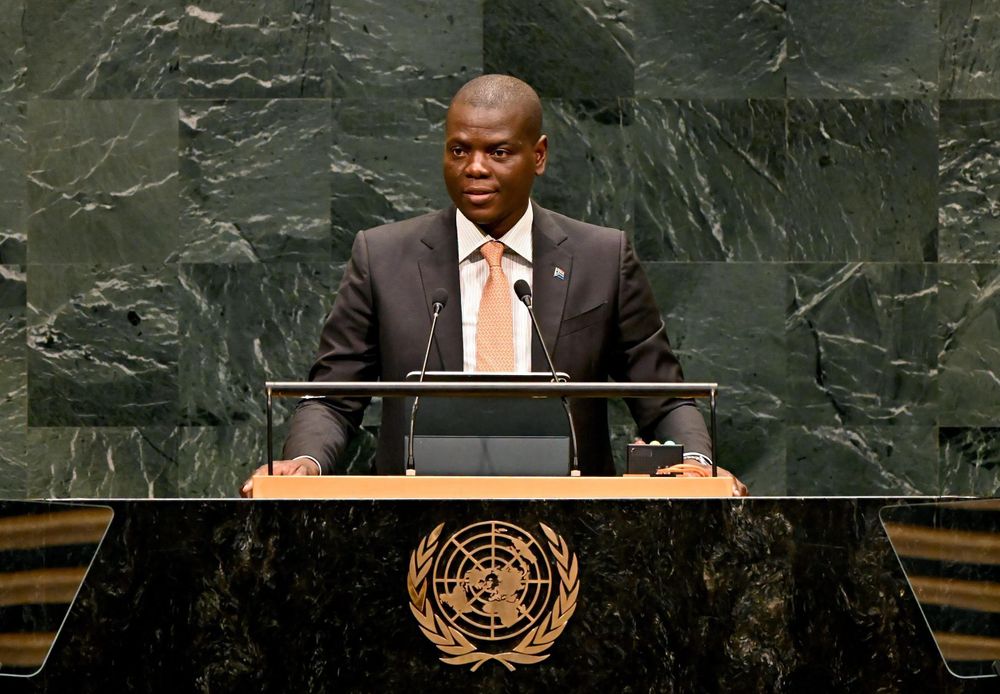
International Relations and Cooperation Minister Ronald Lamola has called for permanent African representation on the UN Security Council.
An international relations and political analyst has highlighted a link between Department of International Relations and Cooperation Minister Ronald Lamola’s address at the 81st United Nations (UN) General Assembly and the outcomes of the recent BRICS Summit, particularly the New Delhi Declaration.
The BRICS Summit was held in New Delhi this month. A summary of the summit’s key resolutions, the New Delhi Declaration, was released, including collective efforts to reform global governance, enhance multilateralism, and address international economic and security challenges.
There were calls to reform international organisations, such as the UN Security Council, the International Monetary Fund (IMF), the World Bank, and the World Trade Organisation (WTO), so that developing countries and the Global South can have a stronger, fairer voice and greater representation.
BRICS recognised the legitimate aspirations of African countries as outlined in the Ezulwini Consensus and the Sirte Declaration.
In his September 24 address, Lamola demanded urgent UN Security Council reform, permanent representation for African nations, and reiterated firm support for the Ezulwini Consensus.
He said restoring trust in multilateralism will not happen without meaningful reform of global governance, principally the UN Security Council.
He explained that African citizens are growing weary of their continent being consigned to the periphery of global governance. Moreover, Africa is home to nearly one-fifth of the world’s population and African countries together account for more than a quarter of UN member states.
“Yet over the past decade, 70% of UN Security Council resolutions have concerned conflicts on the African continent,” Lamola said.
He mentioned that if the future belongs to young people, then a continent that will be home to one in four of the world’s youth by 2030 deserves a bigger seat at the table.
“South Africa therefore reaffirms its support for the Ezulwini Consensus and its call to end Africa’s relegation to the margins of global decision-making,” Lamola said.
“Permanent seats for Africa in the Security Council, with all the prerogatives of permanent membership, are long overdue.”
International relations and political analyst Gideon Chitanga noted that Minister Lamola’s speech aligns with the BRICS New Delhi Declaration by advocating for equal representation for African nations across post-WWII institutions, including the UN Security Council, IMF, and World Bank.
He noted that BRICS’ growing gross domestic product, population, and economic influence give member states leverage to push for reforms in key multilateral institutions.
Chitanga stressed that African nations’ underrepresentation in multilateral institutions stems primarily from major powers seeking to preserve their influence and retain decision-making authority.
“There is fear within these major institutions—whether it’s the United Nations Security Council or the financial institutions, the levers of the financial architecture within the IMF and the World Bank—where it’s believed that African countries could sway decisions away from the West because of the historical contradictions and the sense that Africa is increasingly claiming autonomous decision-making and crafting policies that do not necessarily cohere or follow the direction that is either chosen by the US or other countries from the Global North for Africa,” Chitanga explained.
He said this is about exercising independence and national and continental sovereignty, where Africa charts its own development path based on its interests at the level of the continent but also at the level of the nation-states and increasingly the US and other European countries do not fully trust that any of the African countries would align with their decision.
Chitanga added that this is both geopolitical and ideological, but as the world changes, the emergence of developing powers gives African countries more leverage to achieve critical multilateral reforms.