South African mine deaths rise 37.5% despite fewer injuries - IOL
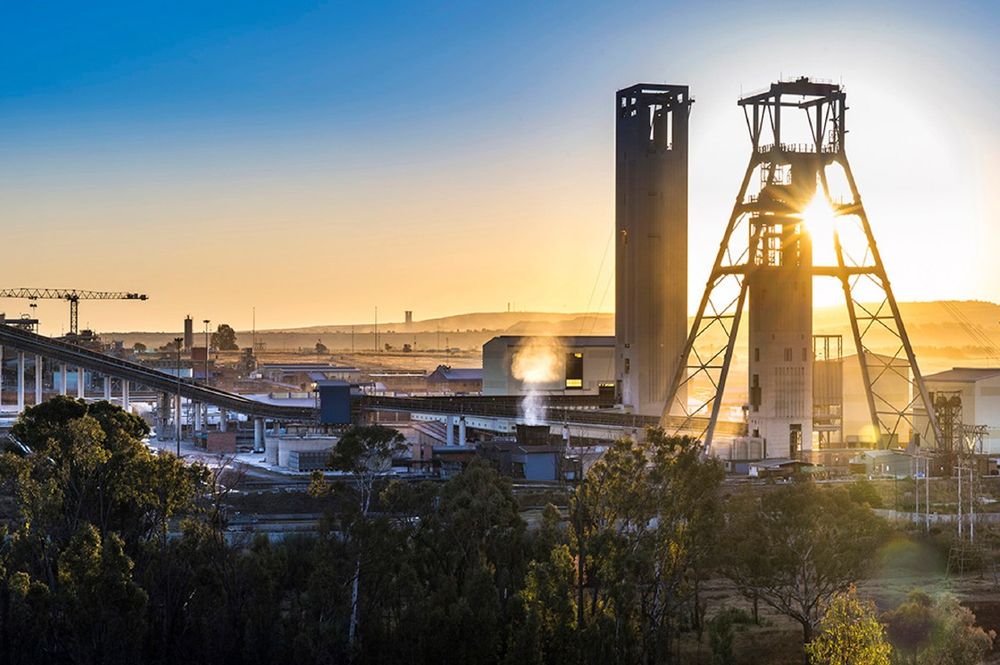
Gold Fields’ South Deep gold mine in South Africa. The global mining group is confident it can meet its production and cost guidance as long as the cost increases experienced in the first quarter did not continue to increase. I SUPPLIED
South African mining industry entered 2026 from its safest recorded year but then experienced a material rise in fatalities, while reportable injuries continued to decline, albeit too slowly to meet the annual target. The evidence indicates substantial long-term progress accompanied by a serious short-term regression in fatal-risk control.
The commitments adopted at the 2024 Mine Health and Safety Summit provide the appropriate evaluative framework. Every mining company committed to a target of zero fatalities, alongside a 20% annual reduction in reportable accidents arising from falls of ground, transportation and mining, machinery, conveyance and general accident categories. Zero Harm is consequently not merely an aspirational slogan: it establishes a normative standard against which even historically low fatality levels remain unacceptable.
Over the longer term, fatalities declined from 615 in 1993 to 41 in 2025 — approximately 93% — making 2025 the lowest annual total on record. Reportable injuries fell from 9,251 to 1,877, almost 80%. Regulation, engineering controls, technology, organised labour participation and institutionalised risk management have cumulatively altered the industry’s safety trajectory.
The 2026 results nevertheless interrupt this progress. Between 01 January and 31 August, 44 mineworkers died, compared with 32 during the corresponding period of 2025 — a year-on-year increase of 37.5%. Moreover, the 44 fatalities recorded by August had already exceeded the 41 deaths reported for the entire 2025 calendar year. Against the absolute commitment of zero fatalities, this constitutes unmistakable regression. It also demonstrates the analytical danger of treating a record-low year as evidence that fatal hazards have been permanently controlled.
The regression is concentrated rather than uniform. Platinum recorded 17 fatalities by August 2026, above the 11 recorded in all of 2025. Gold recorded 15, compared with 21 for full-year 2025, while coal’s two equalled its 2025 total. Platinum therefore shows the clearest deterioration. Gold remains a major contributor, but comparable full-year data are needed before its 2026 position can be characterised conclusively.
These absolute numbers must be interpreted cautiously. Commodity fatality counts are not normalised for employment, shifts worked, production volumes or hours of exposure. A commodity with a larger workforce may record more fatalities without necessarily having a higher fatality rate. Nevertheless, absolute deaths remain ethically and operationally significant under Zero Harm: the commitment concerns the elimination of fatalities, not merely the reduction of frequency rates.
In contrast to fatalities, reportable injuries improved during 2026. Injuries declined from 1,370 in January–August 2025 to 1,180 in the corresponding 2026 period, a reduction of 13.9%. This is meaningful progress, but it falls 6.1% short of the annual 20% milestone. The simultaneous rise in fatalities and fall in injuries suggests that the industry is reducing the frequency of accidents more successfully than it is controlling their potential severity. In other words, fewer workers are being injured, but a greater number of high-consequence events are producing deaths.
Performance differs considerably by accident classification. Machinery injuries declined by 21.1% and conveyance injuries by 35.3%, meaning that both categories exceeded the 20% reduction target. Falls of ground improved by 15.2%, transportation and mining by 14.0%, and general accidents by 13.8%. Falls-of-ground fatalities also decreased from 12 to five, suggesting that focused interventions can reduce historically persistent catastrophic risks.
The principal weakness lies in general accidents. This category accounted for 61% of reportable injuries, while associated fatalities rose from seven to 21. This concentration implies that established controls may be working more effectively for technically defined hazards, such as machinery and conveyance, than for the diverse behavioural, organisational and situational conditions aggregated under “general” accidents. Zero Harm will remain elusive if improved engineering performance is not accompanied by stronger supervision, work design, contractor management, learning systems and everyday operational discipline.
The broader occupational health evidence similarly varies by commodity. In dust exposure monitoring, platinum achieved the 2034 milestone, with 95.1% of results below the prescribed threshold in 2026. Coal improved sharply from 89.2% in 2025 to 93.7% in 2026, approaching the 95% commitment, whereas crystalline silica deteriorated slightly from 91.6 to 91.0%.
Underground compliance stood at 89.3% for crystalline silica, 90.0% for coal dust and 93.7% for platinum dust, compared with generally stronger surface results. Platinum therefore combines leading dust-control performance with deteriorating fatality performance, illustrating why occupational health success cannot be treated as a proxy for overall safety.
No novice cases of occupational lung disease or noise-induced hearing loss were identified in 2025 or through August 2026. This is encouraging evidence that contemporary exposure controls are protecting employees entering the industry, although disease latency and surveillance limitations require continued caution.
Commodity differences are also evident in HIV-related wellness performance. In 2025, platinum counselled 98% of employees and diamonds 95.5%, exceeding the 95% milestone, while gold achieved 76.9% and coal 80.9%. Industry tuberculosis incidence stood at 178 cases per 100,000, less than half the latest national rate of 389. These outcomes reinforce a central insight: Zero Harm requires integrated prevention encompassing traumatic injury, chronic exposure, communicable disease and worker wellbeing.
The appropriate overall judgement is therefore one of differentiated progress. South African mining has not lost the structural gains achieved since 1993, and the continuing decline in injuries demonstrates that prevention systems remain effective. Yet fatal safety performance regressed sharply in 2026, particularly in platinum and diamonds, and the industry is not meeting either its zero-fatality commitment or its overall 20% injury-reduction target.
The response must consequently be targeted but systemic. Current measures include the Falls of Ground Action Plan, fatal-risk management programmes, contractor-management guidance, strengthened safety representation and research into machinery, transport, rock engineering and human factors. However, formal evidence of culture transformation remains incomplete, with risk management showing confirmed full implementation at only 27% of 111 registered mines.
The long-term trajectory is positive, but Zero Harm remains unattained while fatalities rise, high-consequence general accidents proliferate, and commodity-specific weaknesses persist. The 2026 regression shows that progress is fragile and must be sustained through effective controls, accountable leadership and worker-centred learning.
*** Dr Tshitereke, an honorary professor at Unisa’s Thabo Mbeki School of Public & International Affairs, is Chief of Staff at the Minerals & Petroleum Resources Ministry — writing in his capacity as part of the Government & Information System.
** The views expressed here do not necessarily represent those of IOL.
South Africa’s mining industry recorded 44 fatalities between January and August 2026, up from 32 over the same period in 2025 and above the 41 deaths reported for all of last year. Reportable injuries fell by 13.9%, but this missed the industry’s 20% annual reduction target. Platinum recorded 17 deaths by August, while fatalities linked to general accidents rose from seven to 21. Dr Clarence Tshitereke argues that decades of safety gains remain significant, but the latest figures demand stronger fatal-risk controls, supervision and accountability if the mining industry is to make progress towards its Zero Harm commitment