South Sudan replaces election chief ahead of first national election
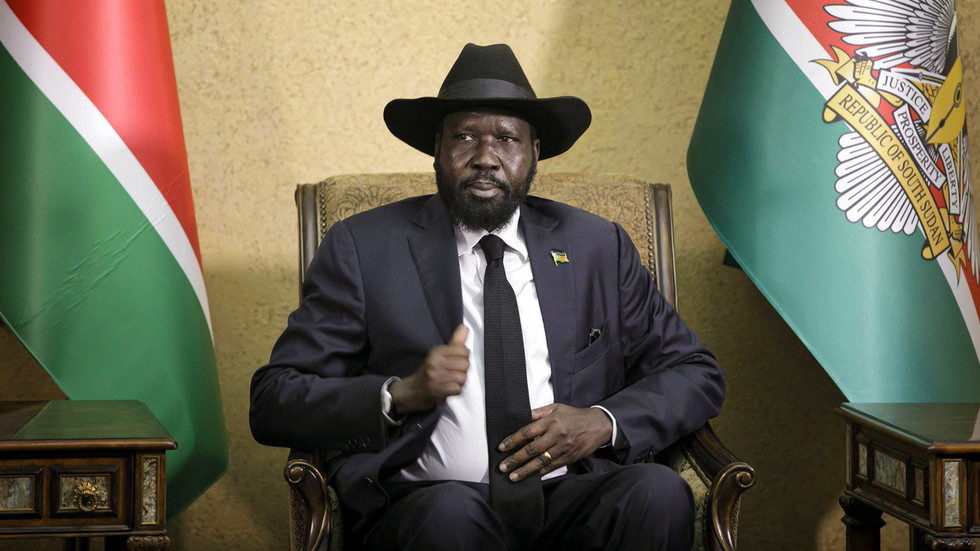
South Sudanese President Salva Kiir © Global Look Press / imago stock&people / Thomas Koehler South Sudanese President Salva Kiir has dismissed the head of the country’s electoral commission three months before its first national election since independence more than a decade ago.
Abednego Akok Kacuol was removed as chair of the National Elections Commission by a decree announced on state TV on Tuesday. Former Secretary-General Gabriel Bol Deng Majok was appointed to replace him ahead of presidential and parliamentary elections scheduled for December 22.
No reason was given for the decision. South Sudan’s electoral law permits the commission’s chairman to be removed on specified grounds, including proven partiality, incapacity, or gross misconduct, and establishes a procedure that must be followed.
Akok welcomed his removal and told local broadcaster Eye Radio that he learned about it through a phone call from “somebody.”
He had led the commission since 2012 and was reappointed when the body was reconstituted in 2023 under a 2018 peace deal – which ended five years of civil war triggered by a power struggle between Kiir and Machar that split the armed forces largely along ethnic lines and killed an estimated 400,000 people.
The peace deal brought the former rivals into a transitional unity government and provided for elections at the end of the transition. Kiir remained president, while Machar returned as first vice president alongside four other vice presidents representing parties to the accord.
Political analyst Abraham Kuol Nyuon told AP that the leadership change could disrupt voter registration and other preparations. “This is a delay tactic,” he said, arguing that the new chairman would need time to assume control despite his previous role at the commission.
READ MORE: The youngest nation breaks: Is a new civil war on the horizon? Kiir has not indicated that the election will be postponed. The country has repeatedly delayed elections since separating from Sudan in 2011, citing failures to implement the peace accord.
This comes amid renewed fighting between government and opposition forces and growing strain on the power-sharing arrangement. Machar has been suspended as first vice president, remains under house arrest, and faces treason charges, which his party says are politically motivated.
The UN Commission on Human Rights in South Sudan warned in August that safeguards for credible elections were absent and that proceeding without inclusive dialogue could fuel renewed conflict.
The dismissal also follows a series of unexplained changes to senior state positions. Kiir removed Benjamin Bol Mel, a vice president and senior figure in the ruling SPLM, without explanation last November. Bol Mel was widely viewed as a possible successor to the president.
South Sudan has been plagued by political instability and armed conflict since gaining independence in 2011. A five-year civil war erupted in 2013 over a feud between President Salva Kiir Mayardit and former First Vice President Riek Machar, rooted in power struggles within the ruling Sudan People’s Liberation Movement (SPLM – the party was founded in Sudan in 1983 and still keeps the same name). The 2018 peace agreement formally ended the civil war, but clashes continue across the country, driven by local militias and resource disputes.
The situation has been further complicated by political upheaval, including the arrest of Machar in March 2025. Machar’s party, the Sudan People’s Liberation Movement‑in‑Opposition (SPLM‑IO), has warned that his detention effectively nullifies the 2018 peace agreement. Machar has been accused of supporting the White Army, a militia composed largely of Nuer fighters, which reportedly participated in clashes in Upper Nile state.
Ongoing insecurity has displaced hundreds of thousands, worsening the humanitarian crisis. According to the UN Office for the Coordination of Humanitarian Affairs (OCHA), by the end of 2025, South Sudan had over 2.7 million internally displaced persons, and more than 9 million people in total are in need of humanitarian assistance.
This website uses cookies. Read RT Privacy policy to find out more.