
S'pore gardener, 55, hospitalised after cooking & eating wild mushroom - Mothership
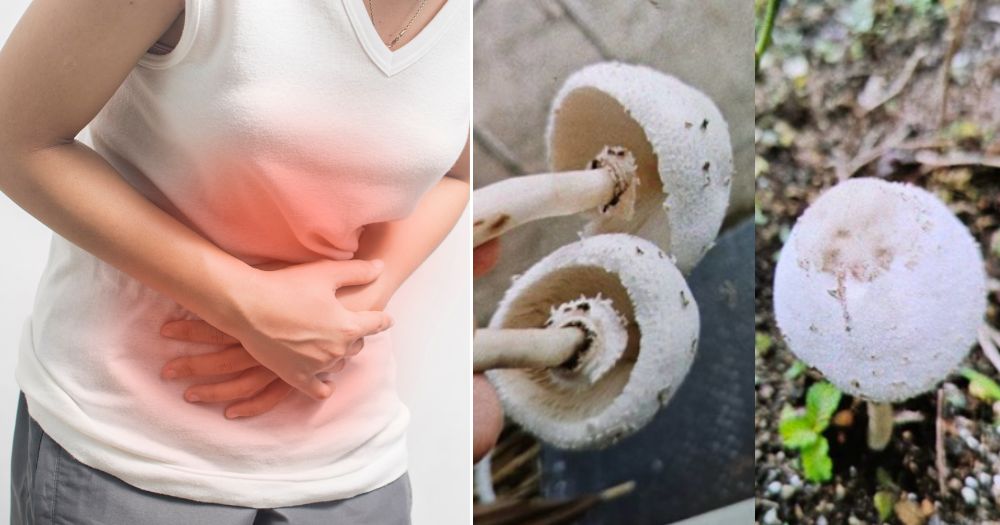
The first reported Chlorophyllum molybdites poisoning in Singapore.
About an hour after a woman ate some wild mushrooms she had foraged and cooked, she started experiencing abdominal pain.
The pain continued to grow, such that she was admitted to the emergency department of Khoo Teck Puat Hospital roughly two hours later with severe, generalised crampy abdominal pain.
She also had multiple episodes of vomiting and diarrhoea.
According to a case report published in 2024 in the Journal of Emergency Medicine and Care, the woman was poisoned by a toxic mushroom known as Chlorophyllum molybdites — the first such case reported in Singapore.
Also dubbed "the vomiter", Chlorophyllum molybdites is a gastrointestinal irritant, and one of the most common causes of mushroom poisoning worldwide.
This case, recorded by doctors from Tan Tock Seng Hospital and Khoo Teck Puat Hospital, was also recently reported on various Singapore media such as Channel 8 and Shin Min Daily News to raise awareness of mushroom poisoning.
According to the case report, the woman, a 55-year-old gardener, shared that she had foraged the mushrooms growing around her neighbourhood.
Before picking them, she first showed pictures of the mushrooms to a friend who was a fellow gardener.
The friend claimed that the mushrooms were edible because he believed he had eaten the same mushrooms previously.
The woman brought the mushrooms home and cooked around 20 grams of them, stir-frying them with butter and garlic.
They were part of a meal she shared with her family, but only the woman ate the mushrooms.
She ate them around midnight, and they tasted pleasant, she said later.
At 3am, she was in the hospital complaining of abdominal cramps, nausea, vomiting, and diarrhoea.
Her symptoms, along with the fact that she had just ingested mushrooms, led the hospital to suspect mushroom poisoning.
She received treatment, and made a complete recovery after two days.
According to the case report, most cases of mushroom poisoning were caused by eating misidentified mushrooms while foraging.
Singapore is home to more than 150 different species of mushrooms, including several poisonous species.
Chlorophyllum molybdites have green spores and gills, and a cap that is broad and convex but flattens when mature.
They are often mistaken for other edible species such as the Macrolepiota procera, also known as the parasol mushroom, because the brown scales on their caps look similar.
Consuming Chlorophyllum molybdites has been reported to cause abdominal cramps, nausea, vomiting, diarrhoea, and more within one to three hours.
The mushroom remains toxic even after it is cooked, the case report said.
It added that most people who experienced Chlorophyllum molybdites poisoning had their symptoms resolved within 24 hours, and no deaths have been reported.
This wasn't the first case of mushroom poisoning in Singapore.
Jonathan Tang, senior consultant at the National University Hospital (NUH) emergency medicine department, told Shin Min Daily News that he encountered a case in November 2025.
A middle-aged woman mistakenly drank a tea made with an unknown mushroom species, and started vomiting and having diarrhoea three hours later.
He advised the public not to forage wild mushrooms, and only consume mushrooms bought from legitimate food sources.
He added that poisonous mushrooms might resemble edible ones.
"Unless you are a fungi expert, it is not possible to be accurately assess whether one is safe to consume," he said.
