Supreme Court Faces New Immigration Decision After Trump Admin Plea - Newsweek
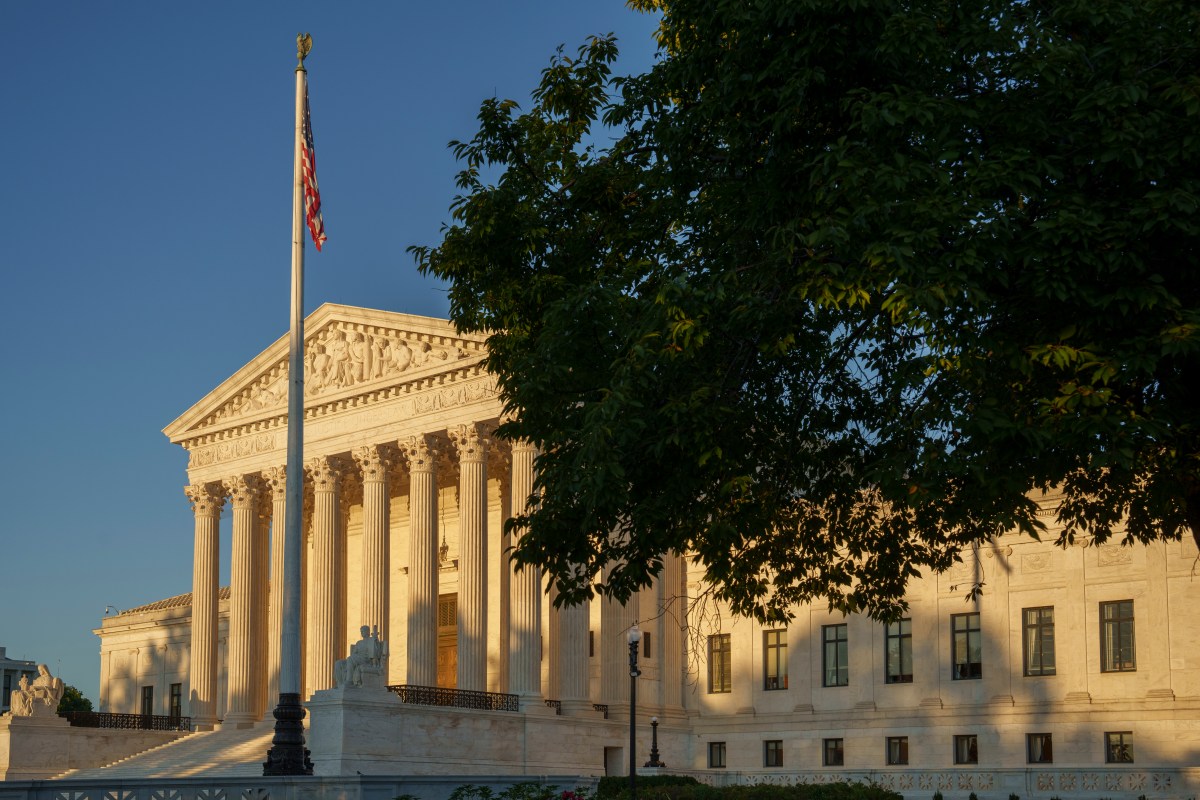
The Trump administration Thursday appealed to the U.S. Supreme Court on another immigration matter, this time over its ability to deport immigrants to countries that are not their home nation.
In a 45-page appeal, the U.S. Department of Justice (DOJ) said a lower court's decision Wednesday had led to canceled removal flights, with over 1,400 illegal immigrants, some of whom were known criminals, remaining in the U.S. and facing potential release from custody.
So-called third-country agreements have been necessary across multiple administrations, due to some nations refusing to accept deportees from the U.S. Under the Trump administration, new agreements have been struck, including with countries that human rights advocates have issued stark warnings about.
The Supreme Court ruled in favor of the Department of Homeland Security (DHS) on the case in question in June 2025, sending the case back to lower courts.
"Third country removals are an essential public safety tool that remove the most dangerous criminal illegal aliens from our streets," a DHS spokesperson told Newsweek Thursday. "Additionally, if an illegal alien chooses to file a claim in court refusing to go to their home country, they should not be surprised when we find a safe and secure nation for them to go to. The First Circuit’s sudden decision to prevent these removals, especially given DHS’s two previous victories in the Supreme Court, is as reckless as it is lawless."
Newsweek reached out to the Northwest Immigrant Rights Project and Human Rights First—the groups representing the original plaintiffs—for comment Thursday afternoon.
The government filed the emergency appeal Thursday, arguing that district and appeals courts improperly interfered with DHS' ability to remove immigrants with final removal orders to countries other than those named in said orders.
In its motion, the Trump administration said a First Circuit Court of Appeals decision late Wednesday to lift an existing stay meant a district court ban on the removals had sprung back into place, prompting the cancellation of at least one deportation flight destined for three different countries.
Part of the argument to allow third-country removals revolves around who the DOJ said is set for deportation—those convicted of murder, attempted murder, rape and other violent crimes. The DOJ said some of those people would have to remain in the U.S. because no other country was willing to take them.
Since the ban's return, 150 deportees had been pulled from flights, with further departures at risk, the government said.
Plaintiffs have warned that deportees face the risk of torture or persecution in the countries to which they have no connection, a fear Solicitor General D. John Sauer sought to dismiss, writing there was a "lack of any realistic risk that they will be persecuted or tortured with the concurrence of foreign governments in third countries where they have little or no preexisting connection, particularly given that the Executive Branch has determined those countries are acceptable places of removal."
A third-country removal refers to when the U.S. deports an individual to a country that is not their country of citizenship or origin, something which is allowed under the Immigration and Nationality Act (INA).
These cases often arise when the person's home country either refuses to take them, the individual has a court order protecting them from deportation to their home country over fear of torture, or DHS identifies another country willing to accept them.
The second reason does not mean an individual cannot be deported from the U.S. altogether; it just means they cannot be deported to the country named in the order.
One particular case of note during the second Trump administration was that of Kilmar Abrego Garcia, a Salvadoran national with such an order in place who ended up on a deportation flight to El Salvador alongside dozens of Venezuelans due to what DHS described as an administrative error.
That order preventing his deportation was then used to fight for his return to the U.S., which the government fought over allegations of criminal activity. He has since faced deportation to a third country, with the government seeking removal to an African nation rather than his requested Costa Rica.
The practice of third-country agreements was not nearly as common before Trump's return to the White House in early 2025.
"The U.S. government has used the third-country removal process in the past, but reportedly its current utilization substantially outpaces past practices," the Congressional Research Service wrote in an August analysis. "Many such individuals lack citizenship, legal status, social ties, a common language, and/or cultural familiarity in these third countries."
The U.S. has used the agreements in the past, but generally on an individual or limited basis, rather than sending large groups at a time.
Under the current administration, it is estimated that more than 25,000 immigrants have been deported to countries other than their own.
In the current case, the Supreme Court previously ruled in June 2025 that the administration's appeal for an emergency stay of a lower-court injunction could go ahead. The following month, the court said the district court could not keep enforcing remedial orders stemming from an injunction it had already stayed.
The justices did not rule on the underlying legality of the policy itself.
The Court's three liberal justices argued that immigrants should not be removed to third countries without adequate notice, or a chance to raise concerns about potential torture or persecution.
Sauer said in his filing Thursday that immigrants had been given ample due process and further restrictions were hampering the government.
The court will now need to decide whether or not to take the case.