Taking on the Houthis? Turkey could pay a steep price - Middle East Eye

Turkey’s new commitments to Saudi Arabia under the Mecca defence pact could increase the risk of Ankara being drawn into a confrontation with Yemen’s Houthis, a development that could have significant consequences for Turkish supply lines to the Horn of Africa.
Although Turkey has yet to ratify the pact, expected in October, continued Houthi attacks against Saudi Arabia, and Ankara’s recent participation in the Saudi-led Multinational Maritime Defense Alliance make some form of confrontation possible.
Several regional experts interviewed by Middle East Eye said Ankara does not want a clash with the Houthis. Instead, they suggested Turkey could use its relationships with Saudi Arabia and Iran to help defuse tensions while deploying military equipment to help Riyadh better defend itself.
A Turkish official told MEE that Riyadh had not formally requested Ankara’s assistance under the Mecca pact, which brings together Turkey, Saudi Arabia and Pakistan.
However, experts also noted that Ankara has much to lose from an escalation, which could disrupt Turkish military, commercial and energy supply lines through the Red Sea.
Ebuzer Demirci, a research fellow at the Secure Futures Lab at the University of Toronto Scarborough, said Bab al-Mandeb, which has effectively been controlled by the Houthis since the weekend, is a gateway to China, India and East Africa for Turkey.
Any restrictions imposed on Turkish shipping would increase trade costs and transit times.
“But the more specific exposure is Somalia,” he told MEE. “Turkey’s presence there - the embassy, the military training base in Mogadishu, offshore oil exploration activities and the spaceport project - is supplied from Turkey through the Suez-Red Sea route.”
Demirci added that although personnel and urgent cargo are transported by air, heavy equipment and naval rotations move by sea and must pass through Bab al-Mandeb.
“Somalia itself trades with the Gulf and Asia through the Indian Ocean and would not be cut off by a closure,” he said. “What would be affected is the direct line between Ankara and Mogadishu, at a time when piracy off Somalia is already rising again.”
Demirci said Houthi restrictions would not completely undermine Turkish influence in the region, since it is rooted in institutions in Somalia and other African countries rather than being solely dependent on maritime traffic. Turkey could also sustain its operations through air transport, he added, although at a substantially higher cost.
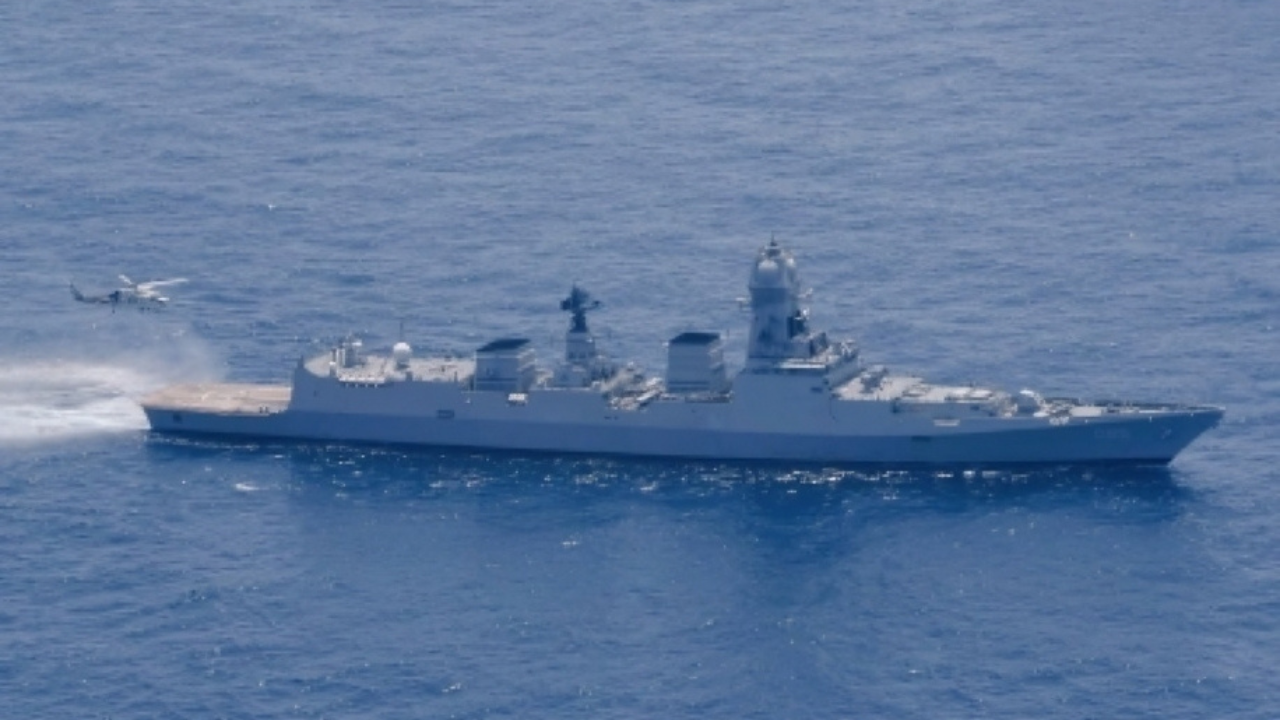
Turkey already has a naval presence in the region. Turkish warships are guarding an energy exploration vessel off the Somali coast, while Ankara separately continues to participate in a UN-backed anti-piracy mission in the Gulf of Aden.
Senior Ansar Allah official Mohammed al-Bukhaiti last week warned Turkey and Pakistan against intervening in support of Saudi Arabia, saying that any direct Turkish or Pakistani intervention on Saudi Arabia’s behalf would carry a “heavy price”.
The general view in Ankara is that Turkey cannot afford a confrontation with the Houthis and should instead focus on building bridges among Saudi Arabia, Iran and the Yemeni group.
Betul Dogan-Akkas, an assistant professor of international relations at Ankara University, said Turkey has not designated the Houthis as a terrorist organisation, leaving open possible channels of communication.
She argued that Istanbul’s sizeable Yemeni diaspora, whose members have deep tribal connections, could provide Ankara with valuable political capital and allow it to become more diplomatically involved in efforts to resolve the war in Yemen.
“The members of the Mecca alliance would probably not want their first action to be directed against another Muslim group,” she told MEE.
Muhammed Huseyin Mercan, an academic and senior fellow at the Ankara-based think tank Seta, agreed, saying that military intervention would create complications extending well beyond the Red Sea.
Pointing to last week’s attack by Iran-aligned Iraqi militias on the East-West Pipeline supplying Yanbu in Saudi Arabia, Mercan said a Turkish confrontation with the Houthis could also strain Ankara’s relations with Baghdad and complicate peace efforts involving the Kurdistan Workers’ Party (PKK).
Ankara has recently made progress in persuading the PKK and affiliated groups to dissolve themselves and integrate into local political and administrative structures, with Baghdad playing a crucial role in that process.
Mercan said Iraqi militias could disrupt these efforts and create additional complications for Turkey. The militias have demanded the complete withdrawal of Turkish troops from northern Iraq as part of negotiations over their own disarmament and integration into the Iraqi armed forces.
“Turkey should try to bring all sides to the table and help lay the groundwork for a comprehensive agreement to end Yemen’s civil war,” he told MEE.
The experts agreed, however, that these risks would not necessarily prevent Turkey from providing Saudi Arabia with military equipment, air-defence systems and drones. There are signs that Ankara intends to do precisely that.
Senior regional officials familiar with the discussions told MEE that Turkey was preparing to provide defensive assistance while avoiding direct intervention inside Yemen.
The officials said the assistance could include the deployment of aircraft, operators and technical personnel, possibly beginning in October after Turkey ratifies the Mecca defence pact. The Turkish parliament is currently in recess and is not expected to consider ratification before then.
'Turkey has actively strengthened its relations with Saudi Arabia while maintaining a delicate balance with Tehran. It can help convey messages, promote de-escalation and mitigate the impact of the conflict'
“Preparations and discussions are ongoing,” one regional official said. “The defence system will be established to counter attacks originating from Yemen, including missiles and drones.”
Demirci said the most likely scenario at Bab al-Mandeb was not a complete closure of the strait but selective Houthi control. Under such a scenario, the group could apply pressure to Saudi-linked traffic while allowing other ships to pass under conditions it sets.
That could prove costly and disruptive for Ankara, he said, but would remain manageable.
“What the Houthis should understand is that Turkey’s commitments in this region are not abstract,” Demirci said.
“Ankara has a defence agreement with Riyadh, a defence agreement with Mogadishu and a founding seat in the maritime coalition. The Houthis have no quarrel with Turkey, and it is in their interest to keep it that way.”
Yasmeen al-Eryani, executive director for knowledge production at the Yemeni think tank Sana’a Center, said the crisis also presented Turkey with an opportunity to assume a political role as a secondary intermediary.
“For example, it could contribute to mitigating the impact of the Houthis’ dangerous advance in Bab al-Mandeb,” she told MEE.
“Turkey has actively strengthened its relations with Saudi Arabia while maintaining a delicate balance with Tehran. It can help convey messages, promote de-escalation and mitigate the impact of the conflict.”