Tata Trusts, led by Noel, calls Chandrasekaran’s extension ‘illegal’ - The Indian Express
Tata Trusts, which controls 66% stake in Tata Sons, has come out against the resolution seeking to reappoint N. Chandrasekaran as Chairman in the board meeting, stating that it was a legal nullity under the provisions of the Articles of Association of Tata Sons. Four Tata Sons directors had voted in favour of reappointment, while Noel Tata voted against it.
“Specifically, the process for appointing a Chairman under the Articles of Association requires a majority of the Trusts’ Nominee Directors voting in favour of the resolution,” Tata Trusts said. That process applies equally to a first appointment as well as to reappoint someone already holding office, it said.
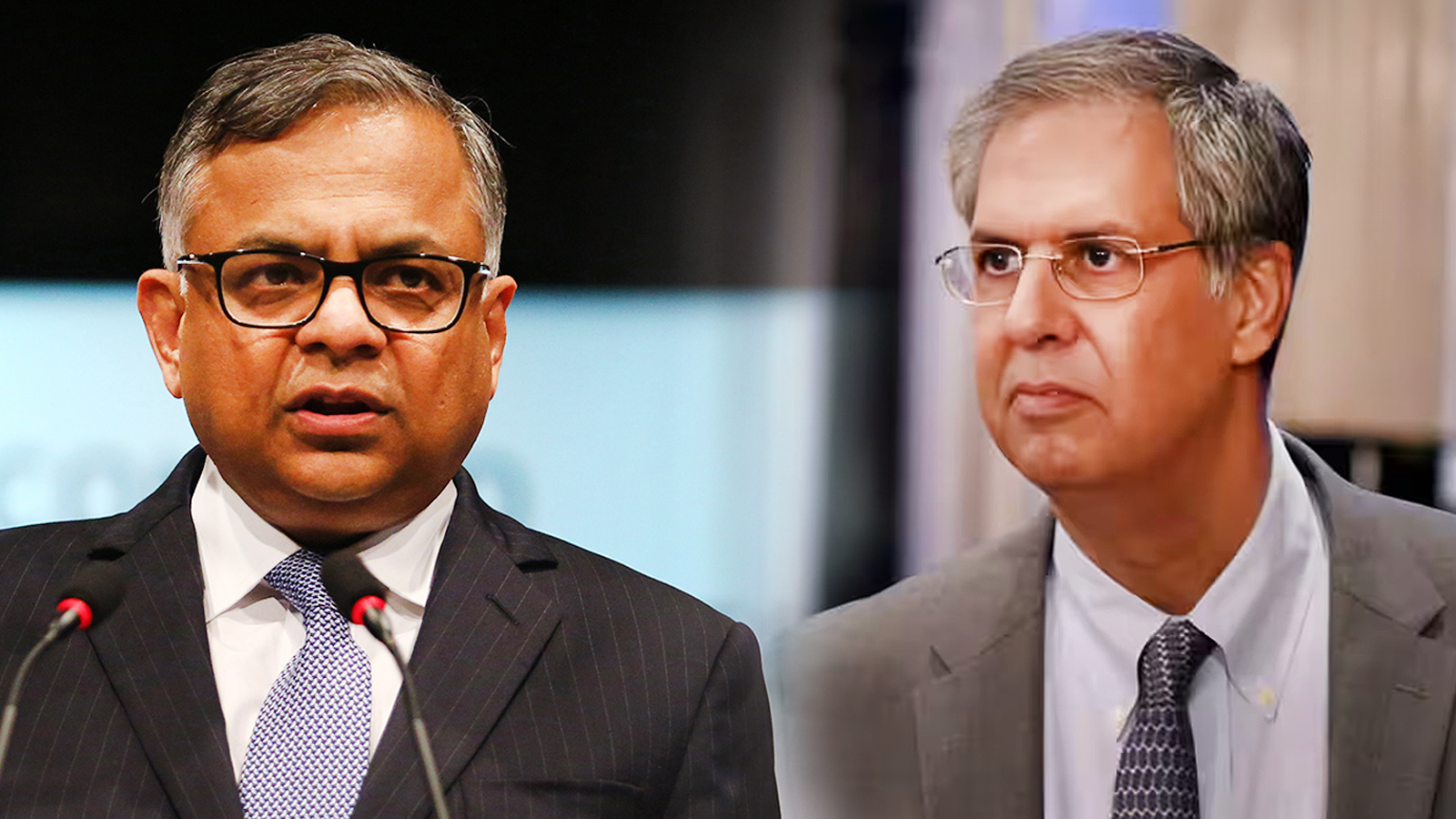
“The Board, accordingly, cannot lawfully hold a meeting or pass a resolution on the Chairman’s appointment or reappointment unless both nominee directors are present, and cannot validly pass such a resolution unless both nominee directors vote in favour,” it said. Venu Srinivasan and Noel Tata are the nominees of Tata Trusts on the Tata Sons board.
“Given that Noel Tata, being one of the Trust nominee directors, voted against the proposal, it was rendered legally void and without any basis,” Tata Trusts said.
Tata Trusts reiterated their position that the decision of Chandrasekaran, Chairman of Tata Sons, to not offer himself for reappointment upon conclusion of his current tenure on 20 February 2027, has been duly accepted and attained finality.
“On August 12, 2026, Chandrasekaran communicated to the Tata Sons Board, his own decision not to offer himself for reappointment- a decision that was freely taken, clearly expressed and not the outcome of any process of review,” it said.
The Trust said it was made public without prior intimation or any deliberations with the company’s shareholders. “Once such a decision has been publicly communicated, it has consequences which cannot be afterwards undone, since the group’s employees, its lenders and counterparties, the market and the majority shareholder have all proceeded on it,” it said.
“The Tata Trusts formally placed on record their acceptance of the decision the following day and advised Tata Sons to initiate the process for setting up a Selection Committee for appointing a successor, in accordance with the Articles of Association of Tata Sons,” Tata Trusts said.
“The Trusts’ position remains unchanged, as a considered judgement of a majority shareholder. This position was reiterated in today’s board meeting by the Chairman, Tata Trusts,” Tata Trusts said.
“Noel Tata further submitted a legal opinion obtained from Justice DY Chandrachud, former Chief Justice of India, regarding the correctness of the Trusts’ stand. The same was not taken note of by the Board,” it said.
“The Tata Trusts remain committed to ensuring an orderly and timely leadership transition in the long-term interests of Tata Sons and the Tata Group,” it said.
George Mathew is an Associate Editor with The Indian Express, based in Mumbai. A veteran of financial journalism with nearly three decades of experience, he is one of the country’s most authoritative voices on banking, regulation, and the corporate sector. Expertise & Focus Areas Mathew’s reporting covers the nerve center of India’s economy. His specialized beats include: The Reserve Bank of India (RBI): He has tracked the central bank's policy evolution through the tenures of multiple Governors, offering deep insights into monetary policy, repo rates, and banking regulation. Banking & Insurance: Extensive coverage of public and private sector banks, non-performing assets (NPAs), and key legislative reforms like the Insurance Amendment Bills. Corporate Affairs: Mathew frequently breaks major stories related to India's largest conglomerates, with a specific focus on the Tata Group, documenting boardroom shifts and strategic decisions. Financial Markets: Reporting on the complexities of Foreign Portfolio Investors (FPIs), IPOs, and currency fluctuations. Authoritativeness & Insight With a career dating back to the late 1990s, Mathew possesses a rare institutional memory of India’s financial liberalization and market crises. His work is not limited to daily news; he frequently contributes to the "Explained" section, where he decodes complex financial legislations and market trends for a broader audience. His rigorous reporting has also been featured in scholarly platforms like the Economic and Political Weekly (EPW). Find all stories by George Mathew here ... Read More