Tata Trusts proposes strategic reorganisation to avoid listing - The Indian Express
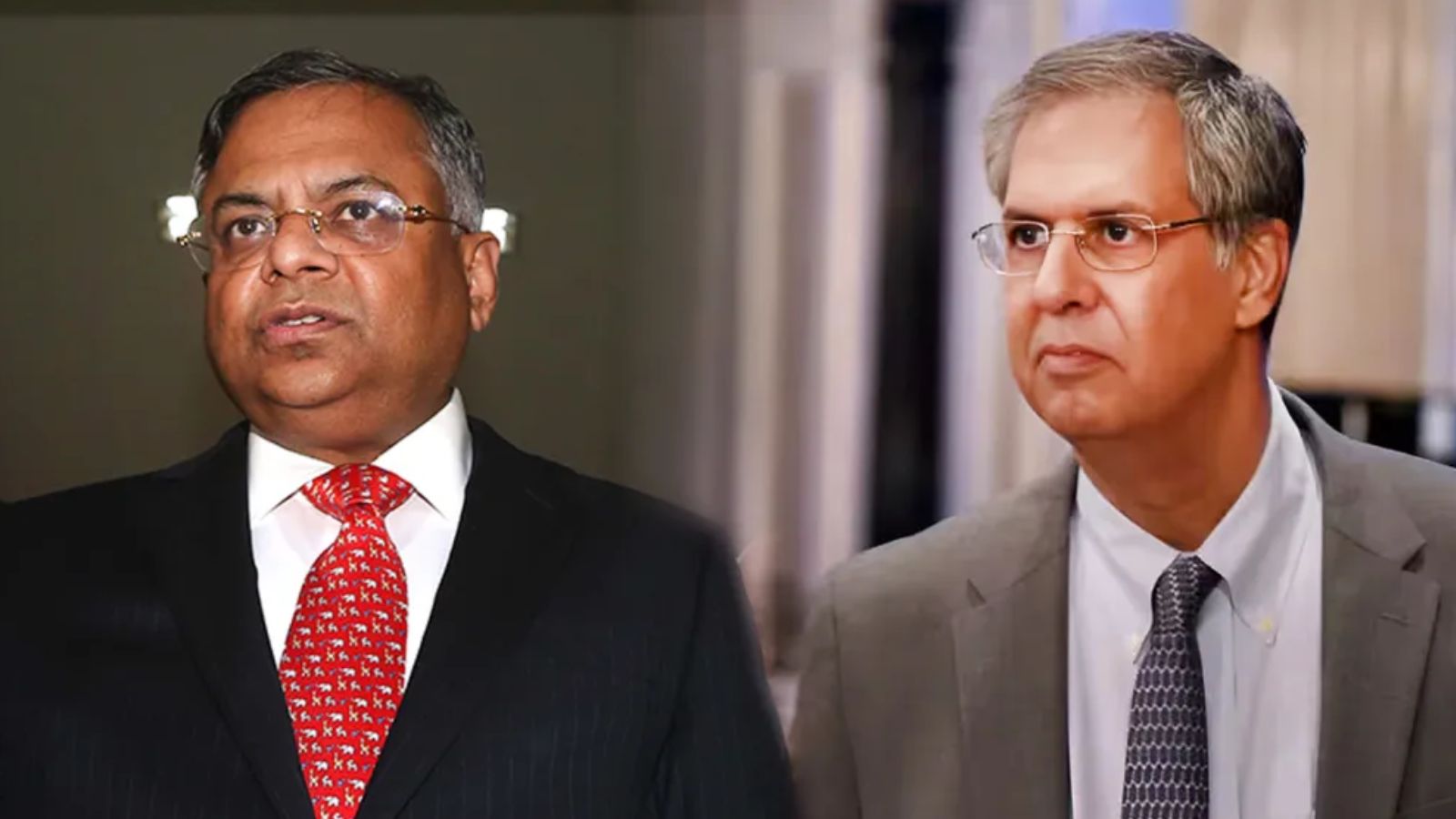
Eleven days after the Tata Sons board decided to comply with the Reserve Bank of India’s (RBI’s) directive to list the company on the exchanges, Tata Trusts have proposed a strategic reorganisation aimed to ensure that the restructured entity is neither an NBFC nor a Core Investment Company (CIC).
The proposal, sent to the Tata Sons board, involves the merger of Tata Electronics Systems Solutions Pvt Ltd (TESS) and Tata Consulting Engineers (TCE) with Tata Sons Pvt Ltd (TSPL). The move, if approved and implemented, would fundamentally alter the structure and nature of Tata Sons and could take the company outside the regulatory framework that triggered the RBI’s listing directive.
The proposed strategic reorganisation of the business and operations of TSPL is not a new pathway, Tata Trusts officials said Monday. “TSPL has, for almost 80 years out of its 100-year existence, always had operating businesses and operating revenues, which enabled it to fund its other, newer business ventures.”
The Trusts have asked the Tata Sons board to consider and approve the proposal and take all necessary steps, including approaching the RBI for the required no-objection certificate (NOC) for the proposed merger and reorganisation. The proposal comes at a critical juncture for Tata Sons. The RBI had rejected the company’s request to be deregistered as an upper-layer NBFC, hence keeping alive the regulatory requirement for its listing.
Tata Trusts, which collectively hold 66% of Tata Sons, are seeking to change the company’s underlying structure rather than simply proceed with a listing in its existing form. The proposed merger would bring two operating businesses directly under Tata Sons, strengthening its operating-business character, changing the regulatory classification of the reorganised entity.
The proposal now rests with the Tata Sons board and, ultimately, the RBI, whose approval will be required for the proposed restructuring.
On September 17, in a dramatic shift of trajectory, the Tata Sons’ board approved a fresh five-year extension for Executive Chairman N Chandrasekaran, alongside a pivotal decision to pursue a public listing to comply with RBI mandates.
As recently as 2004, the group’s tech firm Tata Consultancy Services (TCS) was a business division of TSPL before it was demerged into a separate subsidiary. This was also the case with other operating businesses of TSPL. “Accordingly, the proposed reorganization will result in TSPL reverting to its previous operating model, with its own operations and revenues, in addition to being a holding company for the Tata Group,” they said.
This will also be in line with the previous classification (after 2004) by the RBI of TSPL as a “non-banking, non-financial company”. The amalgamated entity, arising out of the merger of TESS and TCE with TSPL, will have an operating revenue of Rs 105,043 crore, far in excess of its income from financial assets (Rs 40,072 crore) constituting 64.3% of the total income of the amalgamated entity.
This will not meet the “principal business criteria” of an NBFC and it will also not meet the conditions applicable to a CIC (assets aggregating Rs 200,158 crores, out of which investment in group companies will be Rs 177,120 crore representing less than 90% of the aggregate net assets of the resultant entity), Tata Trusts said.
An amalgamation of genuine operating, non-financial companies (such as TESS and TCE) with an NBFC (such as TSPL) will need to be undertaken in accordance with the provisions of the RBI (Non-Banking Financial Companies–Voluntary Amalgamation) Directions, 2025, including the requirement to obtain a prior ‘no objection certificate’ of the RBI, the trusts said. Given that TSPL will also cease to be a CIC upon the conclusion of the proposed reorganization, TSPL will be required to surrender its certificate of registration, it said.
Tata Trusts officials said the proposed reorganization and action plan for compliance “would be in the best interests of the Tata Group as well as its stakeholders, in addition to being a regulatory permissible and compliant form of reorganization of a CIC”.
Tata Trusts, along with TSPL, will engage with the RBI on all aspects of the proposed reorganisation, they said. The proposed amalgamation and consequential steps are in line with regulatory compliance requirements and the unanimous resolutions passed by the Boards of Sir Dorabji Tata Trust (SDTT) and Sir Ratan Tata Trust (SRTT) in July 2025, wherein it was agreed that all endeavours should be made to ensure that the status of TSPL as an unlisted private company should continue.
Tata Sons board decision has drawn sharp lines of conflict, setting up a fierce legal and corporate showdown between the Tata Sons board on one side, and Tata Trusts and its Chairman Noel Tata, on the other. Noel Tata had voted against Chandrasekaran’s reappointment and declared the board’s vote legally void. In a separate statement, Tata Trusts said since Noel Tata, one of the Trust nominee directors, voted against the proposal, it was rendered legally void and without any basis.
Four of the total six directors voted in favour of Chandrasekaran’s reappointment. Noel Tata was the only director who opposed the decision, while Chandrasekaran did not vote.
The rift has exposed a deepening fault line between the holding company’s corporate management — the board and the chairman — and its controlling shareholder, the Tata Trusts, which holds a decisive 66% stake in Tata Sons. Tata Group insiders are worried about the possibility of the worsening power struggle between Noel Tata and the Tata Sons board impacting the group’s performance in the near term as Tata Sons guides capital allocation and its new project proposals.
George Mathew is an Associate Editor with The Indian Express, based in Mumbai. A veteran of financial journalism with nearly three decades of experience, he is one of the country’s most authoritative voices on banking, regulation, and the corporate sector. Expertise & Focus Areas Mathew’s reporting covers the nerve center of India’s economy. His specialized beats include: The Reserve Bank of India (RBI): He has tracked the central bank's policy evolution through the tenures of multiple Governors, offering deep insights into monetary policy, repo rates, and banking regulation. Banking & Insurance: Extensive coverage of public and private sector banks, non-performing assets (NPAs), and key legislative reforms like the Insurance Amendment Bills. Corporate Affairs: Mathew frequently breaks major stories related to India's largest conglomerates, with a specific focus on the Tata Group, documenting boardroom shifts and strategic decisions. Financial Markets: Reporting on the complexities of Foreign Portfolio Investors (FPIs), IPOs, and currency fluctuations. Authoritativeness & Insight With a career dating back to the late 1990s, Mathew possesses a rare institutional memory of India’s financial liberalization and market crises. His work is not limited to daily news; he frequently contributes to the "Explained" section, where he decodes complex financial legislations and market trends for a broader audience. His rigorous reporting has also been featured in scholarly platforms like the Economic and Political Weekly (EPW). Find all stories by George Mathew here ... Read More