
The $60 billion products receiving tariff cuts after Trump-Xi meeting
Want to bookmark your favourite articles and stories to read or reference later? Start your Independent Membership today.
The United States and China have published reciprocal lists of non-sensitive products worth roughly $30 billion each that will receive tariff cuts, ranging from American hair care products to Chinese toys, in a move expected to boost bilateral trade.
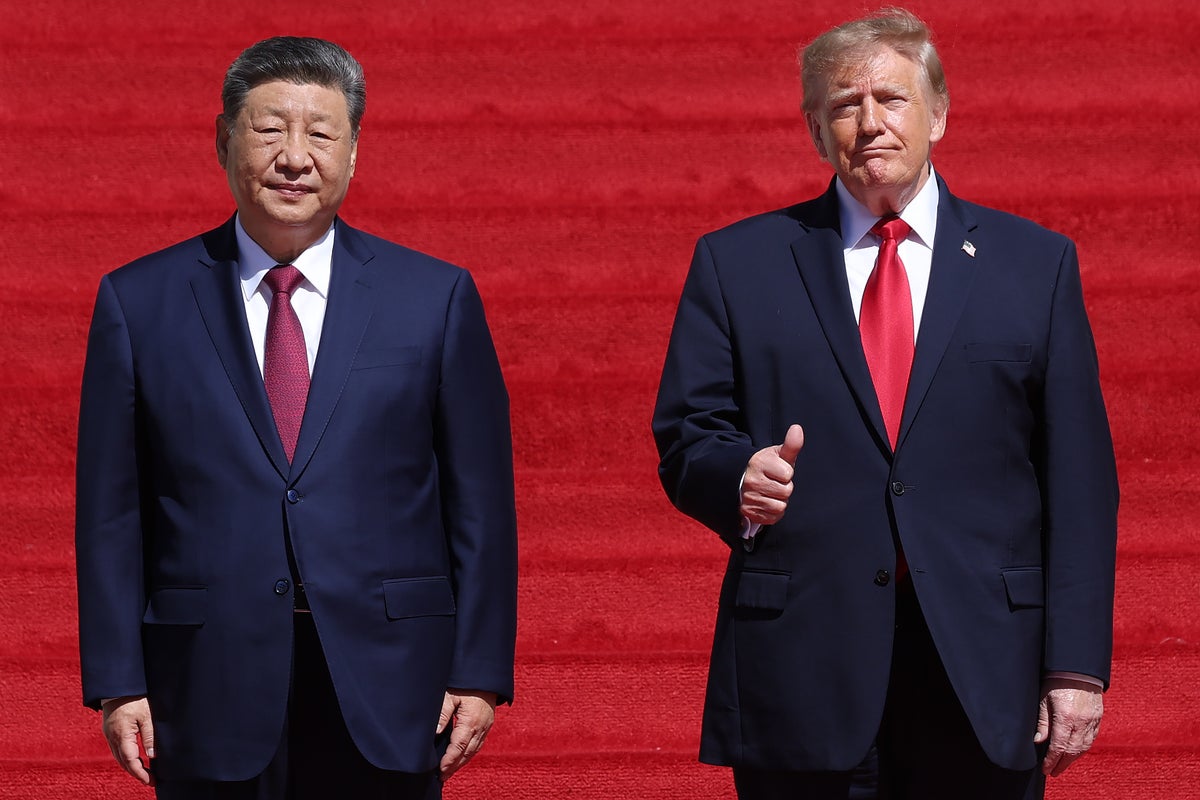
The details were released days after Chinese President Xi Jinping held talks with President Donald Trump in Washington, marking his first state visit to the U.S. since 2015.
Washington had already lowered tariffs against Beijing after Trump’s tariffs climbed to 145 per cent at one point last year, as broader tensions eased.
China’s commerce ministry said that the agreement would help to reinforce trade cooperation between the two nations.
The 1,619 U.S. goods entering China subject to cuts include agricultural commodities, timber, medical equipment, coal, and personal care products.
For Chinese exports heading to the U.S., 77 categories are covered, including tableware, fireworks, soccer balls, glass and wooden Christmas ornaments, and toys such as dolls and puzzles.
Tariff rates on over 90 per cent of the items will align with “most-favored-nation” levels, according to the Chinese commerce ministry, removing country-specific levies. These standard WTO rates vary by product and typically sit in single digits.
U.S. Trade Representative Jamieson Greer said in a separate statement the product lists focused on “nonsensitive goods on each side that could benefit from more favorable tariff treatment.”
The deal could help secure market access for U.S. farmers, manufacturers, businesses and workers, while benefiting American consumers with imports from China including household goods and toys, Greer said.
Both countries said they agreed the list may be adjusted later as needed, but amendments were likely to be no more than on an annual basis.
The Chinese commerce ministry said the two countries agreed to further cooperate in the agricultural sector, forming a group under the Board of Trade established in May to optimize bilateral trade.
Sectors of strategic importance for both countries, such as chips, electric vehicles and batteries, were not covered under the agreement.
“This is a positive outcome for these affected products compared to a smaller tariff cut, and could lead to a more significant boost to bilateral trade,” said Lynn Song, chief economist for Greater China at ING Bank.
The lowered tariffs could be a win for U.S. consumer brands, added Jacob Cooke, CEO of WPIC Marketing + Technologies based in Beijing, as some of the products covered by China's list of U.S. imports included fast-growing categories like hair care, personal care products and infant formula.
With the U.S. list for Chinese products focused more on consumer goods, it could help lower U.S. inflation while also allowing Chinese firms to export more of their overcapacity, said Gary Ng, a senior economist at French bank Natixis.
Some experts said, however, the economic impact at $30 billion each way may be limited overall.
U.S. exports to China were roughly $68 billion through the first seven months of this year, while Chinese exports to the U.S. were at around $270 billion for the first eight months, said Prashant Bhayani, chief investment officer for Asia at BNP Paribas Wealth Management.
A $30 billion deal each way will be “more meaningful” for U.S. exports to China in terms of percentage share, he said.
Even after the deal, the overall average U.S. tariff rate on China is estimated to only drop from around 22 per cent to roughly 20.5 per cent and remain significantly higher than the roughly 11 per cent before Trump’s return to the White House early last year, said Leah Fahy, a senior China economist at Capital Economics in a research report.
Notably, U.S. soybeans were not included in the list of agricultural commodities, she added.
While the deal did not cover sensitive strategic goods, some analysts believe U.S.-China trade will likely continue to recover for the rest of the year after steep U.S. tariffs on Chinese products last year hit bilateral trade.
The U.S. and China last week also reached a two-month extension of the broader trade truce that was set to expire November 10 to January.
China’s trade surplus, which reached a record $1.2 trillion in 2025, will likely remain elevated. By August, it stood at about $800 billion, putting this year’s surplus “on pace to exceed the 2025 record,” according to Ecaterina Bigos, a senior market strategist with BNP Paribas Asset Management.
The U.S. is also investigating China among 16 trading partners in its Section 301 probe on excess industrial capacity and could impose additional tariffs on China when the investigation concludes.
However, with more meetings set between Trump and Xi, including at the Asia-Pacific Economic Cooperation summit in Shenzhen in November and at the Group of 20 summit in Florida in December, Song at ING said he would not expect a major flare-up of trade tensions before year-end.
Some Chinese exporters welcomed the tariff deal announcements.
“This is positive news,” said Richard Chan of Golden Arts Gifts & Decor, which manufactures Christmas decorations in southern China and supplies to countries including the U.S. “The economy in both the U.S. and China is not really good, and the two sides should help each other more.”
However, because most of this year’s Christmas goods are already being shipped ahead of the peak holiday season, the tariff reductions may have limited effect for them at least for now.

