The Data Center Debate Taking Over Native American Tribes - Time Magazine
Whether to support data center development is a defining issue in this campaign season, and it is a debate that has taken over many Native American tribes. And on this issue, many Native leaders on the ballot—including Deb Haaland running for governor of New Mexico, Sharice Davids running for the House of Representatives from Kansas, Mary Peltola running for the U.S. Senate from Alaska, and Peggy Flanagan in a race for U.S. Senate in Minnesota—are being forced to address the issue head-on.
Flanagan won the Democratic-Farmer-Labor primary for the U.S. Senate last month. Her Ojibwe name, Gizhiiwewidamookwe, means Speaks in a Loud and Clear Voice Woman. She has spoken forcefully on data centers, calling AI an “existential threat to us if it gets out of control,” in a July Minnesota Public Radio News debate.
This fits a pattern. In her primary against Rep. Angie Craig, Flanagan ran ads attacking Craig’s ties to the crypto industry: “Angie Craig voted to let Trump make billions selling crypto coins. I won’t.” Analysts see AI and data centers as a natural extension of that same anti-corporate-money lane heading into November. Her “existential threat” framing is about AI broadly, tied to job loss, safety, and runaway systems.
Davids is a former MMA fighter and lawyer by training; she knows how to throw a punch and how to build a case. On data centers, she’s done neither publicly. But she took a quieter and pragmatic approach in a July KSHB voter guide, stating that “no data center should move forward if it raises electricity costs for families, wastes our limited water resources, or shifts the burden onto Kansas communities.”
“Data center decisions are primarily made at the state and local level,” Davids said. It’s also a convenient position: she sits on Transportation, Small Business, and Agriculture committees, not those that would put data centers in her lane anyway. In February, Davids met with the National Association of Tribal Historic Preservation Officers, which proceeded to formally vote against the Section 106 rollback in July, warning it would weaken tribal consultation and expand unilateral agency power. But showing up for a meeting doesn’t carry the same weight as making a public statement.
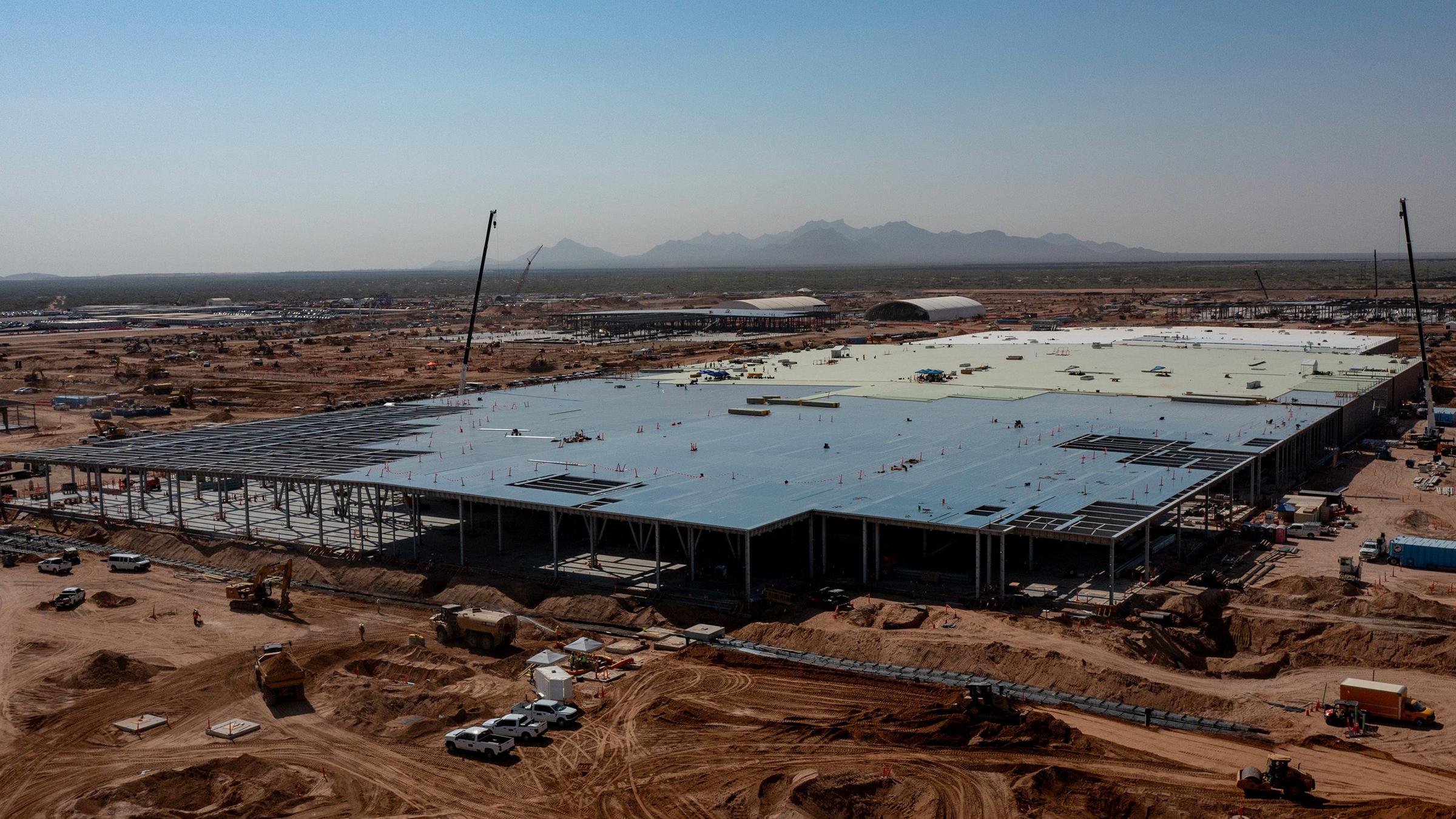
Haaland’s campaign has proposed sun, wind, and geothermal energy generation to offset data center energy consumption alongside requiring high-energy-demand industries to build their own energy infrastructure. But on the state’s biggest data center project, Project Jupiter, she’s said comparatively little. Pressed by a voter in Los Lunas last week, she said: “I don’t have the power to stop Project Jupiter.”
Then, last week, her position seemed to have shifted. Haaland’s campaign now says she supports a moratorium on new data center development “until we have strong, reliable guardrails.” This follows Searchlight New Mexico’s report of $87,200 in campaign donations from executives at Oracle and Clayco, the firm actually building Project Jupiter. Santa Fe and Socorro Counties have already passed data center moratoriums. Four Democratic state legislators already proposed one months ago. Haaland’s is a narrower, later, and far more carefully hedged version of the same idea.
But the demand for accountability didn’t end there. Over the weekend, a New Mexico climate justice petition started circulating, calling on Haaland to return the $87,200 and commit to no AI data centers, with no carveout for Project Jupiter. Haaland responded fast that she hasn’t discussed returning the money with her team, but “cannot be bowled over” by campaign donations. Realistically, the carveout isn’t nothing: the project is 26% complete according to Oracle Cloud Infrastructure’s own vice president, up from 9% in July, despite the fact that two of its permits have been paused by the New Mexico Supreme Court.
Protesters gather outside the New Mexico Environment Department to voice opposition to the Project Jupiter data center during a demonstration in Santa Fe, New Mexico on Aug. 21, 2026. Susan Montoya Bryan—AP
Peltola takes a different tack. Asked about data centers at a Fairbanks Labor Day event, she said she takes her “cue from the people of that region,” deferring to local support provided it doesn’t strain the grid for existing ratepayers. It’s a notably different posture from her opponent, Republican Sen. Dan Sullivan, who has pushed to bring data centers onto Alaska’s military installations, and from a $500 million Stak Energy data center proposal already drawing scrutiny in the North Slope.
But “the people of that region” is complicated in Alaska. As I’ve reported, a lot of the state’s land—roughly 44 million acres, or 12% of all land in the state—is controlled by Alaska Native corporations, for-profit entities created by a 1971 federal law, whose boards answer to fiduciary duty, not shareholder votes. That structure has already let corporations like the Bering Straits Native Corporation go after federal contracts, ICE included, despite loud shareholder objections boards aren’t obligated to address. In other words, the “local support” Peltola invokes in her interview may not translate into actual votes.
This debate also coincides with proposed changes to Section 106, a clause in the National Historic Preservation Act of 1966 that requires federal agencies to assess how development affects historic sites, which are decades in the making. If these changes are enacted, federal land, where Native Nations hold consultation rights under extant law, could theoretically become terrain AI data center developers could claim without a federal review process.
More than 700 organizations, including Native Nations, have already signed a letter opposing this change to Section 106—but this isn’t the first time it has been targeted.
Near the end of President Donald Trump’s first term, the Secretary of the Interior issued Secretarial Order 3389, exempting major energy and land-management projects from standard Section 106 review. It was a move the Biden administration noticed early on and swiftly reversed.
The current Advisory Council on Historic Preservation rewrite picks up where that order left off, and is part of energy, transmission, and mining’s long game to weaken Section 106 as a source of delay for infrastructure—one that predates the AI boom by years.
Data center developers are merely the newest, best-capitalized arrivals to a fight that oil and transmission companies have been taking punches at since Trump’s first term.
Native candidates may differ in their approach to data centers, but they should be united on this: Native Nations must not lose their voice just as another powerful industry comes for their land.