The death of the American lunch hour - Newsweek
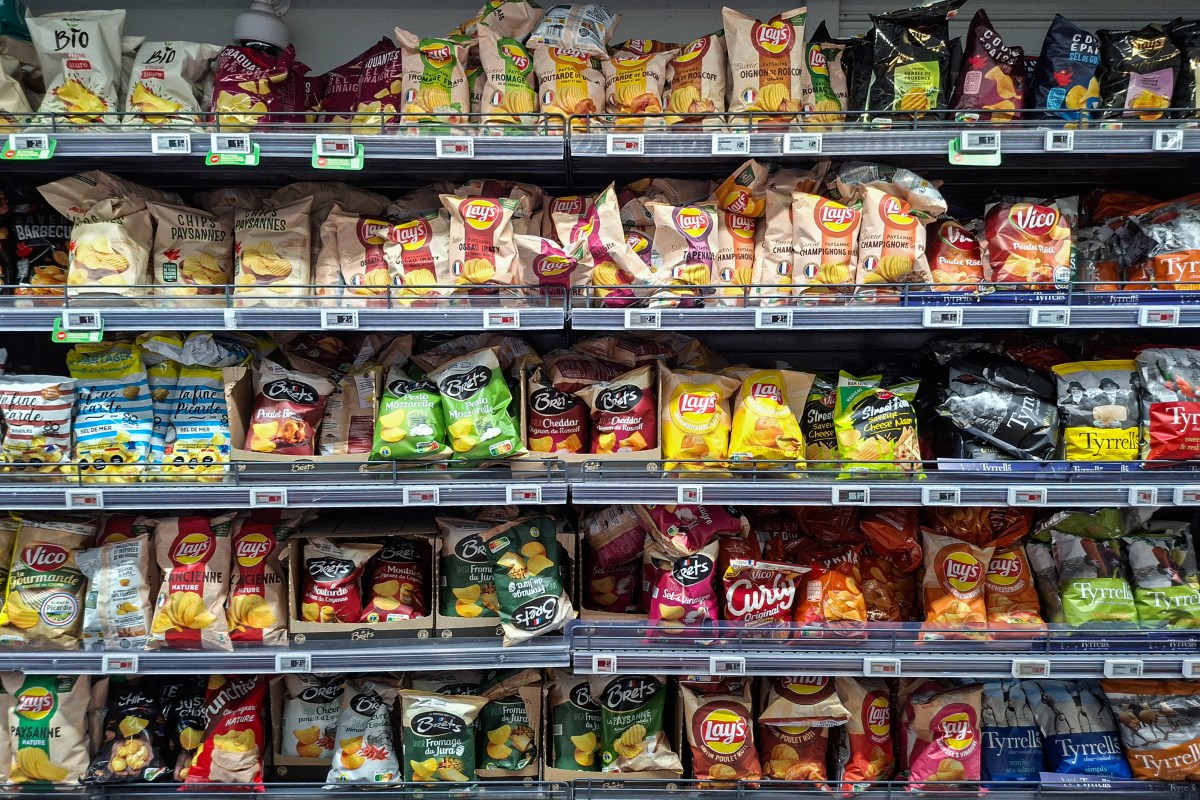
I was born and raised in Italy, where one key aspect of the day was always merenda. It translates loosely to “snack,” but it is really a very specific kind of snack, eaten at a specific time—usually sometime between 4 p.m. and 6 p.m., to bridge the gap between lunch and dinner.
My favorite was always a Kinder Cioccolato with an Estathé, which I would calmly eat while watching TV after ballet class, while my mom was preparing dinner. Dinner was at 7 p.m., because in Italy dinner is at 7 p.m. even if you are a child.
That was the whole point of merenda. It existed because the meals around it were fixed. You ate lunch. Later, you had merenda. Then you had dinner.
When I moved to the United States in 2005, I immediately thought it was odd that the concept of an in-between-meals meal, a snack, didn’t really seem to have a time.
There was no merenda here because it was always merenda time.
You could snack at 10:30 in the morning, at 2 p.m., at 5 p.m., after dinner, in the car, at your desk, while watching TV, while trying to diet and, perhaps especially, while not trying to diet. In America, a snack didn’t necessarily sit between meals. It floated around them.
At the time, I registered this as one of those small cultural differences that seem funny when you move countries. Now I think it was telling me something bigger.
A new survey of 1,000 full-time American college students ages 18 to 25 found that just 24 percent regularly eat three balanced meals a day while school is in session. More than half say they occasionally or frequently replace meals with snacks; another quarter say they eat whenever they have time or follow a completely unpredictable eating schedule. Among students who have completed at least one year of college, 96 percent say they have replaced a meal with snacks during a typical school week.
College students clearly snack a lot but could it be that the very concept of a meal is now losing its place in the day?
Lunch is disappearing not because Americans have suddenly lost interest in meals, but because meals require something modern life increasingly refuses to protect: uninterrupted time. College students may simply be the leading edge of an America in which food has to bend around work, school and productivity instead of forcing those things, however briefly, to stop.
And the phenomenon is much bigger than campus.
A 2025 survey from the International Food Information Council found that 62 percent of Americans said they regularly or occasionally replace traditional meals with snacks or smaller meals. In 2020, that figure was 38 percent.
Market-research firm Circana, which tracks billions of eating and drinking occasions, found this year that 55 percent of U.S. consumers eat or drink three or more snacks a day. It has also observed people snacking increasingly during or instead of meals rather than merely between them.
Somewhere along the way, the snack stopped being a bridge between meals and became competition.
Lunch used to come with something besides food—implied permission to stop.
Just as schools had lunch periods, factories had lunch breaks and offices had lunch hours. The phrase itself assumed there was a part of the day during which a person could reasonably be unavailable for anything else.
Perhaps, though, we should focus on the word “hour,” because the real shift is not simply from meals to snacks. It is from eating as an activity to eating as something that happens alongside another activity.
A meal demands a plate, a chair, perhaps another person, and it certainly asks you to stop doing something else. A snack, on the other hand, requires almost nothing but the actual snack, which can be eaten while walking, driving, chatting on Slack or answering an email. Food as a snack is less an appointment and more a background process.
Kristi Eaton, a PR agency owner in Tulsa, Oklahoma, who works remotely, describes almost exactly that kind of workday.
“I'm usually on my laptop, responding to emails,” she told Newsweek. “Sometimes I'm on my phone scrolling. I do sometimes stop and eat at my kitchen table, but most of the time I'm multitasking.”
That is already visible among college students. Sixty percent of respondents in the study said they eat while studying or working often or almost every day.
The same logic appears in the broader American diet. Circana reported that half of American meals now take less than five minutes to prepare, including 56 percent of lunches.
The point isn’t that Americans literally have no time to eat, it’s that we increasingly expect eating not to interrupt anything else.
Ashlie Garcia, a business owner in Fresno who is single and in her mid-30s, sees the same thing in the disappearance of her own lunch break.
“When you work from your car and don’t plan for a lunch break you most likely grab a banana and a protein bar while muting your phone call,” she told Newsweek. “So the person on the other line doesn't hear the smacking.”
Americans are not, of course, forgetting to eat (despite the flourishing of Ozempic and other similar drugs). The Bureau of Labor Statistics’ 2025 American Time Use Survey found that people 15 and older still spent about 1.2 hours a day eating and drinking as their primary activity.
Think about that “primary activity” concept, though: increasingly, food has to coexist with something else. Breakfast rides in the cup holder, for example, and dinner arrives while the laptop is still on. That changes what kind of food fits American life.
But primary activity is the important phrase.
Convenience food is hardly new but there is a difference between making a meal easier and designing food so that a meal no longer requires a pause at all.
The foods best suited to a fragmented day are the ones that can also be fragmented. Portable, quick, nutritionally dense, easy to consume with one hand and substantial enough to stand in for something more traditional.
That may help explain why the modern snack is being asked to do so much. In the college survey, 70 percent of students said protein content influences the snacks they choose, while 82 percent said healthy snacks help them stay energized.
The protein bar is no longer just something to tide you over until lunch. Sometimes, it is lunch.
For Eaton, dinner marks the point when eating finally becomes its own activity again.
“It does feel different, partly because it's a sit-down meal and partly because it's the end of the day so I feel like I can relax and decompress a little more,” she said.
Eighty-six percent of the students in the survey said they feel financially stressed by everyday living expenses. Among students who had already completed at least a year of college, 90 percent said they had reduced the amount of food they bought or skipped meals to afford something else. Nearly half cited bills, 40 percent rent and 38 percent tuition.
The survey was commissioned by snack company Nature’s Garden and those answers should not be treated as a formal measure of food insecurity, but they clearly illuminate the environment in which meals increasingly have to compete—not just with schedules, but with other expenses.
A full meal requires a certain amount of commitment while a snack is infinitely negotiable because it can become smaller, cheaper, later, earlier or even optional.
Garcia encounters that trade-off not only in the price of food, but in the economics of cooking for one.
“Cooking a full meal for one feels like throwing a dinner party where the only guest bails every single night,” she said. “All the effort, none of the occasion.”
She says groceries designed around larger households can also make cooking feel wasteful.
“So a lot of the time it's easier and cheaper to just snack my way through the week instead of buying real ingredients for a meal I know I won't finish before it goes bad.”
There is another cost to the death of the meal, and it has little to do with nutrition—meals make people show up at the same time.
The family dinner, the school cafeteria and the office lunch all force different schedules to briefly converge. We're all eating right now.
That may sound mundane, but mundane rituals are often what hold social life together and that architecture is weakening across the country. Circana reported this month that half of all main meals eaten at home are now eaten alone. Nearly six in 10 at-home lunches are solo, as are 65 percent of snacks.
Snacking isn't the enemy per se but when eating stops being a shared appointment and becomes something squeezed between other tasks (or while doing other tasks), then one more reason to stop and sit down and encounter other people disappears with it.
When I was a child, merenda worked because everyone understood that family dinner was coming. In a way, my snack had borders. America’s increasingly borderless snacks highlight the fact that we haven't just invented food that fit more conveniently into modern life, but that we have built a version of modern life in which eating is expected to make itself almost invisible.
The protein bar didn't kill lunch, it just fits perfectly into the world that did.