
The Eskom story deserves to be made into a movie - IOL
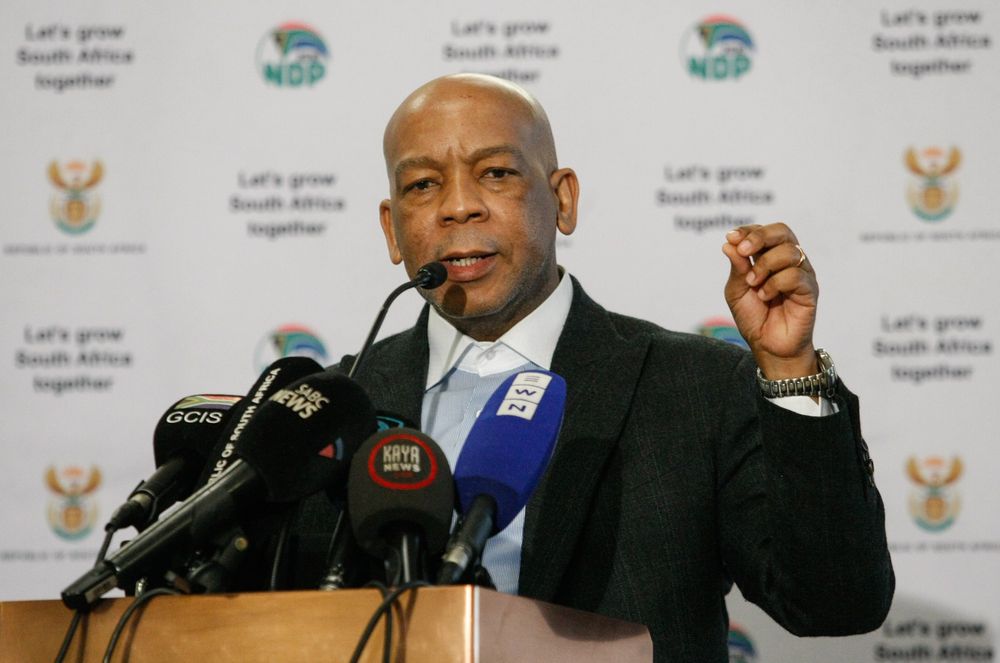
Minister Kgosientsho Ramokgopa led the energy portfolio to recovery. The writer says Ramokgopa's weekly briefings became legendary, and the results were more than 470 days without load shedding, an energy availability factor above 65%, and R30 billion in profit.
IN 2006, Eskom stood as a lodestar of African excellence. The state-owned enterprise won a global award as the best utility in the world, just 12 years into South Africa's democracy. It was a proud moment, proof that a democratic South Africa could build world-class institutions, as it had done with SARS and a truly inspirational Constitution.
In 2008, Jacob Zuma ascended to the presidency, and the centre did not hold. Within months, South Africa experienced its first rolling blackouts. Load shedding became a national crisis, and for a connected few, a business model.
The state capture inquiry exposed the systematic looting of Eskom and Transnet.
Former Eskom chair Zola Tsotsi revealed that Zuma played a direct role in dislodging senior executives, opening the way for the appointment of Brian Molefe and Anoj Singh, both later implicated in Gupta-linked deals.
McKinsey, along with its local partners Regiments Capital and Trillian, played a central role in the state capture of Eskom and Transnet. The commission found that 97% of public expenditure linked to state capture originated from these two SOEs, and McKinsey pocketed $85 million in profits. McKinsey has admitted responsibility for the criminal actions of its former partner, with the NPA confirming that "as a result of Sagar's corrupt actions, McKinsey was awarded contracts with Transnet and Eskom amounting to nearly R2 billion".
The company has returned all fees with interest and agreed to pay over $122 million in restitution. Despite the outsized role of these consulting firms, public discourse often focused disproportionately on non-white beneficiaries of state capture. This one-sided narrative obscured that global corporate enablers were just as complicit. Coal contracts were manipulated, and Eskom paid inflated prices for substandard coal. This was organised theft by those entrusted with the nation's assets, not a "third force" of external saboteurs.
Before renewal could begin, Andre de Ruyter failed spectacularly. Appointed with much fanfare, he presided over worsening load shedding while writing a bestselling book. His tenure proved that imported solutions cannot rescue South African institutions. The ANC learned this lesson and cleared the path for different leadership.
Minister Kgosientsho Ramokgopa, a civil engineer with a BSc, MPA, MBL, and PhD, led the energy portfolio to recovery. Together with Chair Mteto Nyati and CEO Dan Marokane, this "ensemble" relied on data, technical expertise, and transparency. Ramokgopa's weekly briefings became legendary. The results are more than 470 days without load shedding, an energy availability factor above 65%, and R30 billion in profit. This is what happens when the ANC makes the right choices.
The ANC may not govern alone after the upcoming elections. Coalitions are here to stay. The party must position itself as the anchor of stability, holding the centre, protecting the Constitution, and working constructively with others to deliver for communities. This requires humility and a focus on service, not entitlement or self-interest.
Coalition politics is forcing a conversation South Africa has avoided since 1994. For decades, parties operated in silos, each claiming sole legitimacy. Post-2010, the rise of populism and identity politics saw ethnic nationalism creeping back into our discourse. Tribalism, the poison that divided us for centuries, is re-emerging in new political clothing. But voters are pushing back. They are saying clearly: we do not care about your tribal affiliations. We want you to work together. We want you to fix our roads, keep our lights on, and restore our dignity. The quiet revolution is in the homes of ordinary South Africans exhausted by division and hungry for cooperation.
Renewal comes from small, consistent acts of service that bring dignity to the poor. It requires serving the majority instead of big business. These small wins accumulate into credibility. The Eskom turnaround was built on this principle, focusing on fundamentals and delivering measurable results.
The ANC must speak plainly about coalition governance and acknowledge past failures. The rot persists in some provinces, but the party's willingness to confront it, through commissions like Madlanga and leadership changes, suggests it is shedding the worst of its decay. We cannot throw the baby out with the dirty bath water.
The story of Eskom's collapse cannot be told without confronting Zuma's role. He turned a world-class institution into a vehicle for patronage. He did the same to SARS. Now leading the MK Party, he has abandoned the ANC's support for Sahrawi self-determination and aligned with right-wing Moroccan interests.
The ANC has condemned his "opportunistic involvement" that betrays principles of non-alignment and anti-colonial solidarity. Whether Zuma was ever truly an askari, an apartheid era collaborator as Thabo Mbeki suggested, is unproven. But his actions raise legitimate questions about his loyalties. The ANC's implosion was not the work of external forces but of leadership that allowed personal ambition to supersede collective purpose.
The Eskom turnaround proves renewal is possible. The original soul of the ANC, justice, democracy, service, and development, is worth saving. This requires competence, honesty, and humility to hold the centre in a fractured political landscape. As new realignments present themselves, SA must address the dinosaurs from each party.
In my view, Helen Zille's approach prioritises DA electoral gains over national inclusivity, a mindset that defends privilege rather than building unity. The same applies to the ANC. They need the electricity minister to spark a new revolution for meritocracy and kick out their own dinosaurs.
To be fair, capable leaders exist across the political spectrum. The DA has delivered in some municipalities; the EFF has raised issues of economic justice. But the Eskom model proves that when competence and patriotism align, results follow. Can this vision take us on a journey with the best in other parties who believe in saving our country for South Africans? Not for America, China, multinationals, or the greedy.
We need leaders whose primary loyalty is to South Africans. We need a project that makes us the Singapore of Africa. I would not write this article of hope unless I saw how Eskom transformed my love for SA into my belief in SA. Let us start with employing that calibre of leaders from Eskom who make my heart burst with pride. I do not need to beg my former oppressor to lead me into freedom.
The voters are watching. They are tired of division. They want cooperation and results. They are ready to reward those who deliver, regardless of party. That is the new South Africa. That is the future we must build together, because we are stronger together.
Roshan Jainath is a community activist and a writer.
** The views expressed do not necessarily reflect the views of IOL or post.co.za


