The next wave of property boom: Chandigarh Tricity among 11 cities expected to lead real estate growth - The Indian Express
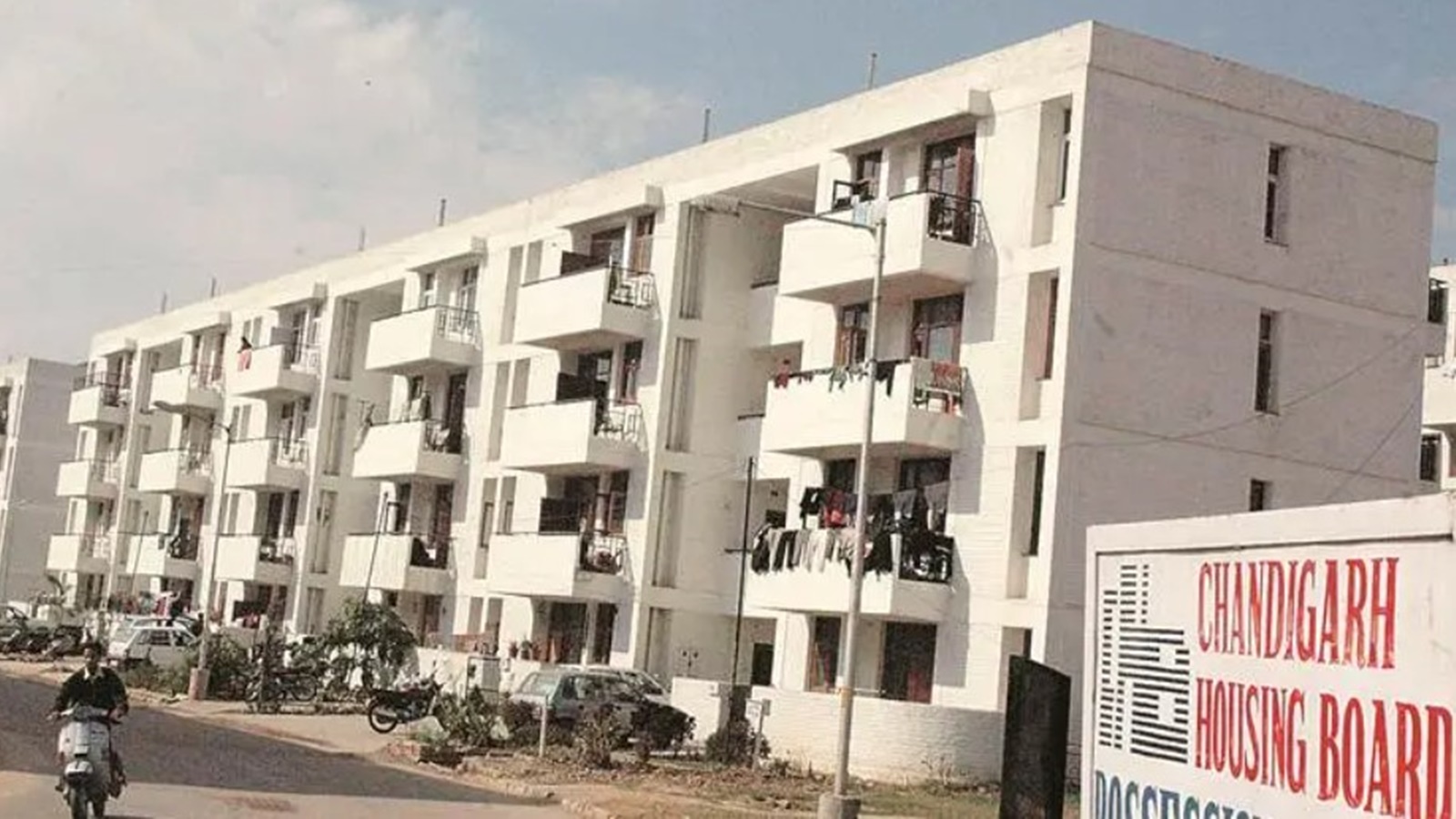
For years, Chandigarh’s real estate aspect has largely been about a tightly held planned city and its spillover into the surrounding Tricity. The latest CII-Knight Frank report, though, has placed Chandigarh Tricity among 11 emerging real estate markets that could shape India’s next phase of property growth, with connectivity, economic activity and urban infrastructure emerging as the key factors behind its inclusion.
The report stated that residential prices across the 11 identified emerging markets — including Chandigarh Tricity — increased 63 per cent between 2021 and 2026, compared with 42 per cent across India’s top eight cities. Between 2016 and 2026, these 11 markets recorded an average residential price CAGR of 8 per cent, against 4 per cent in the top eight.
Chandigarh stands out within this group on pricing as well. The report placed the Chandigarh Tricity residential price range at Rs 7,500-Rs 10,500 per sq ft, second only to Goa among the 11 emerging markets.
The report’s Chandigarh assessment is built around a simple convergence that connectivity is expanding the reach of the Tricity, while its established services economy is creating the demand that can support further real estate development. It identified the Airport Road and regional road network as important mobility anchors, while pointing to professional services, education and healthcare as key economic anchors.
It is this combination that, according to the report, creates potential demand not merely for housing but specifically for premium and mid-premium housing and commercial development.
One of the clearest indications of the premium end of Chandigarh’s property market came earlier this year, when a 4.1-kanal house in Sector 9 changed hands for about Rs 100 crore. The property, measuring 2,489 sq yards, was sold on May 13, according to property registration data accessed by The Indian Express. The transaction value was nearly 69 per cent higher than its collector value of Rs 59.27 crore, underlining the premium commanded by scarce residential property in the city’s established sectors.
The report made an important distinction that connectivity by itself does not create a sustainable real estate market. New roads and improved mobility can open up locations, but the ability of those locations to absorb economic activity depends on the urban infrastructure around them.
For the Tricity, that means the next phase of growth will depend on whether connectivity is accompanied by the basic systems required to support expanding urban activity — water supply, sanitation, drainage, waste management, public transport, housing and other civic services.
In other words, the report’s argument is not simply that better roads mean higher property values. Its broader assessment is that connectivity determines where economic activity can reach, while urban infrastructure determines where that activity can actually be accommodated.
This is particularly relevant to the Chandigarh Tricity, where areas that were earlier peripheral can become extensions of existing urban centres when connectivity and supporting infrastructure develop together. The report sees this interaction between mobility, economic activity and urban capacity as central to the emergence of new real estate centres.
The report also cautioned against viewing infrastructure creation in isolation. For improved connectivity to translate into lasting real estate demand, cities need the economic activity to use that connectivity.
Businesses require access to workers and markets; households require housing and civic services; and new commercial activity requires serviced land, reliable utilities and efficient approvals, the report said.
For Chandigarh Tricity, the report therefore connects the Airport Road and regional road network with an economic base anchored by professional services, education and healthcare. The resulting opportunity, it said, extends into both premium/mid-premium residential development and commercial real estate.
The report placed the Tricity’s connectivity story within a broader national infrastructure push, with infrastructure accounting for a rising share of government capital expenditure. It said the share increased from 39 per cent in FY15 to 55 per cent in FY26, while a three-year public-private partnership pipeline comprises 852 projects worth Rs 17 lakh crore.
But for Chandigarh, the report’s key takeaway is less about the size of that national spending and more about what infrastructure does once it reaches a city.
Its assessment is that real estate growth will be deeper in cities that can combine employment, enterprise, population growth, consumption and urban capacity. Infrastructure, therefore, is the starting point.
The report put emphasis on serviced land, reliable utilities, housing, public transport, healthcare, education and efficient approvals. Without these, improved connectivity can expand access to a location without necessarily creating the economic ecosystem required to sustain development.
For Chandigarh Tricity, the report’s case is consequently not based on one road or one real estate corridor. It is about the combination of mobility and an already established services economy, and whether the region’s urban infrastructure can keep pace with the economic activity that better connectivity brings.
Hina Rohtaki is a Special Correspondent at The Indian Express, based in Chandigarh. She is one of the most prominent journalists covering the Chandigarh Administration, civic issues, and the unique political status of the Union Territory. Professional Background Experience: She has been in the field for over a decade and is known for her investigative reporting on administrative waste and urban governance. Awards: She is a recipient of the prestigious Ramnath Goenka Excellence in Journalism Award, which was presented to her by the President of India in January 2020. She was also awarded the Jethmalani prize (The Will of Steel Awards) in 2025 in the Empowerment category for a series of articles that highlighted the struggles of Covid widows. Core Beat: Her primary focus is the Chandigarh administrative structure, the Union Territory's financial management, and urban development projects. Recent Notable Articles (Late 2025) Her recent work highlights a focus on government accountability, administrative expenditures, and civic trends: 1. Investigative & Financial Reporting "Fuelling power: Senior UT IAS officers guzzled petrol worth Rs 30 lakh in 2 yrs" (Dec 14, 2025): An investigative report detailing the high fuel bills of top bureaucrats, including the Finance Secretary and Chief Secretary’s staff. "Admn spends Rs 1.5 crore on dismantling road railings and fixing again after increasing height" (Dec 8, 2025): Highlighting administrative waste on "non-viable" solutions for pedestrian control. "Chandigarh’s finances under ministry’s watch now" (Nov 27, 2025): Reporting on the new requirement for MHA approval for all new projects in the UT. 2. Governance & Constitutional Status "What will it mean for Chandigarh if it is brought under Article 240?" (Nov 24, 2025): An "Explained" piece on the potential constitutional shift that would grant the President more power over the UT's governance. "MP Manish Tewari moves Bill seeking directly elected Mayor with 5-year tenure" (Dec 6, 2025): Covering the legislative push to reform Chandigarh's municipal leadership structure. "No proposal to increase Mayor's term in Chandigarh by 5 years: Centre" (Dec 10, 2025): Reporting on the Union government's response to demands for a longer mayoral term. 3. Urban Infrastructure & Environment "Chandigarh admn cuts power to India's tallest air purifier, asks firm to dismantle it" (Nov 17, 2025): A critical report on the failure of a high-cost environmental project deemed "of no use" by experts. "UT rethinks 24/7 water supply project as costs soar" (Nov 26, 2025): Detailing the financial challenges and delays in modernizing the city's water network. "Centre 'obfuscating, covering up' MC's shifting deadlines for clearing Dadu Majra dump" (Dec 12, 2025): Reporting on the ongoing controversy surrounding the city's major waste dump. 4. Lifestyle & Local Trends "Chandigarh turns into a Thar city as women fuel the surge" (Dec 2, 2025): A feature on a unique automotive trend in the city, with a record 600 registrations by women drivers this year. "After fivefold spike in 2023, EV sales struggle to pick pace in Chandigarh" (Dec 2, 2025): Analyzing the slowdown in electric vehicle adoption despite previous surges. Signature Beat Hina is known for her meticulous tracking of RTI (Right to Information) data to expose administrative inefficiency. Her "Ground Zero" reporting on the Dadu Majra garbage dump and her scrutiny of the Chandigarh Smart City projects have made her a key figure in the city’s civil society discourse. X (Twitter): @HinaRohtaki ... Read More