The single point of failure threatening Nigeria’s digital future - The Guardian Nigeria News
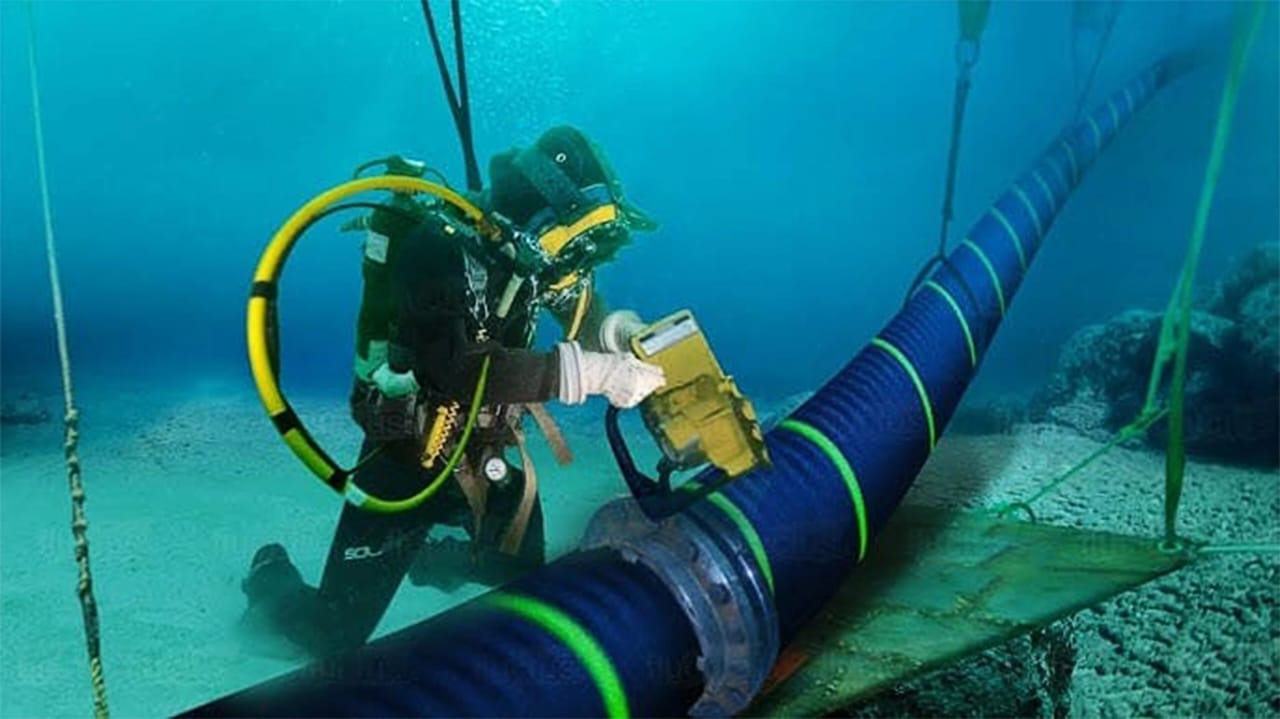
In March 2024, an underwater incident off the West African coast triggered a wave of subsea cable failures, disrupting the WACS, ACE, MainOne and SAT-3 systems. Within hours, parts of Nigeria’s digital economy began to seize up. Banking applications and some USSD services became unavailable, Point-of-Sale (POS) transactions were disrupted, and businesses struggled to access digital services.
The episode exposed a vulnerability that is becoming harder for Nigeria to ignore: an economy increasingly dependent on digital connectivity can still be brought under severe pressure when critical infrastructure fails at the same time.
NetBlocks estimated that the disruption cost Nigeria about ₦273 billion in economic activity over the four-day period.
The problem is not simply that Nigeria has too few digital connections. It is that too many critical connections can fail together.
Nigeria has made significant progress in building a digital economy, but the architecture supporting it remains exposed to two broad forms of vulnerability: physical concentration and policy or governance risk.
One concerns where the country’s connectivity infrastructure is located and how networks are interconnected. The other concerns how the state can intervene in telecommunications services during emergencies and security operations.
The March 2024 outage offered a vivid demonstration of the first vulnerability.
Nigeria has begun to diversify its international connectivity, including through newer subsea systems landing outside Lagos.
Yet Lagos remains the country’s principal hub for international submarine cable infrastructure and digital interconnection. That concentration means that a major incident affecting the coastal corridor can have consequences far beyond the physical location of the damage.
The vulnerability does not end at the shoreline.
Nigeria’s terrestrial fibre networks face persistent disruption from road construction, civil excavation, vandalism and other forms of infrastructure damage.
In the first six months of 2026 alone, the Nigerian Communications Commission reported 5,934 fibre cuts, equivalent to roughly 33 incidents every day.
The numbers matter because fibre is no longer simply a telecommunications industry asset. It carries the infrastructure on which banking, electronic payments, commerce, government services, logistics, education and an expanding range of businesses depend.
The March 2024 experience also raised questions about the resilience of domestic digital pathways. Lagos Chamber of Commerce and Industry President Gabriel Idahosa subsequently called for greater investment in locally hosted switching and transmission infrastructure, arguing that domestic transactions should not unnecessarily depend on infrastructure outside Nigeria.
That principle has become increasingly important as electronic payments expand. A payment initiated in Lagos and destined for another Nigerian city should, wherever technically and economically feasible, be able to remain within resilient domestic networks even when an international connectivity route is disrupted.
This is where network architecture becomes a national economic issue.
Nigeria does not necessarily need a single new piece of infrastructure to solve the problem. It needs layers of redundancy that prevent the failure of one route, facility or provider from becoming a national disruption.
That means geographically separated data and network infrastructure, alternative terrestrial fibre routes, greater diversity in subsea cable landing points, stronger protection for critical fibre corridors and deeper domestic interconnection.
The Internet Exchange Point of Nigeria (IXPN) already provides an important part of that architecture by enabling networks to exchange domestic traffic locally rather than unnecessarily sending it through international transit routes. Strengthening local peering and interconnection can therefore reduce the country’s exposure to external connectivity failures.
The objective should not be to eliminate every possible point of failure. No complex digital infrastructure can achieve that. The objective should be to ensure that the failure of one component does not automatically become the failure of an entire service.
That is the essence of digital resilience.
It is also why the protection of telecommunications infrastructure has increasingly moved from being a commercial concern to a national-security issue.
In June 2024, President Bola Tinubu signed the Critical National Information Infrastructure (CNII) Designation Order, formally recognising critical ICT infrastructure, including telecommunications infrastructure, fibre-optic networks, data centres and other digital facilities, as assets whose protection is important to national security and economic activity.
The designation reflects a reality already evident in everyday life: when connectivity fails, the consequences extend far beyond the telecoms industry.
But physical protection is only one side of the resilience equation. The other concerns the legal framework governing state intervention in telecommunications.
Under Section 148 of the Nigerian Communications Act 2003, the Nigerian Communications Commission has emergency powers that can include suspending a licence, taking temporary control of network facilities, or withdrawing wholly or partially the use of services or network facilities in a public emergency or in the interest of public safety.
The practical consequences of emergency telecommunications intervention were demonstrated in September 2021, when telecom services were suspended across Zamfara State following security concerns.
Such interventions may arise from genuine security imperatives. But they also expose a policy tension that deserves greater attention as telecommunications infrastructure becomes increasingly critical to the economy.
A network designed for resilience must be capable of maintaining essential services during disruption. At the same time, emergency powers capable of affecting network availability must be exercised within a framework that recognises the economic and social consequences of prolonged or geographically broad shutdowns.
The Communications Act itself recognises the importance of survivability. Section 149 provides for disaster and emergency planning, including arrangements directed at the survivability and recovery of services and network facilities during a disaster, crisis or civil emergency.
That principle should inform the broader policy conversation.
The question is therefore not whether the state should possess emergency powers. It is whether those powers, their procedures and their safeguards are sufficiently aligned with the resilience requirements of a digital economy.
Where a security threat is geographically specific, the policy objective should be to achieve the necessary security outcome while minimising unnecessary disruption to unaffected citizens, businesses and critical services.
Clear procedures, proportionality, accountability and appropriate review mechanisms can help reconcile national-security requirements with the need for continuity of essential digital services.
The issue is becoming more urgent because Nigeria’s dependence on connectivity is growing rapidly. Electronic payments, agency banking, POS transactions, cloud services, digital commerce, remote work and online public services have turned telecom infrastructure into part of the country’s economic operating system.
NCC Executive Vice Chairman Dr Aminu Maida captured the broader significance of that transformation when he described modern infrastructure as “virtual, interconnected, and crucial to every sector of society,” adding that “resilience is not a luxury—it is a national imperative.”
That imperative requires a change in how digital infrastructure is viewed.
Subsea cables are not merely telecom assets. Fibre routes are not merely the concern of network operators. Data centres, internet exchanges and telecommunications facilities are increasingly part of the infrastructure through which Nigeria’s economy functions.
The March 2024 cable failure showed what happens when several international routes become unavailable at once. The thousands of terrestrial fibre cuts recorded in 2026 show that the vulnerability is not confined to the sea.
The CNII designation acknowledges the strategic importance of the infrastructure, while the emergency provisions of the Communications Act demonstrate the extent to which network availability can also intersect with national-security policy.
Nigeria’s challenge, therefore, is not simply to build more connectivity. It is to build connectivity that can survive disruption.
That means greater geographic diversity in subsea and terrestrial routes, stronger protection of critical infrastructure, deeper domestic traffic exchange, resilient data and power systems, and an emergency regulatory framework that balances legitimate security needs with continuity of essential services.
A country aspiring to build one of Africa’s leading digital economies cannot afford an architecture in which the failure of a few critical connections—or the disruption of a critical network—can cascade into a much wider economic shock.
The lesson of the 2024 outage was not that Nigeria had no redundancy. It was that too many critical parts of its digital infrastructure could fail together.
The next stage of Nigeria’s digital transformation must therefore be measured not only by how much connectivity the country builds, but by how much disruption that connectivity can withstand.

:strip_icc()/i.s3.glbimg.com/v1/AUTH_63b422c2caee4269b8b34177e8876b93/internal_photos/bs/2021/p/2/cxobwRTySqehrdwG9Xbg/30747888962-a704cc4b7a-k.jpg)