The world is changing rapidly. Albanese needs to follow suit
You have reached your maximum number of saved items.
Remove items from your saved list to add more.
The world has changed in the last few months. The Albanese government needs to change accordingly. It will find it extremely hard. But it’s not impossible.
The federal government was running on the assumption that Australia was suffering a temporary problem with the “cost of living”. So it resorted to temporary solutions. It offered “help with the cost of living”. This involved empathetic rhetoric and cash handouts.
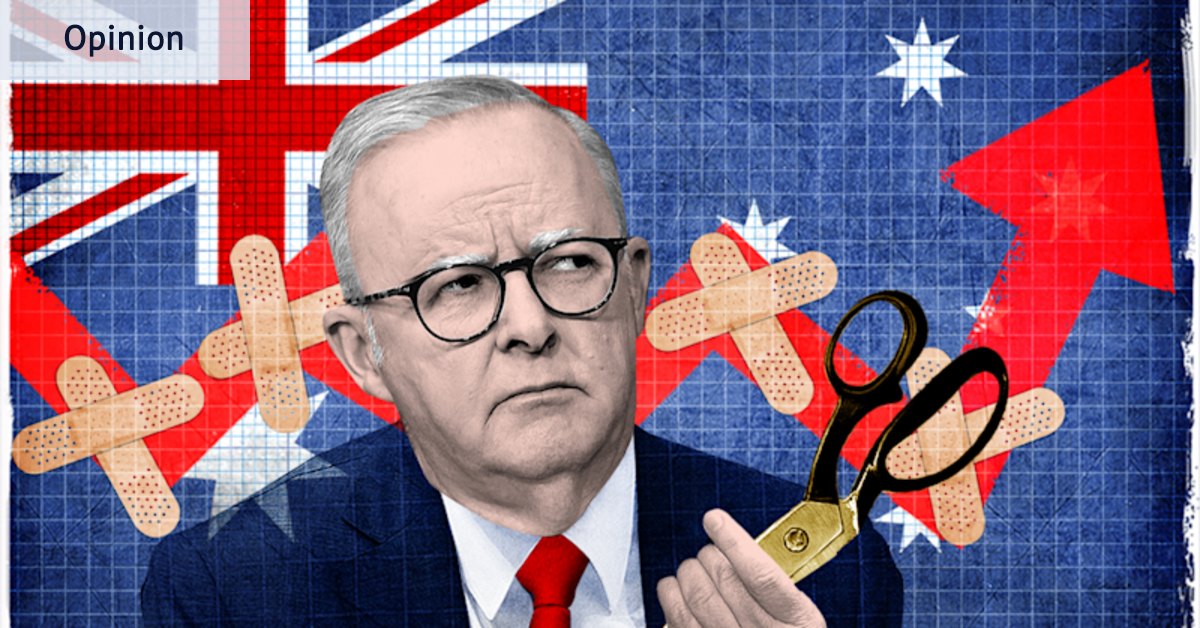
Illustration by Dionne Gain The state governments did exactly the same. “We’re from the government and we’re here to help.” It worked politically. And it was manageable fiscally. The Albanese government was re-elected. Mission accomplished. Even Donald Trump’s absurdly quixotic war on Iran didn’t disturb the scenario. Initially.
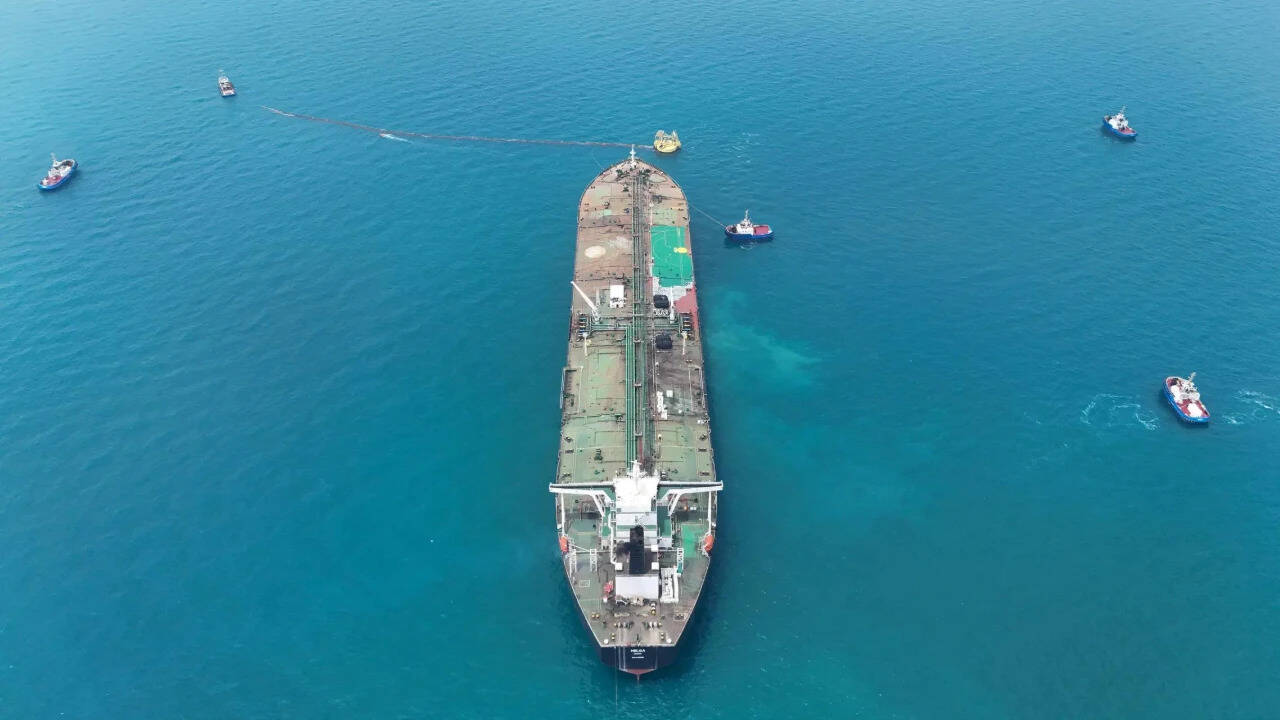
Trump’s “little excursion” with Bibi Netanyahu drove the oil price higher; the Albanese government responded by cutting the fuel excise because “Australians are doing it tough”. It was an expensive subsidy, but it was temporary. The government got no real thanks for it politically but got away with it fiscally.
But the world has changed since, and changed dramatically. Inflation is high and now entrenched. So interest rates are going higher. High interest rates, too, are now entrenched. And that means that interest payments on the national debt are also increasing.
So handouts are not only useless in this new reality; they are worse than useless. They only add to inflation in the economy, aggravating the problem.
This means that the “cost-of-living crisis” is entrenched. It’s no longer temporary. And it’s entrenched at levels driving Australian voters to despair, a despair otherwise known as Pauline Hanson. Treasurer Jim Chalmers has a silver tongue. But it’s stretched as far as it can usefully reach in the face of this new reality. He knows it; that’s why he’s looking unhappy.
Yet the next election isn’t due for a year and a half. What to do? Don Russell, one-time right-hand man to Paul Keating and now chair of Australian Super, famously divided political leaders into two categories: “pleasers” and “doers”.
“Pleasers will try not to upset people; will seek approval from as many groups as possible; and will try to shield the electorate and themselves from bad news,” he said in a 2008 speech. “Doers,” Russell continued, “will identify problems and be seen to deal with them. Doers maintain a dialogue with the electorate and want to educate people.”
Which is the Albanese-Chalmers government? It’s broadly a pleaser. As were its predecessors. The doers included the Hawke-Keating government and the Howard-Costello government. In the opinion of independent economist Chris Richardson, “we have had pleasers ever since WorkChoices”, the final, fatal Howard-Costello reform effort. “Twenty years of pleasers has delivered an economy with no productivity growth and we are rats in a cage fighting over shares of the pie.”
Peter Costello was a “doer” who brought down 10 budget surpluses and created sovereign funds including the Future Fund and the medical research fund. I asked him what he’d do faced with today’s problem of entrenched inflation and rising interest rates if he were magically put in charge.
His answer – stop making it worse by running a budget deficit. Cut government spending to eliminate the federal deficit. That’s a big cut, around $30 billion for the current fiscal year, equal to about 1 per cent of GDP. Costello says that it should be eminently doable. Why? “Australia’s terms of trade have doubled since Keating and me,” the former treasurer tells me. The terms of trade measure the price of our exports compared to our imports.
He’s right; they’ve moved hugely in Australia’s favour as commodities have become more valuable. “We are living in a terms-of-trade surge. In buoyant trading times like these, we should be paying down debt.” Instead, by running a deficit, the federal government is doing the opposite, adding to the debt pile every year.
The government will dismiss this as a partisan point. Costello, of course, is a Liberal. But he has the credentials. And he has the support of non-partisans including the former treasury secretary Ken Henry, who advised Labor and Liberal governments: “Everybody knows the budget should be in surplus right now,” Henry told me in August.
“Everybody knows this generation should not be burdening the next generation with a debt burden.”
The former Reserve Bank governor Philip Lowe this week added his voice: “Now we find ourselves running sizeable budget deficits at a time where we’re at full employment and commodity prices are very high. We should be running sizeable surpluses,” he told the Institute of Public Affairs. “Government spending has been adding to demand progressively over time, and that’s putting upward pressure on inflation.”
Costello says that there is new urgency because interest rates on the national debt are rising: “It’s particularly important as it’s becoming more and more expensive. The interest costs on the debt will be a driver of expenditure racing against NDIS to be the biggest growth in government spending over the years.”
Australia was able to borrow on the world market at rates of 1 per cent or lower during COVID. But today Australia is borrowing money at around 5 to 6 per cent. “A heap of cheap COVID debt will need to be rolled over, starting in about two years for the federal government and about four years for the states,” says Richardson.
The Albanese government says that all is not lost. Its Intergenerational Report last month projects that productivity will increase, thanks to AI. Meaning that the economy will be able to grow faster without generating inflation. Productivity growth is like lubricant to prevent the motor running hot.
Costello, incidentally the father of the Australian intergenerational reports, is unconvinced: “The Intergenerational Report was what the Americans call a Hail Mary pass – everything is going badly but the government has latched onto AI as its saviour,” Costello continues. “It’s high risk. Let us hope Anthropic and OpenAI can save Australia because the government doesn’t have much idea how to do it.”
So if the government is going to face the problem squarely, should it eliminate the deficit by raising taxes or cutting spending? “Revenue is maxed out,” Costello says. “It has to be done on the spending side.”
There is one important qualifier here. The idea of a tax on gas exports could raise tens of billions. The proposal has considerable backing, but the government has ruled it out for now.
It would be a drastic change for the Albanese government to conduct major fiscal reform. The government has confronted some tough spending cuts. It’s addressing the runaway cost of the NDIS, for example, and suffering some political pain as a result. But, overall, it would be required to change its persona from pleaser to doer, from giver to taker. As it edges towards the next election, it is deeply reluctant to make itself more unpopular by cutting programs.
Its instinct is to temporise. To trim here and there but to hope that high inflation just fades away. Or to allow the Reserve Bank to do all the work of cutting inflation. But even if Governor Michele Bullock does the dirty work of crushing inflation with higher interest rates, the government will not escape responsibility. Their only choice is whether to help fix the problem. Or not.
It is not about to fade away. Three big developments have changed the world. First, inflation is now entrenched. Trump’s prediction of a war lasting “two to four weeks” is now an indefinite standoff, in its eighth month with no end in sight. The global oil price remains around 40 per cent higher than its level before the war. Even a tentative resumption of oil flows through the Gulf of Hormuz has not reduced its price because of the multiple uncertainties hanging over the oil market.
Second, in response to this inflation, central banks including Australia’s stand poised to raise rates again and again. This means that high interest rates are entrenched.
Third, the global bond market is fed up. Fed up with inflation, fed up with profligate governments. So what, you may ask? Australia’s national debt is very modest comparatively. But if the global bond market is raging, no one is spared.
Recall Bill Clinton’s moment of awakening. His advisers told him that if he wanted lower interest rates and faster growth, he would have to convince the bond market he was serious about cutting the deficit. “Clinton’s face turned red with anger and disbelief,” related journalist Bob Woodward. “‘You mean to tell me that the success of the program and my re-election hinges on … a bunch of f--ing bond traders?’”
Cutting spending purposefully would be hard. Don Russell’s consolation: “The life of a minister might be shockingly hard and thankless, but at least the doer has something to show for it when it is all over.”
Peter Hartcher is political and international editor. His international column appears on Tuesdays.
You have reached your maximum number of saved items.
Remove items from your saved list to add more.