This 55-year-old teacher treks 5 km daily to keep promise of teaching one student - The Indian Express
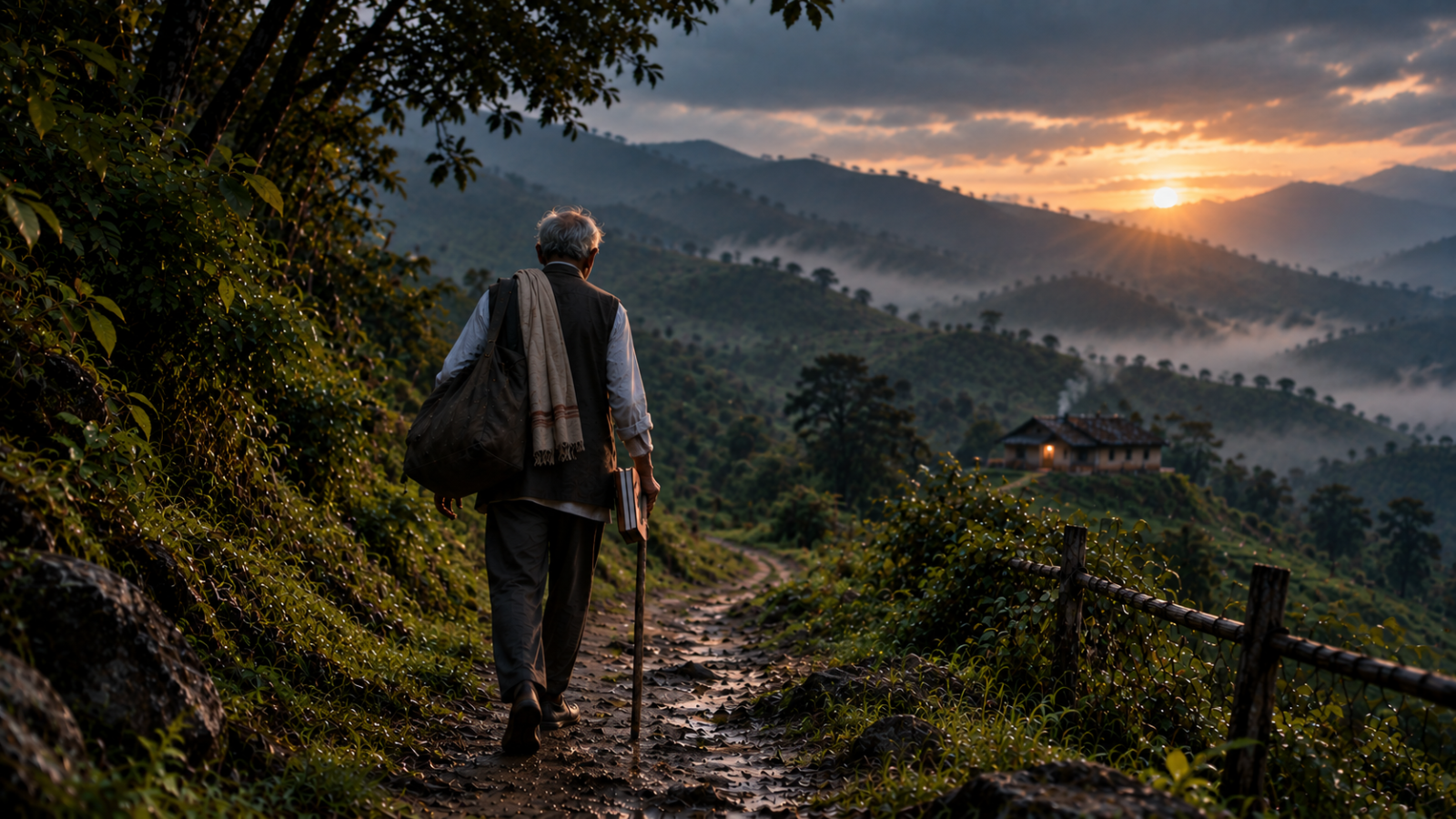
Every morning, when most teachers head to school by vehicle or public transport, Jivan Mithari sets out on a 5-kilometre walk through dense forest, braving rain, wild animals and the absence of a motorable road, only to teach a single student.
For the past 13 years, the 55-year-old teacher has been walking to the Zilla Parishad school at Kawaltek Dhangarwada, a remote hamlet in Gaganbawada taluka of Maharashtra’s Kolhapur district, bordering Sindhudurg.
The hamlet has no electricity, and vehicles cannot reach the school. Located 2.5 km from the nearest road, the school makes Mithari’s daily journey a 5 km walk to and from the institution.
“I went there on July 26, 2013. Since then, I have continued to work there,” Mithari said.
His decision to seek a transfer to the remote school was something of a dare.
Before moving, Mithari had served as chairman of the Kolhapur District Primary Teachers’ Cooperative Bank. He said his fellow teachers once remarked that influential figures like him usually secured postings at well-connected schools, while others were left to work in difficult, far-flung locations.
“I said I will go,” Mithari recalled, explaining that he sought a transfer and chose the remote school.
The school once had a much larger student population. The hamlet, comprising Kawaltek Dhangarwada and Anandur Dhangarwada, earlier housed between 70 and 100 families. But after 2000, migration in search of livelihoods in Kolhapur city gradually thinned the settlement, reducing the number of children in the settlement.
This year, Mithari has just one student officially enrolled: Swara Bodake, who is in Class 3. Her younger sister, not old enough for formal education, also attends classes since the hamlet has no anganwadi, the government-run women and child care centre. She is expected to enter Class 1 next year.
The low enrolment, however, has not changed Mithari’s commitment.
“Even if I have fewer children, I have to keep doing my work,” he said.
The journey itself carries risks. The route is frequented by gaurs, leopards and other wildlife. Mithari recalled encounters with gaurs on his way and said villagers had taught him how to respond differently depending on whether the animal was alone or moving in a herd.
“Ultimately, we are entering their territory,” he said.
On another occasion, a leopard killed a young bullock near the settlement. Forest officials subsequently installed a trap camera and captured hundreds of images of the animal. Mithari was advised not to sit or stop along the route while travelling to and from the school.
“I am also a human being. I do feel scared. But over time, it has become a habit,” the teacher said.
The alternative for the children is hardly practical. The nearest school at Dhundawade would require young children to travel nearly 5.5 km each way, or about 11 km daily, according to Mithari. During the monsoon, such a journey would be particularly difficult for children aged 6 to 9.
The community survives mainly on small-scale farming, firewood collection, and forest produce such as jamun, karvand, and other wild fruits. To protect their crops from frequent visits by gaurs, the farms are secured with double fencing.
Mithari, who is due to retire in May 2029, says the long walk has also become a form of daily exercise. Despite the school’s low enrolment, he stresses that a compound wall is essential for the safety and security of the students.