Thobakgale tells Madlanga Commission prisons become training base for future crime bosses - IOL
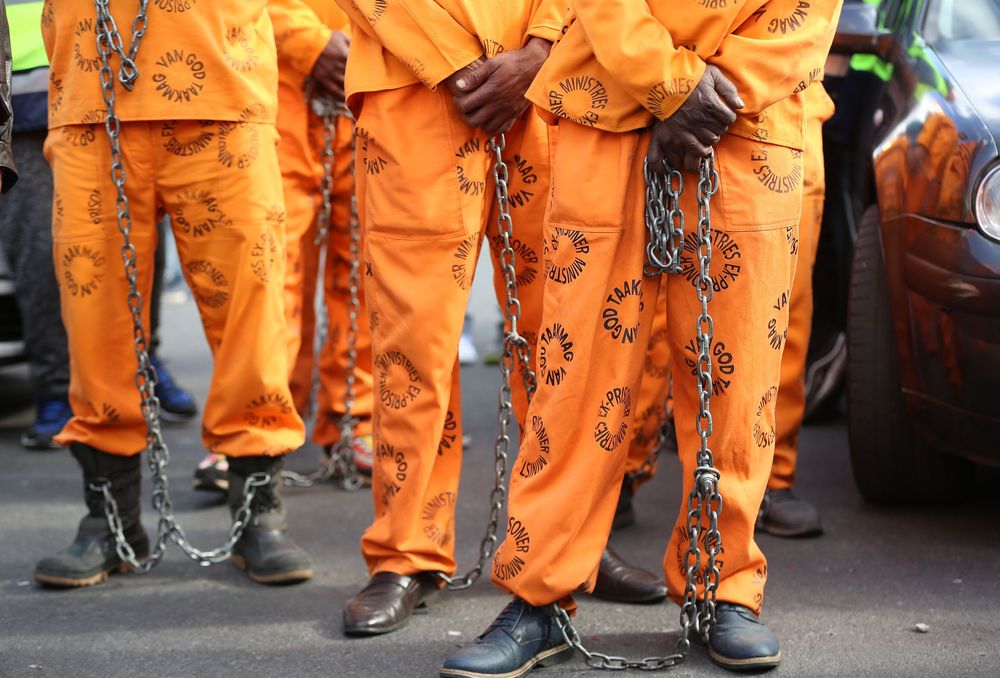
Correctional Services commissioner Makgothi Thobakgale said prisons are not housing criminals and suspects but have become breeding ground where gangs recruit new members and prepare future leaders of the criminal underworld.
Correctional Services commissioner Makgothi Thobakgale said prisons are not housing criminals and suspects but have become breeding ground where gangs recruit new members and prepare future leaders of the criminal underworld.
Testifying at the Madlanga Commission on Tuesday, Thobakgale warned that imprisonment does not necessarily sever criminals’ links to the outside world or bring their criminal ambitions to an end.
“While incarceration removes offenders from society and seeks to protect the public, it does not automatically extinguish criminal intent or criminal associations or criminal activity for that matter,” he said.
“Consequently, some offenders continue to pursue criminal objectives even while in remand detention or serving their sentences.”
However, he also mentioned that this usually happens when a young person, who belongs to a gang, is taken to juvenile jail.
But older people, they recruit even inside prison.
Thobakgale said his department has a constitutional and legislative responsibility to house people who have fallen foul of the law, from those convicted of relatively minor offences to perpetrators of violent and highly organised crimes.
At the heart of the department’s mandate, he said, is rehabilitation, changing behaviour, encouraging accountability and preparing offenders to return to society as law-abiding citizens.
But that process is not embraced by everyone.
Some inmates, Thobakgale said, actively resist rehabilitation and use their time inside correctional centres to maintain criminal networks and pursue unlawful activities.
“This is the central security risk that the Department manages on a daily basis,” he said.
According to Thobakgale, gangsterism has a long and deeply entrenched history inside South African correctional facilities.
Among the most notorious are the traditional Number Gangs, the 26s, 27s and 28s, whose origins are traced back more than a century to the mining communities.
The gangs operate through rigid hierarchies, rituals, codes and internal systems of discipline.
Loyalty is reinforced through intimidation, coercion and violence, while their influence has spread across correctional centres.
He said the 28s were divided into the gold and silver lines.
The gold line is regarded as the more aggressive wing, responsible for fighting and confrontational activities, while the silver line traditionally performs support functions and assists other members.
The gang has also been associated with smuggling and has increasingly spread across different prison work teams.
The 27s are associated with violence, including assaults and attacks on officials and fellow inmates.
They also serve as an intermediary between the 26s and 28s while enforcing the gangs’ internal code.
The 26s, meanwhile, are primarily focused on money-making activities, including smuggling, drug dealing and gambling.
Members have also sought access to coveted goods and privileges through corrupt influence and positions that provide opportunities for illicit activity.