Three years, R192m and counting: The long road to reopening Lilian Ngoyi Street - IOL
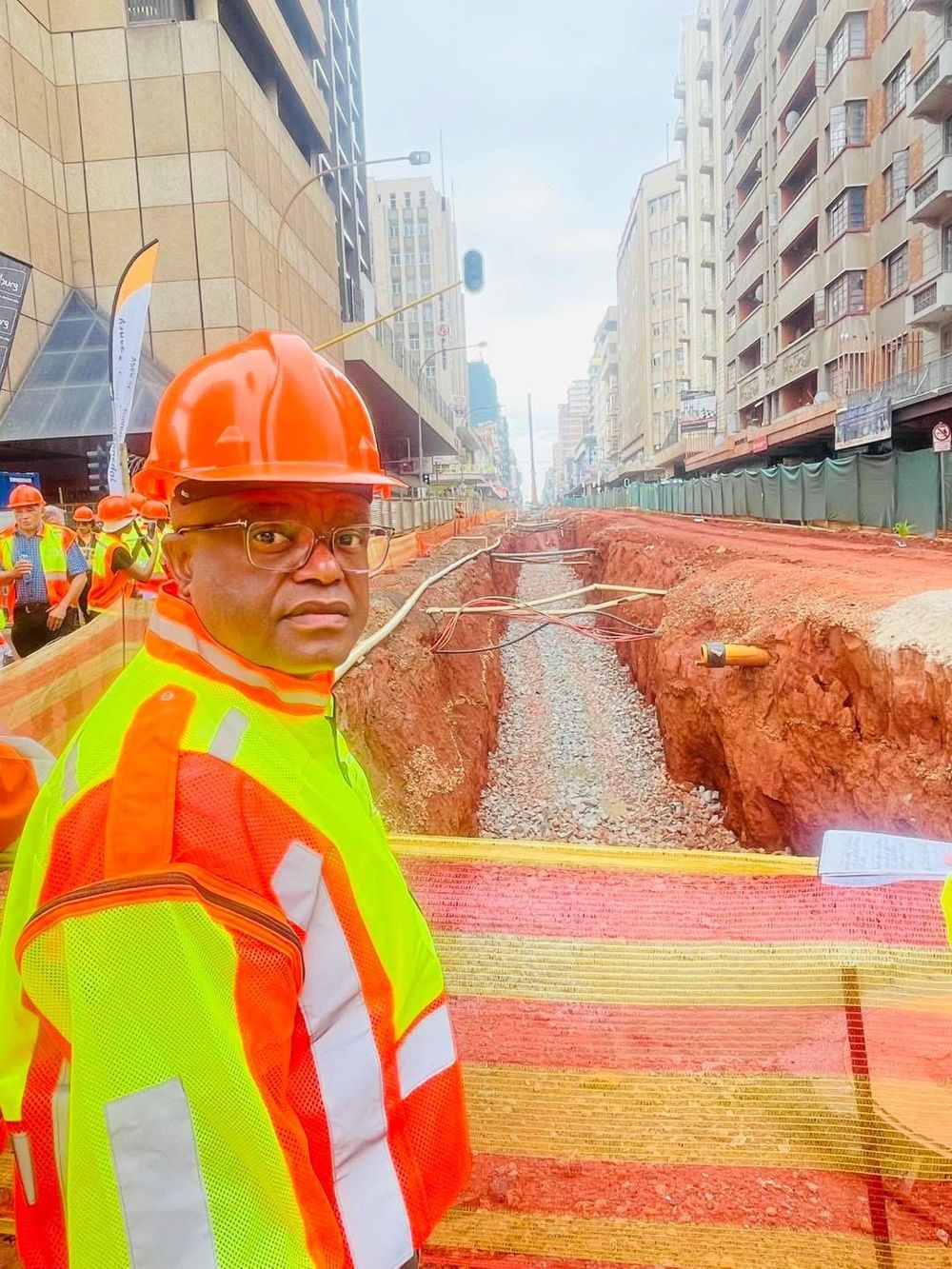
Johannesburg Mayor Dada Morero has defended the R192 million cost of rehabilitating Lilian Ngoyi Street, saying the bulk of the work and the money have gone into rebuilding ageing underground tunnels and replacing critical water and electricity infrastructure.
More than three years after a deadly gas explosion tore through Lilian Ngoyi Street in central Johannesburg, motorists and businesses are still waiting for the troubled rehabilitation project to reach the finish line.
The R192 million project was initially expected to be completed by the end of August.
That deadline has now been pushed to October 31, with the Johannesburg Roads Agency (JRA) saying the project is 72% complete.
The latest delay has put renewed focus on why the project has taken so long, why the costs have risen and what remains to be done before the street can fully reopen.
The rehabilitation of Lilian Ngoyi Street, formerly known as Bree Street, began after a methane gas explosion on July 19, 2023.
The explosion killed one person and injured several others, while damaging the road and underground infrastructure.
What followed was not simply a conventional road reconstruction.
City officials say the explosion exposed serious problems beneath the street, including ageing tunnels and a network of water, electricity and other services.
The scale of the underground work has since become one of the central explanations for the project's high cost and lengthy construction period.
Three years later, the road is still not finished.
The first phase of the rehabilitation covered a 450m section between Harrison and Wanderers streets.
That section was completed in August 2025, although the official reopening only took place in September.
The second phase covers the remaining 1.8km stretch between Ntemi Piliso and End streets.
It was initially scheduled for completion by the end of August 2026.
The JRA has now revised the target to October 31, 2026.
The extension means parts of Lilian Ngoyi Street will remain subject to closures and construction activity until at least the end of October.
The disaster scene on Lilian Ngoyi Street, Johannesburg in the aftermath of a methane gas explosion on July 19, 2023. The explosion killed one person and injured several others, while damaging the road and underground infrastructure.
The city points to several factors.
The first is the complexity of the underground infrastructure.
Speaking to the media this week, JRA CEO Zweli Nyathi said engineers found conditions beneath the street that could not have been fully anticipated when the project was designed.
Engineers had to excavate deeper, install additional cables and introduce new rock surfaces after discovering that some existing infrastructure could not be safely accessed.
Nyathi said the project required extensive work below the road rather than simply replacing the damaged surface.
“There’s a lot of work that went into this particular road. It’s not an easy one,” he said.
The cost of the project has also attracted attention.
Mayor Dada Morero has defended the R192 million price tag, arguing that the amount cannot be assessed simply by looking at the finished road surface.
“That is why you see that there’s an argument about the cost of the road, but what people are commenting on is the upper surface of the road. They’re not commenting on what went underneath. It’s not a normal street that you construct and build in Soweto because there’s no tunnels,” he said.
According to Morero, the project included rebuilding underground tunnels and installing new water and electricity infrastructure.
“That is why you see the cost goes to about R192 million for the entire project, but part of that amount goes into the tunnels and the infrastructure that was to be built, and there’s also additional infrastructure that also came out as they were doing the construction that needed to also be covered,” Morero said.
He said new water and electricity infrastructure had been installed, with City Power still expected to complete one line.
The city has also acknowledged that financial pressures played a role in the delays.
Morero attributed some of the project's setbacks to cash-flow challenges within the City of Johannesburg.
JRA spokesperson Bertha Peters-Scheepers said payments had now been finalised and the contractor had regained momentum.
But the latest completion date remains dependent on payments continuing to flow.
Peters-Scheepers said the revised deadline was contingent on the timely payment of service providers going forward.
Despite the prolonged disruption, JRA officials say much of the major road construction has already been completed.
Nyathi said the road itself had been compacted, leaving primarily finishing work and roadside infrastructure.
“It’s just the side furniture and other things like kerbs and piping and all sorts of things, so it’s the cosmetics basically,” he said.
The JRA says the work is taking place along the 1.8km second-phase section between Ntemi Piliso and End streets.
One of the biggest lessons from the rehabilitation has been the condition of Johannesburg's ageing underground infrastructure.
Nyathi said the tunnels beneath Lilian Ngoyi Street were built in the 1950s and had become unsafe.
“Remember this was a gas explosion solely because the underground tunnels which were built in the 1950s couldn’t take the stress anymore, and there was water and some cabling, electricity, so there’s a lot and some activities happening underneath,” he said.
The rebuilt tunnels are intended to make it easier and safer for municipal entities to access services in future.
“They will just go in and do what they need to do without having to find their way in the dark, and the old tunnels were really unsafe as well,” he said.
The JRA says the new infrastructure has also been designed with the longer term in mind.
“We make sure that whatever we’re putting can take us maybe another 50 years if technology changes or anything, but we make sure that we accommodate everyone,” Nyathi said.
The remaining work will continue to disrupt traffic.
The JRA says sections of Lilian Ngoyi Street will be closed progressively as contractors work through the outstanding construction.
“As each section is completed, it will be reopened to traffic. All intersections will remain operational during the sectional closures,” Peters-Scheepers said.
More than three years after a deadly methane gas explosion shut down parts of Lilian Ngoyi Street, Johannesburg is still racing to complete the R192 million rehabilitation project, with the latest deadline now set for October 31, 2026.
The city is now betting on the revised deadline.
JRA officials say contractors have assured them that the outstanding work can be completed on time.
“With the revised deadline, remember we lost some time, I’m very much sure that we’ll be able to complete it,” Nyathi said.
Morero also expressed confidence in the October deadline.
“We are confident on the 31st of October we’ll now be delivering an ending over the roads,” he said.
With questions continuing over the R192 million cost, Morero said the city would welcome an independent review of the project.
“We welcome any independent engineers to come in and do an assessment against the cost of what we’ve deployed and we’re definitely sure that they’ll arrive at the same conclusion in terms of the cost that we deployed,” he said.