
Tinubu’s Extended Vacation: Lawmakers ask NASS leadership to reconvene plenary to decide next move - Premium Times Nigeria
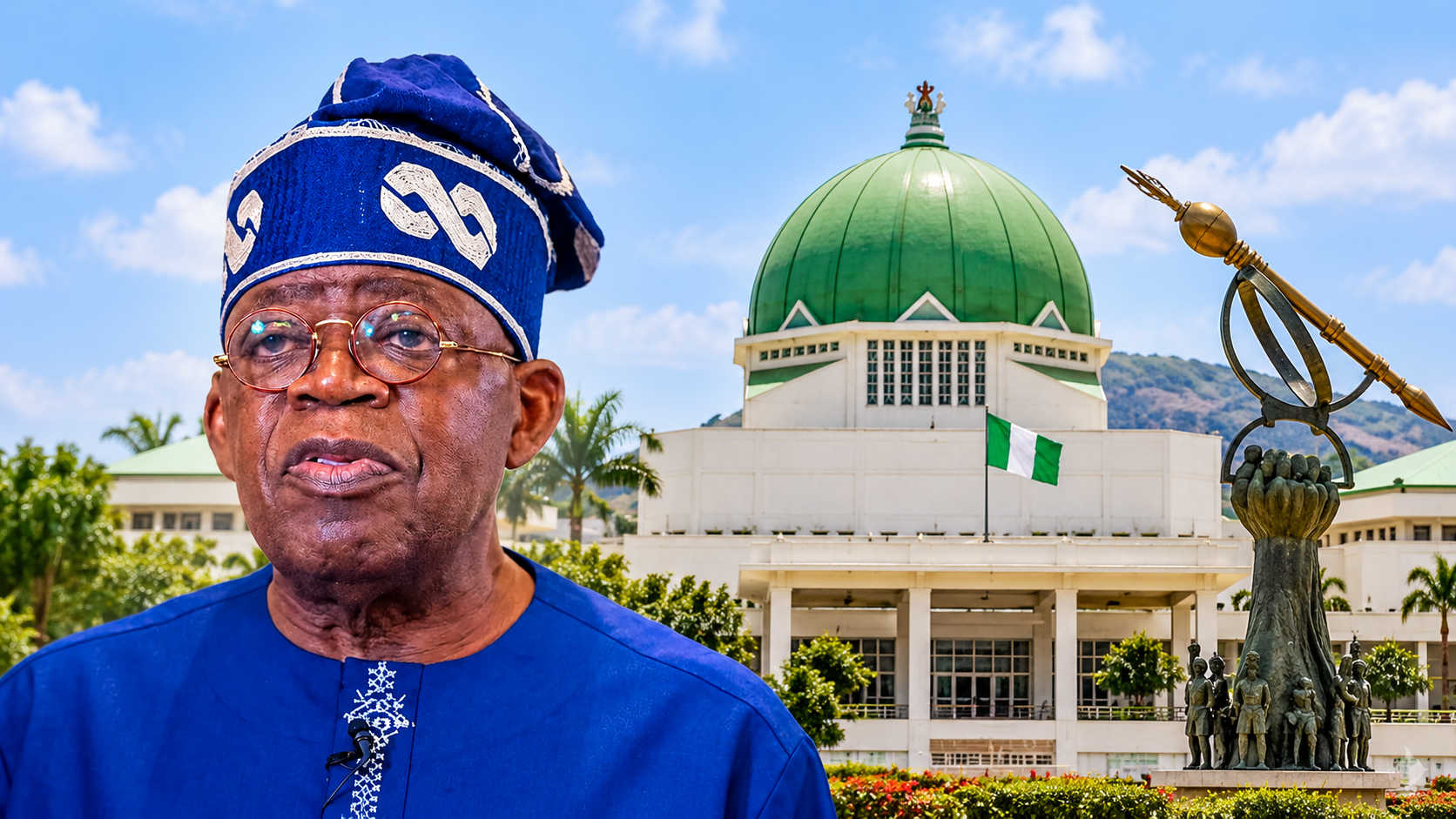
Some members of the House of Representatives operating under the banner of the Save Democracy Group (SDG), have called on the National Assembly to reconvene and determine whether Vice President Kashim Shettima should assume the functions of president in the absence of President Bola Tinubu.
The group made the call in a statement on Wednesday and signed by its leaders, Awaji-Inombek Abiante (NDC, Rivers) and Abubakar Kusada (APC, Katsina).
It followed the expiration of the 21-day period provided under Section 145 of the 1999 Constitution within which the president should be on leave.
Pesident Tinubu left Abuja on 30 August for Europe on what the Presidency described as a three-week working vacation as part of his annual leave. His first destination was London, United Kingdom.
However, on 21 September, the Presidency announced that the president had extended his working vacation by a few days and would return to Nigeria at the weekend.
According to the statement by his Special Adviser on Information and Strategy, Bayo Onanuga, Mr Tinubu spent about a week in London before travelling to Paris, France, where he met French President Emmanuel Macron and businessman Vincent Bolloré.
The Presidency said the president remained in contact with officials in Nigeria and continued to direct government affairs from abroad.
Among other things, it said he ordered an independent panel to investigate the deaths of 37 illegal miners in Minna following their detention by the Nigeria Security and Civil Defence Corps.
While away, Mr Tinubu also delegated Vice President Shettima to represent him at some official engagements.
However, Mr Shettima subsequently travelled to New York on 20 September to represent Nigeria at the 81st United Nations General Assembly. He joined other world leaders at the opening of the General Debate on Tuesday and is scheduled to deliver Nigeria’s national statement on Thursday, 24 September.
The Secretary to the Government of the Federation, George Akume, has also represented the president at some official functions in his absence.
The developments have renewed questions about the formal transfer of presidential powers during Mr Tinubu’s absence.
After the Presidency announced on 30 August that Mr Tinubu had departed Nigeria for a three-week vacation in Europe, PREMIUM TIMES examined the relevant constitutional provisions and reported on the implications of his absence, including the question of whether presidential powers should be transferred to Vice-President Kashim Shettima.
The report also noted that, at the time, the Presidency had not indicated whether Mr Tinubu had transmitted a written declaration to the leadership of the National Assembly notifying them of his absence and transferring the functions of his office to the vice-president.
SDG said the central issue is whether Mr Tinubu transmitted the written declaration required by the document to the President of the Senate, Godswill Akpabio, and the Speaker of the House of Representatives, Abbas Tajudeen, before or during his vacation.
It argued that if the declaration was not transmitted, the National Assembly had a constitutional responsibility to invoke Section 145(2), which provides for both chambers to mandate the vice president to perform the functions of the president as Acting President.
“If it was transmitted, the President of the Senate and the Speaker of the House of Representatives should immediately make that fact clear to Nigerians,” the group said.
However, if no declaration was transmitted, SDG argued that the 21-day period had elapsed and the National Assembly should act in accordance with Section 145(2).
It said the issue should not be determined by whether Mr Tinubu remained able to communicate with government officials or issue directives while abroad.
“The Constitution cannot be replaced by assurances that the president remains in communication with officials or continues to issue directives from abroad.
“The question is not whether modern technology allows the President to work from another country. The question is whether the Constitution has been obeyed,” the lawmakers said.
In its statement, the SDG referred to Botswana as an example of how constitutional arrangements can provide clarity when a president is temporarily outside the country.
The group said that when Botswana’s President Duma Boko travels outside the country, the vice president assumes the role of acting president under that country’s constitutional arrangements.
It added that where both the president and vice president are outside the country, a minister can be designated to perform the functions of acting president.
The lawmakers acknowledged that Botswana’s constitutional framework is different from Nigeria’s but said the example illustrated the importance of making temporary transfers of presidential authority formal and transparent.
“Constitutional continuity should be clear, formal and transparent – not left to assumption,” the group said.
The SDG called on Messrs Akpabio and Tajudeen to immediately reconvene both chambers of the National Assembly to address what it described as the constitutional uncertainty created by Mr Tinubu’s prolonged absence.
The group asked the leadership of both chambers to publicly establish whether the president transmitted the written declaration required under Section 145(1).
It further called for both chambers to pass the required simple-majority resolutions mandating Mr Shettima to perform the functions of president as Acting President if it is established that no declaration was transmitted within the 21-day period.
The demand comes as the National Assembly is scheduled to reconvene from its recess. The legislature’s recent recess has previously been extended, with committees continuing some legislative activities while plenary was suspended.
The SDG argued that the National Assembly should not treat its constitutional responsibilities as optional.
“The National Assembly cannot insist that citizens obey the Constitution while treating its own express constitutional responsibilities as optional,” it said.
It said no individual should be regarded as being above the Constitution and that political considerations should not override constitutional provisions.
“If the President has complied with Section 145, Nigerians should be informed accordingly,” it said. “If he has not, the Constitution provides the next step.”
The SDG’s position comes as similar questions have been raised by opposition politicians over the president’s absence.
The African Democratic Congress, through its National Publicity Secretary, Bolaji Abdullahi, on Tuesday questioned the constitutional basis for the continued representation of Mr Tinubu by the SGF, Mr Akume, as both the president and vice-president were outside the country.
Former Vice President Atiku Abubakar has also asked the Presidency to clarify whether Mr Tinubu transmitted the required letter to the National Assembly and questioned why Section 145 had not been activated if no such declaration was transmitted within 21 days.
The Presidency, has, however, maintained that Mr Tinubu remains in charge and has continued to direct the affairs of government from abroad.
The current debate over Section 145 is rooted in the constitutional crisis that followed the prolonged absence of former President Umaru Yar’Adua in 2009 and 2010.
Mr Yar’Adua travelled to Saudi Arabia for medical treatment in November 2009 but did not transmit the written declaration contemplated under the then Section 145 of the Constitution to formally transfer presidential functions to his deputy, Goodluck Jonathan.
As his absence continued, Mr Jonathan remained vice president but could not constitutionally exercise the full powers of the president because the procedure in Section 145 depended on a written declaration from Mr Yar’Adua.
The situation created a dispute over who could lawfully exercise presidential powers while the president was outside the country and unable to discharge his functions.
After about 78 days of Mr Yar’Adua’s absence, the National Assembly intervened on 9 February 2010, adopting what became known as the Doctrine of Necessity to empower Mr Jonathan to exercise the functions of President as Acting President.
The move was significant because the Constitution at the time did not expressly give the National Assembly the power to simply pass a resolution transferring presidential powers to the vice president where the president had failed to transmit the required declaration.
Contemporary legal analysis described the doctrine as an extraordinary mechanism for addressing a constitutional lacuna where strict application of the existing provisions left the country without a clear line of executive authority. The National Assembly itself justified the intervention on the need to prevent a vacuum in government.
Mr Jonathan was subsequently sworn in as acting president on 9 February 2010. Mr Yar’Adua returned to Nigeria later that month but died on 5 May 2010, after which Mr Jonathan succeeded him as president in accordance with the constitutional line of succession.
The experience exposed what lawmakers and constitutional lawyers regarded as a gap in the constitutional framework: there was no clear mechanism for dealing with a president who was unable or unwilling to transmit the written declaration required to trigger the transfer of presidential functions.
That gap was subsequently addressed through constitutional amendment.
The amended Section 145 now expressly provides that where a president fails or is unable to transmit the required declaration within 21 days, the National Assembly shall, by a simple-majority resolution of each chamber, mandate the vice president to perform the functions of President as Acting President until the president communicates his availability to resume his functions.


